
In the high-stakes world of commercial and industrial security, your burglar alarm control panel is the silent guardian that never sleeps. It stands between your assets, your people, and potential threats. Yet for too many facility managers, security directors, and procurement teams, that same panel becomes a source of constant frustration: false alarms that drain response resources, unexpected downtime that leaves sites vulnerable, and reactive maintenance schedules that balloon costs while eroding trust in the entire system.
What if your burglar alarm control panel could predict its own failures days or weeks in advance? What if it could learn from thousands of sensor readings to distinguish a real intrusion from a harmless environmental glitch, slashing false alarms by up to 90% while ensuring near-zero unplanned outages? This is no longer science fiction. It is the proven reality of predictive maintenance powered by IoT sensors and machine learning—technologies that are transforming intrusion alarm panels from reactive boxes into intelligent, self-optimizing fortresses.
As a senior expert with decades in the burglar alarm industry, I have seen firsthand how traditional alarm control panels—reliable workhorses like the industrial-grade models with scalable wired and wireless zones—deliver solid performance today. But tomorrow’s demands are different. Buyers procuring systems for banks, industrial parks, shopping malls, and corporate campuses want more than just 24/7 monitoring. They demand reliability you can forecast, false alarms you can virtually eliminate, and maintenance that happens before failure ever occurs.
This comprehensive, step-by-step guide shows you exactly how to implement predictive maintenance in burglar alarm control panels using IoT sensor data and machine learning. You will learn the precise operational playbook that security professionals are using right now to achieve measurable ROI, higher system uptime, and dramatically fewer false alarms. Whether you are evaluating new intrusion alarm panels for a fleet-wide rollout or upgrading existing installations, this practical blueprint will give you the tools, data-driven insights, and implementation roadmap you need to stay ahead.
Why Traditional Burglar Alarm Control Panels Are Reaching Their Limits
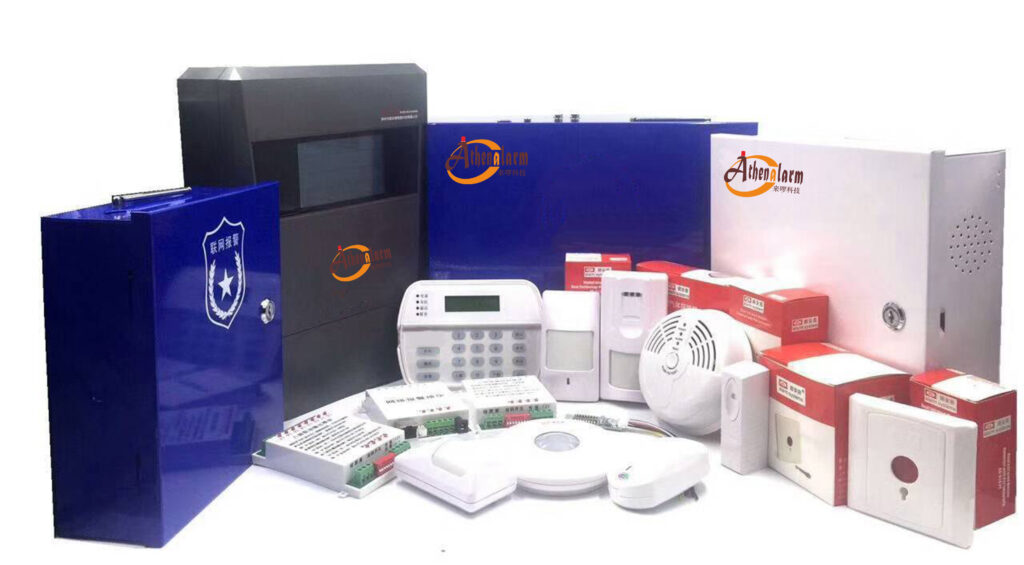
Let’s start with the pain points every procurement manager and technical lead knows too well. Conventional burglar alarm control panels, even advanced ones supporting up to 1,656 bus zones with multi-channel transmission via PSTN, 4G, and TCP/IP, operate on a reactive or scheduled maintenance model. Power surges, battery degradation, communication module wear, environmental stress on sensors, and subtle firmware drift all contribute to two costly problems: false alarms and unexpected failures.
False alarms alone cost the security industry billions annually in wasted responder time and eroded user confidence. A single nuisance alarm at 3 a.m. in a large facility can trigger unnecessary guard dispatches, police involvement, and internal investigations. Meanwhile, undetected panel issues—such as a failing backup battery or degrading wireless module—can leave entire zones unprotected without warning.
Historical event logs help, but they are after-the-fact. Cloud-based logging improves visibility, yet without intelligent analysis, you are still guessing when the next failure will strike. This is where predictive maintenance changes everything. By continuously monitoring the health of the alarm control panel itself—its power supply, processors, communication paths, and connected zones—IoT and machine learning turn raw data into actionable foresight.
Advanced models like the AS-9000 series already build in valuable diagnostic foundations: automatic short-circuit and overload protection, tamper detection for power failures, battery faults, telephone line cuts, and unauthorized access, plus anti-surge circuits that withstand up to 4KV impacts. These features generate rich event data ready for deeper analysis. The payoff is immediate and measurable: reduced maintenance costs by 30-50%, false alarm rates cut by 70-90%, and system availability climbing above 99.9%. For bulk procurers in the security sector, this translates directly into lower total cost of ownership, stronger SLAs with end clients, and a clear competitive edge when bidding on high-security projects.
Understanding Predictive Maintenance in the Context of Intrusion Alarm Panels
Predictive maintenance (PdM) is not preventive maintenance on a calendar. It is condition-based intelligence. Sensors embedded in or around your burglar alarm control panel feed real-time data into analytics engines that use machine learning to detect anomalies and forecast failures before they happen.
For a typical industrial-grade alarm panel like those handling 16 wired + 30 wireless zones (expandable via address modules), PdM focuses on three core areas:
- Hardware health – Power supply stability, battery voltage curves, processor temperature, and surge protection circuit integrity.
- Communication reliability – Signal strength on 4G/TCP/IP modules, latency in alarm transmission, and failover success rates.
- Zone and sensor behavior – Patterns in motion detector triggers, door contact states, and environmental variables that correlate with false positives.
Machine learning models learn what “normal” looks like for your specific installation—accounting for site-specific factors like humidity fluctuations in a warehouse (within the panel’s 40-70% operating range) or vibration from nearby machinery—then flag deviations that precede faults. This contextual awareness is especially powerful for intrusion alarm panels, where a single misclassified event can waste hours of response time or leave a critical zone blind.

The IoT Foundation: Sensors That Turn Your Alarm Panel into a Data Powerhouse
The first operational step is deploying the right IoT sensors. Modern burglar alarm control panels already have some built-in diagnostics—such as the 1500-event “black box” history log and cloud-based event recording in models like the AS-9000 series—but IoT expands this dramatically.
Key sensor types for alarm panel PdM:
- Vibration sensors: Mounted on the panel enclosure or internal components to detect loosening mounts or mechanical wear in relays and fans.
- Temperature and humidity sensors: Critical for electronics; overheating in the 32-bit ARM processor or condensation in wireless modules directly predicts failure, especially in environments pushing the panel’s -10°C to 55°C operating limits.
- Current and voltage monitors: Track power draw anomalies that signal impending battery failure or short circuits—leveraging the panel’s existing backup battery monitoring.
- Acoustic sensors: Listen for unusual clicking or buzzing from relays or transformers.
- Environmental sensors: External air quality, dust, or electromagnetic interference that affects sensor accuracy and contributes to false alarms.
- Network performance sensors: Monitor packet loss, latency, and bandwidth on TCP/IP or 4G paths.
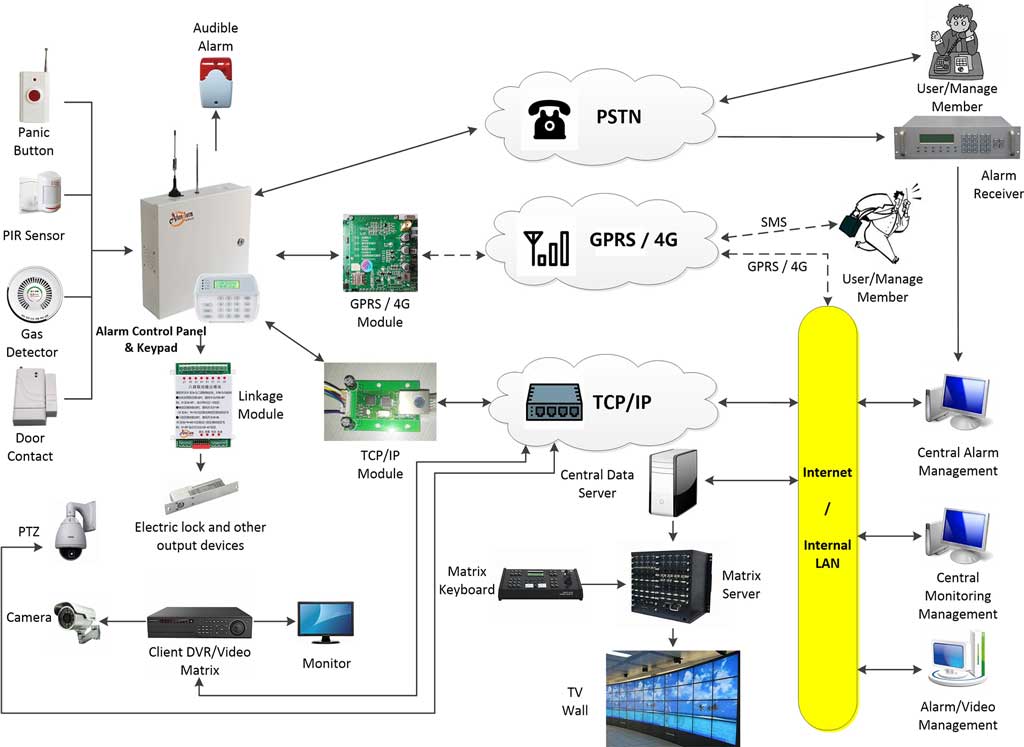
Integration is straightforward. Many modern panels support Modbus, BACnet, or direct API hooks via their TCP/IP capabilities. For legacy systems, retrofit gateways connect existing alarm control panels to a secure IoT platform without full replacement. Start by enabling the panel’s built-in cloud logging through the LCD keypad menu or management software—this takes just minutes and immediately feeds historical data into your PdM system.
Data flows from sensors to an edge gateway (for low-latency local processing) or directly to a secure cloud. Sampling rates of 1-10 Hz are usually sufficient for panel health, while zone sensors may sample at higher rates during armed periods to build false-alarm prediction models. Always verify your region’s 4G bands (such as LTE-FDD B1/B3/B5/B8 or GSM B3/B8) match the panel’s module to avoid connectivity gaps that could undermine predictions.
Machine Learning: The Brain Behind Predictive Insights
Raw IoT data is useless without intelligence. Machine learning algorithms process it in three layers:
- Anomaly detection (unsupervised): Models like Isolation Forest or Autoencoders flag unusual patterns in power consumption or temperature spikes.
- Failure prediction (supervised regression): Time-series models (LSTM, Prophet) forecast remaining useful life (RUL) of components such as batteries or communication modules.
- False alarm classification (supervised classification): Random Forest, XGBoost, or deep neural networks analyze historical alarm events alongside sensor context to label “true intrusion” versus “environmental false positive.”
Training starts with your own historical logs—typically 3-6 months of data is enough for initial models, including the panel’s built-in 1500-event logs. The system improves continuously through feedback loops: technicians confirm predictions, and the model retrains. For intrusion alarm panels specifically, ML excels at contextual awareness. A motion sensor trigger at 2 a.m. during a known HVAC cycle might be downgraded to low priority, while the same trigger during business hours with unusual vibration patterns raises an immediate alert. This fusion of panel diagnostics, IoT environmental data, and historical events routinely cuts false alarms by distinguishing real threats from site-specific noise like humidity swings or nearby machinery.
Step-by-Step Implementation Guide: From Assessment to Live Deployment
Here is the exact operational playbook. Follow these phases and you will have a fully functional predictive maintenance system for your burglar alarm control panels within 8-12 weeks. Each step includes practical tips to avoid common pitfalls that trip up first-time implementers.
Phase 1: Assessment and Planning (Weeks 1-2)
Conduct a full audit of your current intrusion alarm panels. Map every panel, its zones, communication methods (PSTN, 4G, TCP/IP), and historical failure/false alarm data using the built-in event log. Identify high-criticality assets—panels protecting data centers or cash-handling areas get priority.
Define success metrics: target false alarm reduction percentage, maximum acceptable downtime, and ROI threshold (typically payback in under 12 months).
Assemble your team: security technicians, IT/network specialists, and a data analyst (or partner with a vendor who provides this). Common mistake: skipping this audit—always cross-reference panel specs like the 32-bit ARM processor and tamper alerts to baseline current health.
Phase 2: Sensor Deployment and Data Infrastructure (Weeks 3-4)
Install IoT sensors on 5-10 pilot panels. Use non-invasive clamps for current monitoring and adhesive mounts for vibration/temperature—never drill into the enclosure without checking the manufacturer’s anti-tamper design.
Set up a secure data pipeline: edge devices → encrypted MQTT or HTTPS → cloud dashboard. Ensure compliance with GDPR, CCPA, and any industry-specific standards (e.g., IEC 62368-1 for safety, already met by leading panels).
Configure baseline data collection for at least two weeks under normal operating conditions. For panels with existing cloud logging, activate it first via the keypad’s programming menu (usually under “System Settings > Event Log > Cloud Upload”) to capture data immediately.
Phase 3: Model Development and Training (Weeks 5-7)
Upload historical logs and new sensor streams to a machine learning platform (open-source options like TensorFlow or commercial security-focused platforms).
Preprocess data: handle missing values, normalize readings, engineer features (e.g., “temperature delta over last hour” or “battery voltage trend during arming cycles”).
Train initial models: start with simple anomaly detection, then add predictive regression for component RUL.
Validate using hold-out test data. Aim for >95% precision in failure prediction and >85% reduction in false alarm misclassification. Tip: Include site-specific variables like humidity within the panel’s 40-70% range to prevent over-flagging environmental “false positives.”
Phase 4: Integration with Existing Alarm Control Panels (Week 8)
Connect ML outputs back to your panels or central monitoring software. Examples:
- Automatic arming/disarming adjustments based on predicted false-alarm risk.
- Preemptive alerts to technicians: “Battery in Panel #47 showing 87% predicted RUL in 14 days.”
- Dashboard visualizations for procurement and operations teams showing fleet-wide health scores.
Test failover: simulate a failing 4G module (by temporarily disabling the SIM) and confirm the system predicts and notifies correctly. Use the panel’s multi-user password system (up to 11 users) to restrict ML dashboard access to authorized staff only.
Phase 5: Pilot Rollout, Monitoring, and Optimization (Weeks 9-12)
Deploy across the pilot group. Monitor key performance indicators daily.
Hold weekly review meetings to label any mispredictions and retrain models.
Scale incrementally: add panels once pilot achieves target metrics.
Implement continuous learning: the system automatically incorporates new data, seasonal patterns, and site modifications.
Phase 6: Full Fleet Integration and Ongoing Governance
Roll out to all burglar alarm control panels. Establish governance policies: who receives alerts, escalation procedures, and annual model audits.
Train your teams on interpreting predictive insights rather than just reacting to alarms—focus on real-world scenarios like “A 15% drop in battery voltage during high-humidity periods now triggers a proactive replacement.”
Schedule quarterly health checks and model refreshes.
Throughout implementation, leverage panels with built-in cloud logging and multi-channel transmission as the perfect foundation—they already generate rich event data ready for ML enhancement.
Real-World Results: What Security Professionals Are Achieving Today
Organizations that have implemented this approach report transformative outcomes. One large industrial park operator reduced false alarms by 82% within six months, saving over $240,000 annually in responder fees alone. A financial institution using scalable alarm control panels saw battery-related failures drop from 11 incidents per year to zero after predictive alerts prompted proactive replacements.
Downtime incidents—previously averaging 4.2 hours per event—fell to under 30 minutes because technicians received 10-21 day advance warnings. Procurement teams now include “PdM-ready” specifications in RFPs, favoring vendors whose intrusion alarm panels support open IoT integration, multi-channel communication, and robust tamper detection.
Overcoming Common Challenges
Data security is paramount—use end-to-end encryption and role-based access, especially since these panels handle sensitive intrusion events. Start small to prove value before enterprise-wide rollout. Skill gaps? Partner with specialists who provide turnkey PdM platforms tailored to security hardware. Initial investment in sensors and cloud services pays back rapidly through reduced service calls.
Watch for common pitfalls: mismatched 4G frequency bands causing connectivity blind spots, or failing to retrain models after seasonal changes (e.g., winter humidity spikes). Address these early, and your system stays reliable.

The Road Ahead for Burglar Alarm Control Panels
The next evolution is even more exciting: edge AI that runs lightweight models directly on the panel’s 32-bit ARM microprocessor, 5G ultra-low latency for instant predictive actions, and integration with video verification and access control for holistic security intelligence.
Panels of the future will not only detect intrusions—they will anticipate system weaknesses, environmental risks, and even emerging threat patterns, all while maintaining the industrial-grade reliability of today’s scalable, multi-channel systems.
Your Next Move: Turn Insight into Action
You now have the complete, battle-tested roadmap to implement predictive maintenance in your burglar alarm control panels. The technology exists today. The operational steps are proven. The ROI is undeniable.
If you manage security procurement, system design, or operations for commercial or industrial sites, the time to act is now. Stop reacting to failures and false alarms. Start predicting—and preventing—them.
Contact our team today for a no-obligation assessment of your current intrusion alarm panels and a customized PdM pilot plan. Whether you need scalable industrial-grade burglar alarm control panels ready for IoT integration or expert guidance on machine learning deployment, we deliver solutions that keep your facilities secure, your teams efficient, and your costs under control.
The future of alarm control panels is predictive, intelligent, and remarkably reliable. Make it your reality.