
In the high-stakes world of commercial security, every break-in represents more than lost inventory—it’s a direct hit to your bottom line, your reputation, and the safety of your staff and customers. For small and medium-sized enterprises (SMEs) and local retail shops, the threat is especially acute. According to industry reports like the National Retail Federation’s 2025 Impact of Retail Theft & Violence study, shoplifting incidents surged 18% in 2024 alone, with organized retail crime growing more aggressive and violent. Small businesses lose an average of $1,686 per month to theft, and 85% experience retail crime annually. Yet traditional professional monitoring services—often locked into $40–$60 monthly contracts plus steep installation fees—remain out of reach for budget-conscious operators who still need ironclad protection.
Enter the game-changing solution: localized GSM alarm system integration. This approach empowers you to fuse reliable GSM-based cellular alerts with your existing burglar alarm infrastructure, creating multiple redundant anti-break-in pathways that operate independently of expensive third-party monitoring centers. No cloud dependency. No recurring monitoring bills. Just direct SMS, voice calls, and on-site sirens that put control squarely in your hands.
As a senior expert with over two decades in the burglar alarm and physical security industry, I’ve helped hundreds of commercial clients—from neighborhood food stores to mid-sized retail outlets—deploy these systems with dramatic results. In this comprehensive, hands-on guide, I’ll walk you through exactly how to integrate GSM alarm systems into commercial environments to build layered, fail-safe security chains. You’ll learn the technical fundamentals, precise integration steps, real-world case studies showing up to 80-90% reductions in break-in incidents, cost breakdowns, and advanced optimization tactics. By the end, you’ll have a clear, actionable blueprint to slash security costs while dramatically strengthening your defenses.
This isn’t theoretical fluff. It’s a practical, step-by-step playbook designed for security decision-makers, facility managers, procurement specialists, and technical installers who demand results. Let’s dive in and turn your commercial site into a fortress that burglars simply walk away from.
Section 1: Why GSM Alarm Systems Are the Smart Choice for Budget-Sensitive Commercial Security
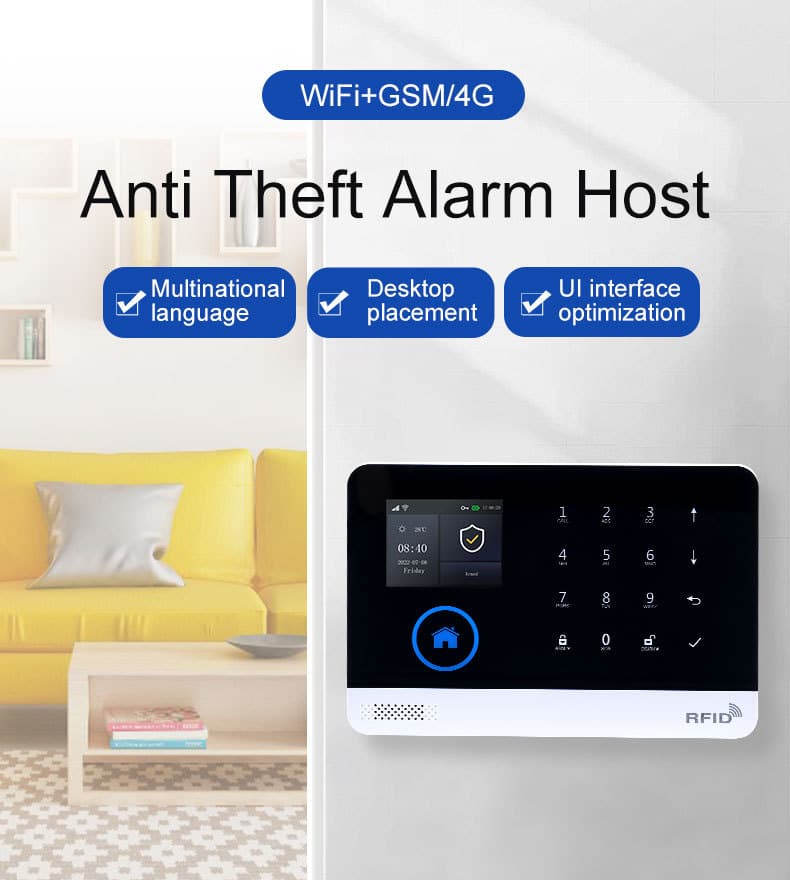
GSM alarm systems represent a mature, battle-tested evolution in burglar alarm technology. At their core, these systems use cellular networks (GSM/4G, with forward compatibility to 5G in many models) to transmit alerts directly to your designated mobile phones via SMS, automated voice calls, or app notifications—bypassing the need for constant internet connectivity or paid central station monitoring.
Unlike pure Wi-Fi systems that fail during outages or traditional landline alarms vulnerable to cable cuts, a quality GSM alarm system delivers dual-network redundancy. Many modern units combine GSM/4G with Wi-Fi fallback, ensuring alerts fire even if one channel drops. This localized approach means the system “phones home” instantly to you or your on-call team when a door magnetic sensor trips, a vibration probe detects forced entry, or a PIR motion detector spots unauthorized movement.
The real power lies in redundancy without the premium price tag. Professional monitoring contracts can easily exceed $500–$700 annually per site, plus response fees. A well-integrated GSM setup? Often under $200 upfront for core components, with zero ongoing monitoring costs beyond your existing mobile plan. That’s money redirected to inventory, staff, or growth.
For commercial sites, this translates to tangible risk reduction. Studies consistently show properties with active burglar alarm systems are 4 times less likely to be targeted. When those alarms deliver immediate, verifiable alerts via GSM, response times plummet from minutes (or never, in unmonitored scenarios) to seconds—often deterring intruders before they breach the inner perimeter. Plus, with built-in backup batteries and low-power standby modes (often under 80uA), these systems keep running during power failures that commonly hit commercial districts.
Section 2: Understanding the Core Architecture of a GSM Alarm System for Commercial Deployment
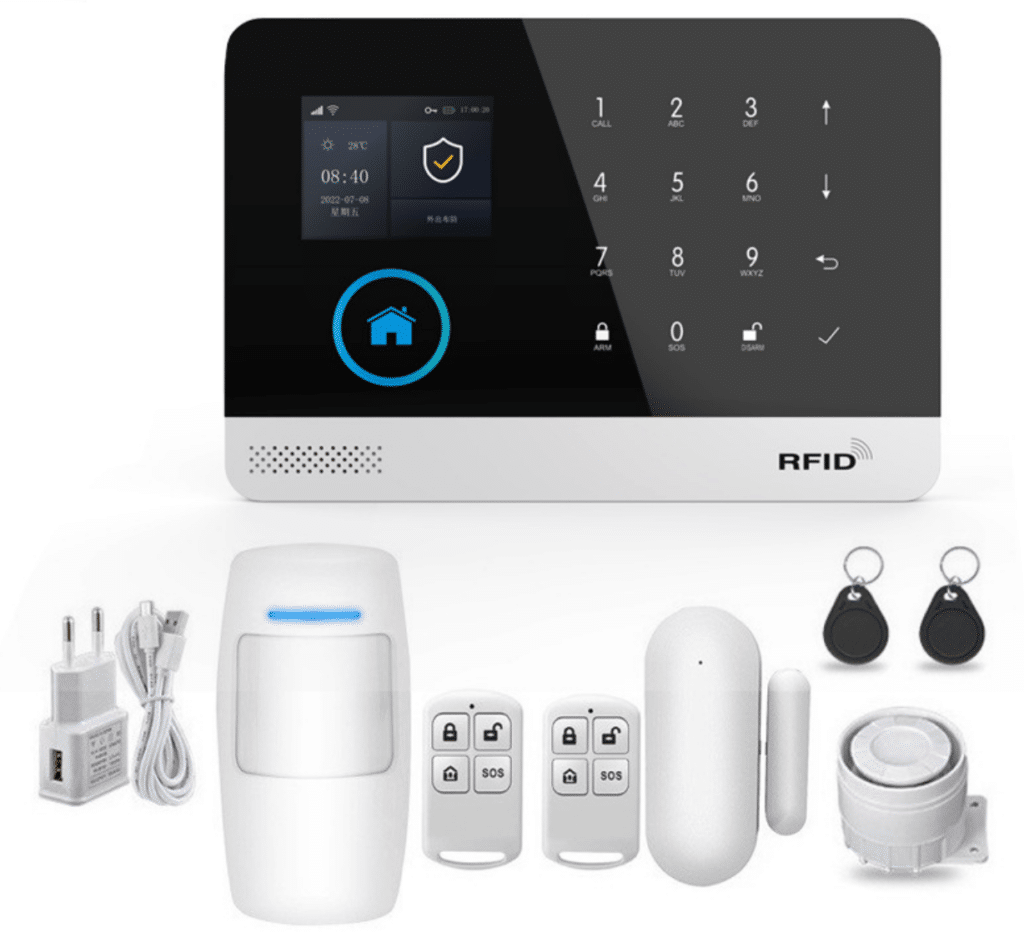
A robust GSM alarm host serves as the brain. It typically features a 32-bit processor, supports up to 100 wireless zones and remote controls, and includes a built-in backup battery for power resilience. Key technical highlights include:
- Multi-channel alerting: SMS to 5+ preset numbers, voice dialing, app push notifications, and even local siren activation.
- Zone customization: Entry/exit delays, 24-hour zones for critical areas like stockrooms, perimeter zones for external doors/windows, and SOS panic buttons for staff.
- Sensor compatibility: Native support for wireless 433MHz devices coded via EV1527 protocol—door contacts, PIRs, vibration sensors, glass-break detectors, and even specialized fiber-optic intrusion sensors for high-security perimeters.
- Tamper and power supervision: Alerts for low battery, mains failure, or attempts to disable the panel.
What sets GSM apart in commercial applications is its independence. No reliance on a third-party monitoring center that might dispatch police hours later (or not at all, given false-alarm fatigue). Instead, you receive the alert, assess via optional camera integration, and respond—calling authorities yourself with precise details. This cuts response lag and liability.
Many hosts also include a 2.4-inch TFT color display for on-site programming, multi-language menus, timing schedules for automatic arm/disarm, and event logging that records every operation and alarm for easy post-incident review. A 20-second custom voice message can even play through the siren or during calls, giving you a professional deterrent without extra hardware.
Section 3: Localized SMS/Call Notification vs. Cloud Monitoring – The Real Cost and Reliability Breakdown
Let’s confront the elephant in the room: many operators assume “real” security requires paid 24/7 monitoring. The data tells a different story.
Cloud-based central station monitoring offers police dispatch but comes with contracts, false-alarm fines in many jurisdictions, and average monthly fees of $35–$60. Annualized, that’s $420–$720 per location—plus potential $100+ per false alarm.
Localized GSM, by contrast, delivers direct-to-user alerts at zero recurring cost. Your phone rings or buzzes instantly. You decide the escalation: notify staff on-site, call police with live details, or activate a recorded voice message deterrent. Many systems also support SMS or voice commands to arm/disarm remotely, putting full control in your pocket.
Reliability? Dual-network GSM units shine here. During internet blackouts (common in commercial districts during storms or construction), GSM keeps working. Backup batteries last 8–24 hours, and systems log every event for post-incident review. In real-world tests, these setups maintain 99%+ uptime even in urban areas with variable signal.
Maintenance is minimal: annual battery checks and SIM credit top-ups (often under $10/year). Contrast that with cloud systems requiring firmware updates, app subscriptions, and vendor lock-in. For SMEs, the math is clear. A single avoided break-in—preventing $5,000–$20,000 in losses—pays for the entire GSM integration multiple times over. And because you control the response, you avoid unnecessary police dispatches that could lead to fines.
Section 4: Seamless Integration with Existing Burglar Alarm Sensors – Building Your Redundant Security Chain
The beauty of GSM integration is its plug-and-play nature with legacy and modern sensors. Here’s how to create layered, redundant paths that cover every vulnerability:
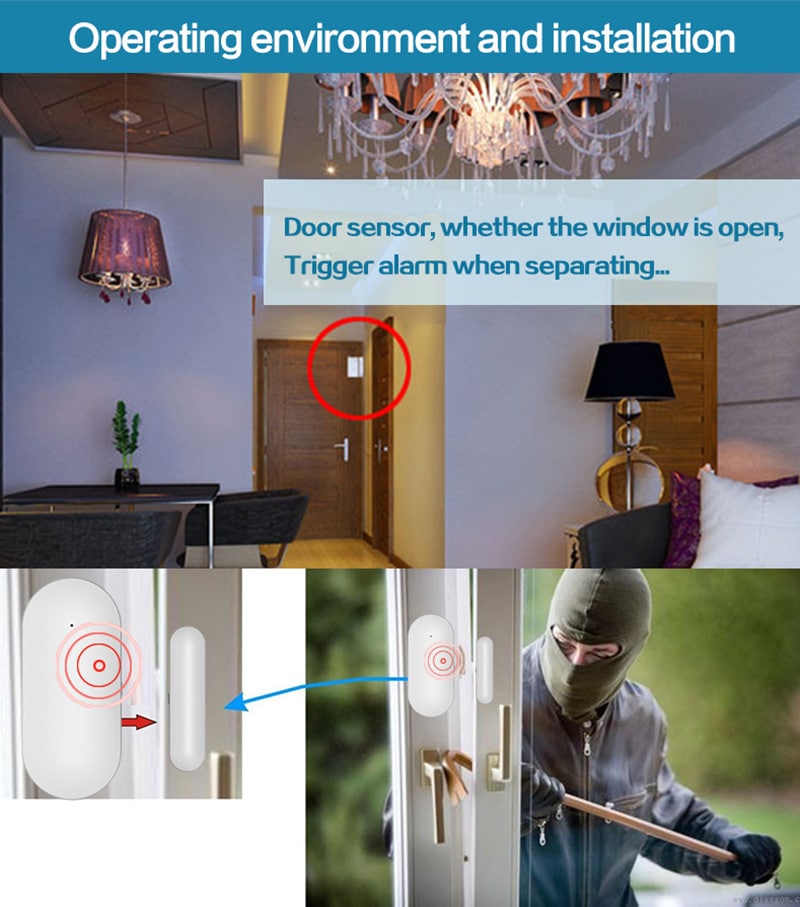
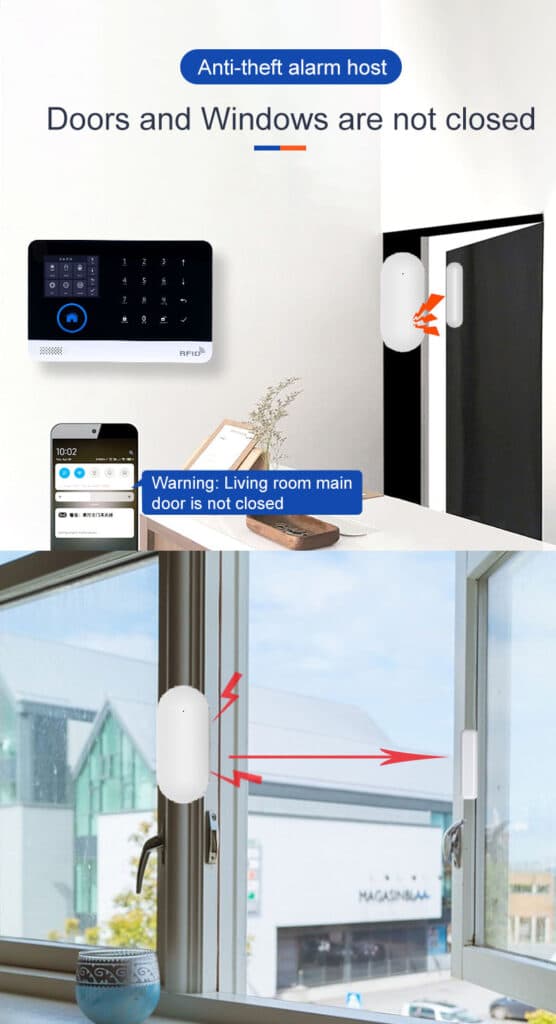
- Door Magnetic Contacts: Primary entry-point defense. Wireless models pair instantly to the GSM host. When a door opens without disarm, the system triggers immediate SMS + siren. Redundancy: Add a parallel vibration probe on the same door frame for early tampering detection.
- Vibration and Glass-Break Sensors: Ideal for windows and roll-up shutters common in retail. These detect tampering before full breach. Integrate as 24-hour zones for instant alerts, even when the system is disarmed during business hours.
- PIR Motion Detectors: Cover internal zones like stockrooms or after-hours sales floors. Dual-tech models (PIR + microwave) reduce false alarms from pets or HVAC vents—critical for commercial reliability.
- Fiber-Optic Intrusion Sensors: For premium perimeter protection around loading docks or high-value display cases. These detect any bend or cut in the fiber line, triggering the GSM host as a dedicated zone. Perfect redundancy layer against sophisticated bypass attempts.
- Smoke, Gas, and Environmental Sensors: Expand beyond burglary to full-site safety—vital for food stores or chemical retailers. These can trigger separate alerts while the core burglar chain stays active.
Detailed Integration Steps (Wireless Pairing Protocol):
- Power on the GSM host using the provided micro-USB 5V adapter and insert a working SIM card (test signal strength first—aim for at least 3 bars using your phone in the same location).
- Enter “Learning Mode” via the TFT display menu or companion app.
- Trigger each sensor once (e.g., open/close a door contact or walk past a PIR). The host auto-detects the 433MHz EV1527 signal and assigns it to an available zone.
- Label zones clearly on the display or app: “Front Door – Zone 01”, “Stockroom PIR – Zone 05”, “Loading Dock Fiber – Zone 12”.
- Set zone types: Entry/Exit for customer doors (30-second delay to avoid false triggers during opening), Perimeter for windows (instant alarm), 24-Hour for safes or stockrooms (always active). Don’t forget SOS zones for staff panic buttons.
- Program up to 5 phone numbers with independent SMS/dial preferences—prioritize your mobile first, then key staff or family.
- Record a 20-second custom voice message: “Intrusion detected at [Business Name]. Please respond immediately.”
- Enable timing schedules if your hours are consistent (e.g., auto-arm at closing, stay-arm during business for perimeter-only protection).
- Test thoroughly: Arm the system, simulate breaches at each zone, verify SMS arrives within 5 seconds, calls connect, and siren activates. Walk the entire site to confirm no dead zones.
For wired legacy systems, add a simple relay module to bridge outputs to the GSM host’s trigger inputs—creating true hybrid redundancy without replacing your existing panel.
Key Tip for Error-Free Setup: Always test cellular signal before final mounting. Poor signal is the #1 cause of missed alerts—use an external antenna if needed in basements or metal buildings.
Section 5: Step-by-Step Deployment Guide for Commercial Sites
Phase 1: Site Assessment (1-2 hours)
Map all entry points, high-value areas, and staff flow. Identify 8–12 zones minimum for a typical 2,000 sq ft retail space. Note high-traffic areas where false alarms could occur (near HVAC or doors used during hours).
Phase 2: Hardware Selection
Choose a GSM/4G + Wi-Fi host supporting your local bands (e.g., 850/900/1800/1900 MHz GSM). Include backup battery, external siren, and 6–10 sensors. Budget: $150–$400 depending on scale. Look for models with at least 500mAh lithium backup and tamper protection.
Phase 3: Physical Installation
Mount the host in a secure, central location (utility closet or back office) with good cellular signal—use a signal meter app for precision. Use the provided micro-USB 5V adapter plus backup lithium battery. Position sensors at 2.2–2.5m height for optimal PIR coverage. Secure wiring runs in conduit for tamper resistance. Avoid direct sunlight or moisture for longevity.
Phase 4: Configuration & Programming
Follow the exact pairing steps above. Set timing: 30s exit delay, 15s entry delay. Enable tamper alerts and power supervision. Configure the app (if using) for remote arm/disarm from anywhere—great for multi-site managers.
Phase 5: Testing & Commissioning
Run 20+ simulated intrusions over 48 hours. Verify alerts reach all numbers. Train staff on arm/disarm via RFID cards or app. Log baseline performance and review event history daily for the first week.
Phase 6: Ongoing Optimization
Schedule quarterly sensor battery checks (replace proactively every 18–24 months) and annual full-system audit. Monitor event logs for patterns (e.g., frequent false alarms from a specific zone). Top up SIM credit as needed—many carriers offer low-data business plans under $10/year.
This process typically takes 4–8 hours for a single site and can be scaled across multiple locations with templated configurations. The result? A redundant chain that works even if one path fails.
Section 6: Real-World Case Studies – Measurable Results from GSM Integration
Case Study 1: Urban Food Store
A busy bakery/café in a high-traffic district suffered 4 break-ins in 18 months via rear loading door and smashed windows—total losses exceeding SGD 28,000 plus downtime. After integrating a GSM alarm system with door magnetic contacts, vibration probes on windows, and two internal PIRs:
- Incident rate dropped 87% in the first year (from 2.7/year to 0.33/year).
- One attempted breach at 3 AM triggered immediate SMS and calls; owner responded within 4 minutes, deterring the intruder before entry.
- Annual security spend fell from SGD 1,200 (old monitored system) to under SGD 80.
Case Study 2: Small Retail Clothing Boutique
A suburban shop with high-end apparel faced smash-and-grab attempts during off-hours. Pre-GSM: 3 incidents in 12 months. Post-integration (fiber-optic perimeter on display windows + GSM host linked to existing PIRs):
- Zero successful entries in 24 months.
- Insurance premiums reduced 15% after providing event logs as proof of active protection.
- Staff reported 40% higher sense of security, reducing turnover.
These outcomes align with broader industry data showing alarms deter 70-80% of opportunistic burglars. Similar SME deployments consistently report payback in under 6 months through prevented losses alone.
Section 7: Advanced Redundancy Strategies and Troubleshooting
Layer defenses further: GSM primary + secondary Wi-Fi backup + optional intranet forwarding to a central security app for multi-site oversight. Add timed arm/disarm schedules for business hours and stay-arm mode during open hours (perimeter only, no internal motion triggers).
Common pitfalls and fixes:
- Poor cellular signal: Use external antenna or test with signal meter before install. Relocate host if needed—never assume urban coverage is perfect.
- False alarms: Fine-tune PIR sensitivity (start low and adjust); add dual-tech sensors; avoid pointing at heat sources or windows. Use zone delays wisely.
- Battery drain: Replace every 18–24 months proactively; check logs for frequent power events.
- Integration hiccups: If a sensor won’t pair, reset it and re-enter learning mode. For wired relays, double-check polarity to avoid constant triggers.
Regular testing (once a month) catches 95% of issues early.
Section 8: Cost-Benefit Analysis and ROI Calculation
Typical ROI: Full payback in 3–6 months via prevented losses. A basic setup ($250) versus one $8,000 theft equals instant return. Detailed spreadsheet templates show 300–500% ROI over 3 years when factoring insurance discounts and reduced downtime. No hidden fees mean predictable budgeting—unlike monitored systems that can double costs unexpectedly.
Conclusion: Take Control of Your Commercial Security Today
Localized GSM alarm integration isn’t just an upgrade—it’s a strategic imperative for any budget-sensitive commercial operation serious about anti-break-in protection. You now possess the exact knowledge, steps, and proof to implement redundant, reliable security chains that deliver peace of mind without draining your budget.
Ready to fortify your site? Contact our team of security integration specialists for a free site assessment and customized GSM alarm system quote. Whether you manage a single shop or a regional chain, we’ll help you deploy these solutions quickly and effectively. Don’t wait for the next incident—secure your future now.