
In high-stakes environments—such as Tier III+ data centers, bullion vaults, and national infrastructure—the failure of an intrusion detection system isn’t just a technical glitch; it is a catastrophic security breach. Traditional “fail-safe” measures often fall short because they lack true alarm redundancy design.
For system architects and security engineers, the goal is high-availability (HA). This means the system must remain fully operational even when a primary component fails. This guide breaks down the technical strategies required to eliminate single points of failure (SPOF) and ensure your security posture remains uncompromised.

The Core Mandate: Eliminating Single Points of Failure (SPOF)
A standard alarm system is a chain; if one link snaps, the entire perimeter goes dark. High-availability design replaces that chain with a mesh. In critical site security, we focus on four failure domains:
- Detection Failure: A sensor dies or is masked.
- Processing Failure: The main control panel (CP) freezes or loses power.
- Communication Failure: The link to the Alarm Receiving Center (ARC) is cut.
- Power Failure: Prolonged outages exhaust standard battery backups.
1. Dual-Path Communication: Beyond Simple Backup
The most common point of failure is the transmission path. High-availability design for critical sites requires an “Active-Active” or “High-Priority Failover” communication strategy.
Implementation Steps for Engineers:
- Physical Path Diversity: Ensure your primary path (Fiber/Ethernet) and secondary path (5G/LTE) do not exit the building through the same conduit. A single backhoe can sever both if they are buried together.
- Polling Intervals (Heartbeats): For Grade 4 security (EN 50131), set your heartbeat intervals to the highest frequency. If the ARC doesn’t receive a “keep-alive” signal within 90 seconds (or 10 seconds for ultra-critical sites), it must trigger a “Communication Loss” alarm.
- Provider Redundancy: If using dual SIM cards for cellular backup, use two different carriers (e.g., AT&T and Verizon) to guard against a specific network provider’s regional outage.
2. Control Panel Redundancy: Hot-Standby Configuration
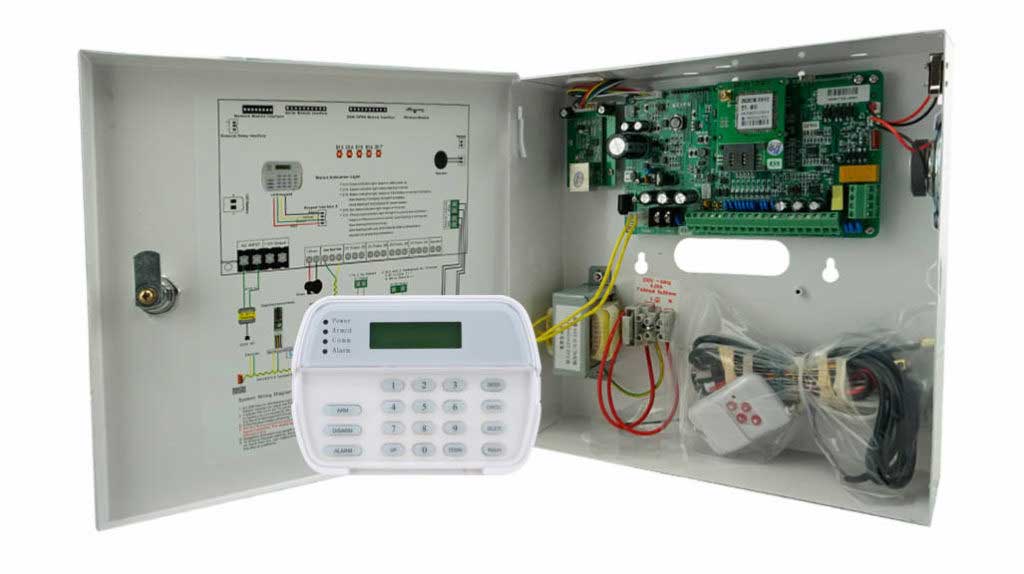
In a standard setup, if the motherboard of the control panel fails, the sensors are useless. For high-availability, we deploy Hot-Standby Redundancy.
How to Configure Hot-Standby:
- Hardware Mirroring: Install two identical, networked control panels.
- Data Synchronization: Use a dedicated high-speed bus or RS-485 link to sync the “state” of all zones, user codes, and arming status between the Master and Slave panels in real-time.
- The “Watchdog” Circuit: A physical heartbeat monitor checks the Master panel. If the Master fails to pulse, a mechanical or electronic relay instantly shifts the sensor bus (Zone Bus) to the Slave panel.
- IP Address Takeover: The Slave panel assumes the virtual IP of the Master to ensure the monitoring software sees no interruption.
3. Power Architecture for 99.99% Uptime
Power issues cause more “false negatives” than any other factor. A professional alarm redundancy design must account for “Total Blackout” scenarios.
| Power Layer | Requirement | Function |
| Primary | AC Mains (Monitored) | Standard operation and battery charging. |
| Secondary | Dual Lead-Acid/LiFePO4 Batteries | Provides 24–72 hours of standby (per EN 50131-6). |
| Tertiary | Building Generator/UPS | Seamless transition for indefinite outages. |
Pro Tip: Use Distributed Power Supplies (PSUs) on the sensor bus. If the main panel’s power fails, the distributed PSUs keep the PIRs and glass-break detectors powered, allowing the redundant panel to read them immediately upon failover.
4. Sensor-Level Redundancy: Cross-Zoning and Technology Mix
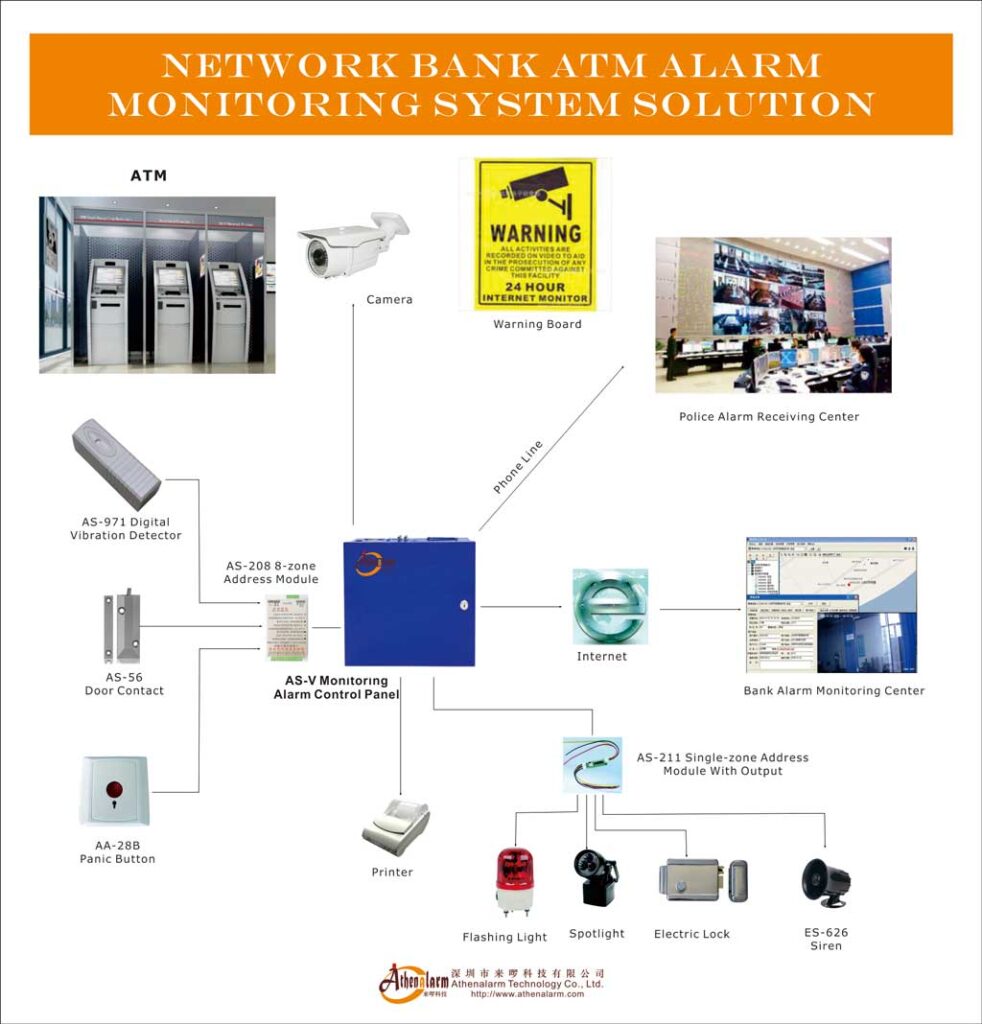
Even the best panel is useless if a sensor is bypassed. We solve this through Detection Redundancy.
- Dual-Technology Sensors: Use PIR + Microwave sensors. Both must trigger to create an alarm, reducing false positives while ensuring that if the infrared spectrum is masked (e.g., by a heat-shield), the microwave sensor still detects motion.
- Overlapping Fields of View: In a high-value server room, “Sensor A” should look at the door, while “Sensor B” looks at “Sensor A.” If an intruder tampers with one, the other captures the event.
- End-of-Line (EOL) Resistor Monitoring: Always use Dual or Triple EOL resistors to detect not just “Open/Closed” states, but also “Short Circuit” and “Tamper” (Resistance change).
Practical Validation: The Failover Test Protocol
A redundancy plan that hasn’t been tested is merely a suggestion. Follow this commissioning checklist to validate your high-availability design:
- The “Comm-Cut” Test: Physically unplug the Ethernet cable. Confirm the system switches to Cellular within the configured timeout (e.g., <15 seconds) and sends a “Path 1 Failure” alert to the ARC.
- The “Dead-Panel” Test: Power down the Primary control panel. Verify the Standby panel takes over the zone monitoring and reports the “System Trouble” without losing the current “Armed” state.
- The “Load-Drop” Test: Calculate the total current draw of all sensors. Disconnect AC power and ensure the batteries maintain the voltage above the cutoff threshold for the duration required by local regulations (e.g., UL 1076).
Industry Standards and Compliance
To ensure your design meets global insurance and legal requirements, refer to these authoritative frameworks:
- EN 50131-1 Grade 4: The gold standard for high-security European installations, requiring maximum resistance to interference and sophisticated redundancy.
- UL 1076: Standards for Proprietary Burglar Alarm Units and Systems, focusing on internal communication reliability.
- NFPA 72: While primarily for fire, its guidelines on “Circuit Integrity” and “Survival of Path” are vital cross-references for alarm architects.
- SIA CP-01: Standards aimed at reducing false alarms, which is a critical byproduct of a well-designed redundant system.
Summary
High-availability in the anti-theft sector is about predictability. By implementing dual-path communications, hot-standby panels, and layered power, you ensure that the system’s “Brain” is never truly offline. For engineers, the mantra remains: Assume every component will fail, and design the system to thrive in spite of it.
References:
- British Security Industry Association (BSIA) – Guide to Dual Path Signaling.
- International Electrotechnical Commission (IEC) 62642 series on Intrusion Systems.
- UL 603 – Standard for Power Supplies for Use with Burglar-Alarm Systems.