
1. Introduction
In 2024, data center security incidents rose by over 30%, according to a Gartner industry report. These breaches—often involving unauthorized access, insider manipulation, or physical tampering—underscore a critical truth: physical alarm systems remain a foundational defense layer in data center security.
This article presents a real-world Data Center Alarm Case, analyzing the design, deployment, and optimization of an advanced intrusion alarm solution for a mid-sized financial data center.
Drawing from over 15 years of field experience in alarm technologies and physical security integration, I’ll share insights into the strategies and outcomes behind a successful, standards-compliant deployment.
The goal: to help security managers, IT directors, and facility engineers understand how an intelligent alarm system can mitigate theft and intrusion risks in high-value data environments.
2. Background of the Data Center
The client—a medium-scale data center located in a dense metropolitan financial district—operates 24/7 to process critical financial transactions and private client data.
Its core assets included:
- Over 500 high-density servers and networking switches
- Redundant UPS and cooling systems
- A secure network operations center (NOC)
- Confidential client storage with restricted access
Threat Landscape
The site faced increasing risks:
- Physical intrusion attempts at the perimeter
- Insider threats, such as unauthorized access during night shifts
- Cyber-physical vulnerabilities, where power or HVAC failures could create security blind spots
According to the Ponemon Institute’s 2023 Cost of a Data Breach Report, the average cost of a downtime-related breach exceeded $9,000 per minute in financial data centers.
These challenges created an urgent need for a robust data center alarm solution—integrated, intelligent, and fully auditable.
3. Identified Challenges and Risks
During the initial security audit, several critical weaknesses were identified:
- Outdated Alarm Infrastructure – Legacy sensors lacked integration with modern networked monitoring systems.
- High False Alarm Rate – Environmental noise and HVAC vibrations triggered frequent false alerts.
- No Unified Monitoring – Alarm data, CCTV footage, and access logs existed on separate platforms.
- Insufficient Perimeter Protection – Fencing sensors were either missing or misconfigured.
- Limited Staff Awareness – Operators relied on manual reset protocols, delaying incident responses.
From an operational perspective, even a 15-minute outage could result in losses exceeding $50,000.
These findings highlighted the need for a tailored alarm solution designed specifically for a data center environment, balancing sensitivity with reliability.
4. Proposed Solution: Alarm System Overview
After analysis, the deployment team proposed a multi-layered alarm system integrating:
Core Components
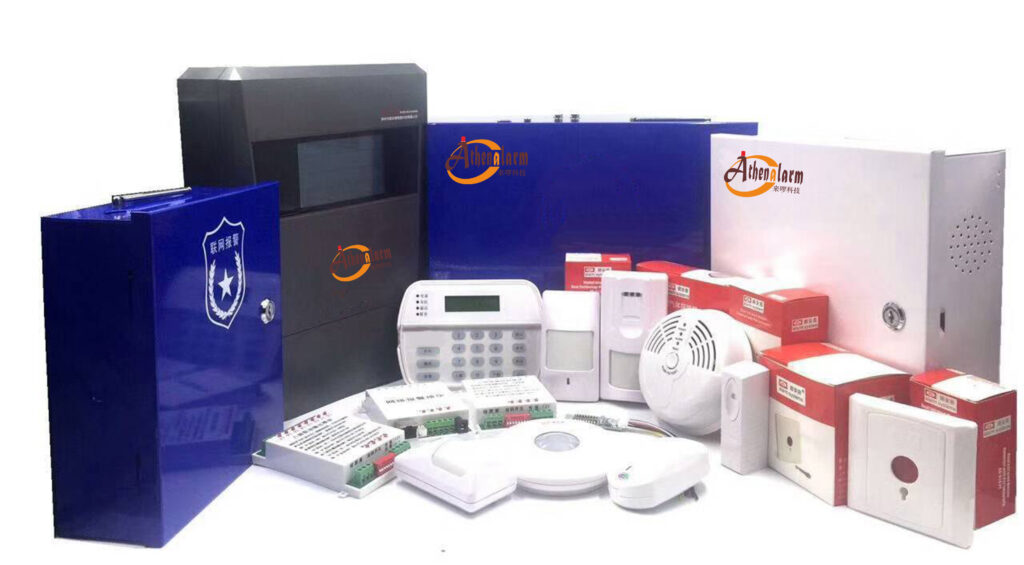
- Perimeter Detection: Microwave and vibration fence sensors to detect approach and intrusion.
- Interior Protection: PIR motion sensors, glass-break detectors, and magnetic door contacts.
- Access Control Integration: Biometric readers (fingerprint + RFID) linked to alarm triggers.
- AI-Powered Video Analytics: Automatic verification of intrusion events, minimizing false alarms.
- Environmental Sensors: Monitoring temperature, humidity, and power anomalies that may signal tampering.
- Centralized Alarm Monitoring Software: Real-time event management integrated with the NOC dashboard.
- Mobile Alert System: Instant notifications via encrypted mobile app to on-duty supervisors.
Standards and Compliance
All devices complied with UL 639 (Intrusion-Detection Units) and ISO/IEC 27001 physical security guidelines.
This vendor-neutral design ensured future scalability and system interoperability.
This configuration represented a proven data center alarm case, addressing both physical and environmental vulnerabilities.
5. Implementation Process
The deployment followed a structured five-phase approach:
1. Site Assessment
Engineers conducted a three-day onsite audit, mapping all entry points, HVAC ducts, and cable pathways.
A risk matrix was developed to classify critical zones (Tier 1: Server Hall, Tier 2: Control Room, Tier 3: Support Areas).
2. System Design
Based on audit data, a layered alarm topology was drawn.
Sensor placement was optimized using a CAD-based layout, ensuring coverage overlap for redundancy.
3. Installation
Hardware installation proceeded zone by zone to avoid operational downtime.
Networked alarm panels were integrated via fiber connections to the main monitoring console.
4. Integration and Testing
- Linked alarm events with CCTV system for instant visual verification
- Calibrated motion sensors to filter HVAC-induced false triggers
- Conducted failover tests simulating power cuts and network outages
5. Training and Handover
Operators underwent comprehensive training on alarm recognition, escalation protocols, and maintenance cycles.
Documentation included wiring schematics, event-response flowcharts, and SOPs.
6. Results and Outcomes
After deployment, the client reported measurable improvements:
| Performance Metric | Before | After (12 Months) |
|---|---|---|
| False Alarm Rate | 20+ per month | < 5 per month |
| Average Response Time | ~6 minutes | Under 2 minutes |
| Unauthorized Entry Incidents | 3 per year | 0 incidents |
| Compliance Readiness (ISO 27001) | Partial | Full compliance |
ROI Analysis:
Factoring reduced downtime, operational efficiency, and theft prevention, the system paid for itself within 9 months.
Client Feedback:
“The new alarm solution integrated seamlessly with our existing infrastructure. We’ve achieved near-zero false alarms and full visibility into all security layers.”
(Operations Director, anonymized financial data center)
7. Lessons Learned and Best Practices
Through this Data Center Alarm Case, several best practices emerged:
- Customization Is Essential: Pre-packaged alarm systems fail to address unique data center risks.
- Integration Enhances Intelligence: Linking alarms with CCTV and access logs accelerates response validation.
- Maintenance Matters: Regular calibration prevents degradation of sensor accuracy.
- Train for Human Factors: Even the best system can fail if operators misunderstand alerts.
- Plan for Scalability: Anticipate future expansions with modular architecture.
- Adopt Emerging Technologies: IoT-based vibration sensors and machine learning analytics can predict anomalies before they escalate.
Common Pitfall: Over-reliance on a single detection layer—perimeter or interior only—creates exploitable gaps.
8. Conclusion
This Data Center Alarm Case demonstrates how a carefully engineered, multi-layered alarm deployment can transform physical security resilience.
By integrating intrusion detection, video analytics, and environmental monitoring, the client achieved a zero-incident record and improved operational assurance.
For security professionals seeking similar results, consider engaging with certified alarm experts for assessment and system design tailored to your facility’s unique risk profile.
Looking Ahead: As data centers continue to expand globally, the fusion of AI-driven analytics and predictive alarm systems will define the next evolution of secure, autonomous infrastructure.
Disclaimer: The results described in this case study are specific to the deployment environment and may vary. Always consult a qualified professional before implementing similar systems.