
I. Introduction
Wireless burglar alarm systems have become a standard in modern security deployments, especially in commercial, industrial, and mixed-use facilities. Their advantages—flexible installation, reduced wiring costs, scalability, and minimal site disruption—make them highly suitable for professional alarm installers, security product managers, and procurement decision-makers. As wireless detectors continue to mature in reliability and encrypted communication, understanding how to correctly integrate them with a burglar alarm control panel is essential for achieving stable performance.
This guide provides a detailed technical walkthrough on how to connect wireless detectors to a burglar alarm control panel. It covers pairing procedures, integration best practices, and important considerations related to wireless burglar alarm technology. Mastering these processes helps reduce false alarms, enhance system dependability, and ensure compliance with professional standards.
Whether you are an alarm system integrator, a product manager evaluating new wireless intrusion detection solutions, or a bulk procurement professional responsible for large-scale deployments, this article equips you with actionable insight to build secure and reliable wireless alarm systems.
II. Understanding Wireless Burglar Alarm Components
What Is a Burglar Alarm Control Panel?
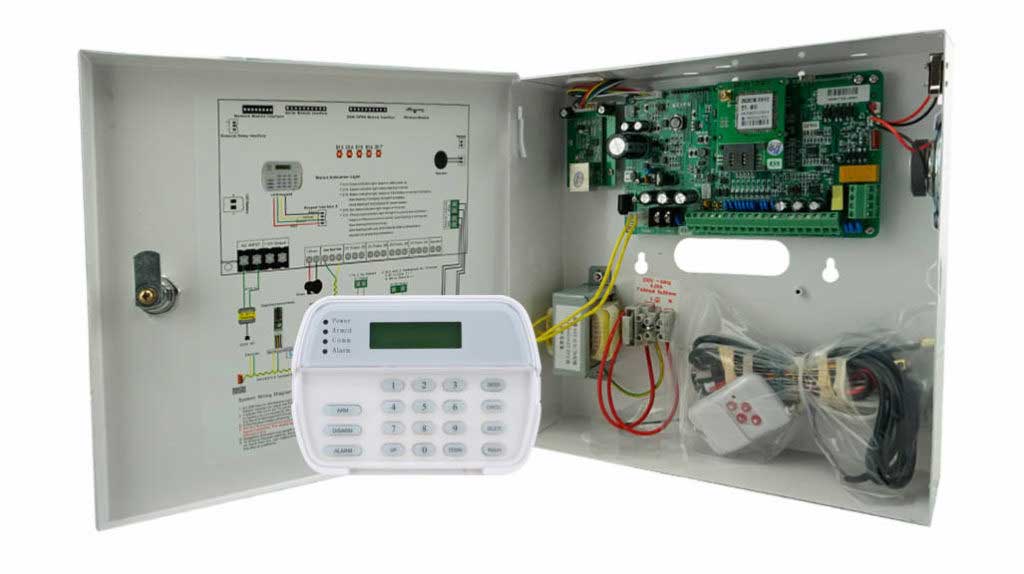
The burglar alarm control panel—often referred to as the alarm host—is the central processing unit of a wireless intrusion alarm system. It receives, verifies, and manages signals from different wireless detectors. The control panel handles alarm reporting, supervises detector status, validates tamper events, manages encryption keys, and communicates with monitoring centers or mobile apps. A professional-grade burglar alarm control panel typically supports multiple wireless zones, signal strength analysis, and dual-path communication options.
Types of Wireless Detectors
Wireless detectors serve specific intrusion detection and safety functions. Common types include:
- Wireless PIR Motion Detectors: Detect human movement using infrared sensing; widely used in hallways, warehouses, offices, and open areas.
- Wireless Door/Window Magnetic Contacts: Monitor perimeter entry points through reed switches.
- Wireless Glass Break Detectors: Detect acoustic or shock signatures associated with glass breaks.
- Wireless Smoke, Heat, and CO Detectors: Provide life safety monitoring alongside intrusion detection.
- Wireless Vibration or Shock Sensors: Used on safes, windows, and walls to detect forced entry attempts.
Each type supports different transmission intervals, supervision signals, tamper reporting methods, and pairing mechanisms.
Key Technologies Behind Wireless Alarm Systems
Modern burglar alarm control panels and wireless detectors commonly use:
- RF transmission (315/433/868/915 MHz depending on region)
- Spread-spectrum or FHSS (Frequency Hopping Spread Spectrum)
- Encrypted communication (AES-based)
- Mesh-capable networking for some proprietary protocols
- Zigbee or Z-Wave integration in smart security ecosystems
Compatibility between the control panel and the wireless detector is crucial. Mismatched frequency bands, encryption keys, or protocol types will lead to failures during enrollment or cause unstable communication.

III. Step-by-Step Guide to Connecting Wireless Detectors
1. Preparation Before Connection
Before enrolling a wireless detector into the burglar alarm control panel, verify:
- Power availability: Ensure the panel has stable mains power and battery backup.
- Detector battery level: Install fresh batteries in the detector—low battery during pairing can cause failed enrollment.
- Compatibility: Confirm that the detector supports the same wireless protocol and frequency as the panel.
- Environmental suitability: Check that temperature, humidity, and mounting location align with the detector’s specifications.
- Clear RF environment: Avoid pairing near strong interference sources like Wi-Fi routers or metal cabinets.
This preparation significantly improves pairing success and long-term wireless stability.
2. Enrolling Wireless Detectors to the Control Panel
Although different manufacturers implement unique menu structures, the core steps to connect wireless detectors to a burglar alarm control panel are similar:
Step-by-Step Enrollment Process
- Power on the control panel and enter its programming or zone enrollment mode.
- Select a wireless zone (e.g., Zone 01 for a PIR, Zone 02 for a door contact).
- Trigger the detector to send its unique ID to the panel:
- Open the tamper switch, or
- Press the test button, or
- Remove the battery tab to power it for the first time.
- Once triggered, the panel typically displays:
- The device ID
- Signal strength
- Device type
- Confirm the enrollment, save the configuration, and exit programming mode.
- Label the zone with a meaningful description such as “Warehouse Rear Door Contact”.
Variations for Popular Brands
- Honeywell/Resideo: Enrollment via auto-enroll or manual serial number entry.
- DSC: Zone learning through Wireless Enrollment Mode using tamper activation.
- Ajax, Pyronix, Texecom, UTC/Interlogix, Athenalarm, etc.: Use app-based or keypad-based learning.
3. Testing the Wireless Connection
After pairing, functional testing is critical to ensure reliable performance.
Testing Methods
- Walk test for PIR detectors
- Open/close test for magnetic contacts
- Signal strength measurements using the panel’s diagnostics
- Simulated intrusion events to validate alarm reporting
Troubleshooting Common Issues
- Weak signals → reposition the detector or install repeaters
- Interference → move away from Wi-Fi routers or metal surfaces
- Frequent communication loss → replace batteries or re-enroll the device
- False alarms → adjust sensitivity or relocate the detector
IV. Important Considerations and Best Practices
1. Security and Encryption
Professional wireless burglar alarm control panels must use encrypted communication to prevent signal spoofing, replay attacks, or jamming attempts.
Relevant standards include:
- EN 50131 Grade 2/3 requirements for wireless intrusion systems
- UL 639 Intrusion-Detection Units
Always choose wireless detectors that support encryption matching the control panel’s protocol.
2. Placement and Range Optimization
For optimal wireless detector performance:
- Avoid placing detectors near large metal objects, steel doors, or industrial machinery.
- Maintain line-of-sight where possible to maximize RF range.
- Install PIR detectors away from air vents, moving curtains, or heat sources.
- Ensure magnetic contacts have correct alignment and gap tolerance.
These practices significantly reduce false alarms and improve signal stability.
3. Maintenance and Upgrades
Ongoing maintenance improves system reliability:
- Replace detector batteries based on manufacturer guidelines.
- Update panel firmware to patch vulnerabilities or improve RF stability.
- Periodically test RF signal strength and supervision reports.
- Plan detector scalability when expanding large wireless alarm networks.
These steps are critical for procurement teams managing long life-cycle security deployments.
4. Compliance and Safety
Depending on the site type, ensure compliance with:
- UL fire/life safety rules
- EN 50131 intrusion system classifications
- Local building codes and occupancy safety requirements
Using compliant wireless detectors also supports product certification demands for large-scale corporate procurements.
V. Potential Challenges and Solutions
Wireless burglar alarm installations may face real-world issues:
Challenge: RF Interference from Wi-Fi, Bluetooth, or Machinery
Solution: Change wireless channel (if supported), adjust placement, or add repeaters.
Challenge: Large commercial buildings with long distances
Solution: Use mesh-capable or repeater-ready wireless panels; select long-range detectors.
Challenge: Dense walls or concrete structures
Solution: Conduct RF surveys before installation; install detectors on structural “soft spots.”
Challenge: Device supervision failures
Solution: Check battery levels, correct mounting, and verify antenna orientation.
Real-World Case Scenario
A logistics warehouse experienced intermittent signal loss from wireless PIR detectors installed near heavy steel racks. By relocating detectors 40 cm outward and adding a wireless repeater, the integrator restored stable communication and eliminated false tamper alarms. This optimization approach is typical in large industrial deployments where wireless range can be inconsistent.
VI. Conclusion
Connecting wireless detectors to a burglar alarm control panel is a foundational skill in modern intrusion alarm system deployment. By understanding detector types, preparing correct installation conditions, following proper pairing procedures, and adhering to best practices, technicians and decision-makers can ensure stable, secure, and standards-compliant wireless burglar alarm systems.
For complex projects, always refer to manufacturer documentation and engage certified installers to address site-specific challenges. When evaluating systems for bulk procurement, prioritize professional-grade wireless detectors with encryption, long-range capability, and strong compliance certifications.
Mastering these techniques not only improves operational reliability but also enhances the overall security posture of any wireless alarm deployment.
VII. References
- EN 50131 Intrusion and Hold-Up Alarm Systems — European Standard (CENELEC).
- UL 639 Standard for Intrusion-Detection Units — Underwriters Laboratories.
- Security Industry Association (SIA) — Annual Security Megatrends Report.
- Honeywell/Resideo/Athenalarm Technical Documentation — Wireless Detector Installation Guides.
- DSC (Digital Security Controls) Installation Manuals — Wireless Receiver and Detector Pairing Instructions.
- IEEE Communications Society — Research papers on RF security and wireless interference mitigation.