
Introduction
In commercial and industrial environments, one of the most common causes of false dispatches, security gaps, and unnecessary maintenance visits is poorly programmed burglar alarm zone configurations. A single misclassified motion sensor or an incorrectly assigned entry/exit zone can create blind spots or generate repetitive nuisance alarms that undermine the confidence of end-users and monitoring centers. As buildings become more complex and intrusion detection systems more feature-rich, the need for precise and well-documented zone programming has never been greater.
A burglar alarm zone configuration defines how each detection point behaves and how the control panel interprets triggers across the premises. Proper zone programming ensures that perimeter sensors, interior PIR detectors, glass-break sensors, panic inputs, and 24-hour zones respond exactly as intended—whether during scheduled arming, partial arming, or specialized operating modes. When designed and programmed correctly, these zones form a layered protection strategy that strengthens security, streamlines monitoring, and improves system reliability.
This professional guide walks technicians, product managers, procurement teams, and security decision-makers through best practices for burglar alarm zone programming, covering core concepts, advanced configuration techniques, troubleshooting tips, and compliance considerations. Whether you manage multi-partition commercial facilities, evaluate new intrusion detection systems, or bulk-purchase alarm products, this article provides the technical insights needed to optimize zone performance and reduce long-term operational risk.
1. Understanding Burglar Alarm Zone Types and Their Roles
A successful zone configuration begins with understanding the purpose and behavior of each zone type. Different properties require tailored combinations of sensors and zone assignments to ensure complete and efficient protection.
Key Zone Types in Burglar Alarm Systems
1. Entry/Exit Zones
These zones typically protect main doors or access pathways. They are programmed with entry and exit delays to allow authorized users enough time to arm or disarm the system without triggering alarms. When misconfigured, these zones can cause immediate alarms during legitimate entry—leading to false dispatches.
2. Perimeter Zones (Instant Zones)
Used for windows, external doors, and fences, instant perimeter zones should trigger alarms immediately when armed. They form the first defensive layer and are critical for both residential and commercial security applications.
3. Interior Follower Zones
These PIR motion detector zones activate only when an entry/exit zone has been violated first. This reduces false alarms by allowing authorized movement during entry grace periods. Proper programming here is essential to avoid unwanted triggers in high-traffic interior areas.
4. 24-Hour Zones
Always active, regardless of arming status. Common devices include panic buttons, tamper circuits, and fire sensors. These zones demand careful programming to prevent missed emergency signals.
5. Specialized Zones
Such as glass-break detectors, vibration sensors, safe or vault sensors, and supervised zones for high-risk areas. These require manufacturer-specific sensitivity settings and verification logic.
Practical Considerations for Zone Type Selection
- Conduct complete site surveys to map entry points, restricted areas, and high-value zones.
- Match sensor technology—PIR, dual-tech, magnetic contact, glass-break—to the environment.
- Avoid mixing zone types in shared pathways to prevent inconsistent behavior.
- Use clear naming conventions (e.g., “Warehouse Roller Door Zone 04”) to simplify maintenance.
A properly mapped zone configuration ensures monitoring centers can quickly understand alarm events and dispatch accurately.

2. Step-by-Step Best Practices for Zone Programming
Programming burglar alarm zone configurations requires structured procedures, attention to detail, and awareness of the building’s operational processes. Below are key steps used by experienced installers to ensure optimal setup.
Step 1. Perform a Detailed Site Assessment
Before entering programming mode, inspect the site:
- Identify entry points, high-security areas, and sensitive zones.
- Confirm sensor compatibility with the alarm panel (wired or wireless).
- Assess environmental factors such as HVAC vents, reflective surfaces, or pet activity that may affect PIR sensitivity.
- Document device locations and cabling routes for future reference.
Step 2. Assign Logical Zone Numbers and Descriptions
Zone numbering should follow a natural layout:
- Low numbers for main entry points
- Middle ranges for perimeter and interior devices
- Upper ranges for auxiliary or supervised zones
Clear descriptors make troubleshooting and remote monitoring far easier.
Step 3. Configure Zone Response Types
Program each zone according to its function:
- Delay 1 / Delay 2 for staged entry routes
- Instant for perimeter windows or doors
- Follower / Interior Stay for motion detectors
- 24-Hour Audible or Silent for panic zones
- Supervised zones for critical assets or power-sensitive devices
Matching the response type to the real-world use case is essential for system integrity.
Step 4. Enable Cross-Zoning and Alarm Verification (Where Applicable)
Cross zoning reduces false alarms by requiring two different sensors to activate within a specified time window. This is useful for:
- Large warehouses
- Outdoor perimeter sensors
- High-ceiling spaces prone to airflow disturbances
Alarm verification logic, depending on panel capability, can include double-knock programming or time-based reactivation filters.
Step 5. Program Bypass and Override Options
Technicians should ensure that end-users cannot unintentionally bypass critical zones. For commercial systems:
- Disable bypassing for essential perimeter sensors
- Allow controlled bypasses for interior motion zones during maintenance
- Log bypass events in the system history for auditing
Step 6. Test, Document, and Validate
After programming:
- Perform walk-tests for every zone
- Verify entry/exit timing
- Validate cross-zone logic
- Confirm monitoring center signal formats
- Save programming backups where available
Problems such as overlapping detection areas or delayed motion triggers are best identified during interactive testing.
3. Integrating Zones with the Overall Security Ecosystem
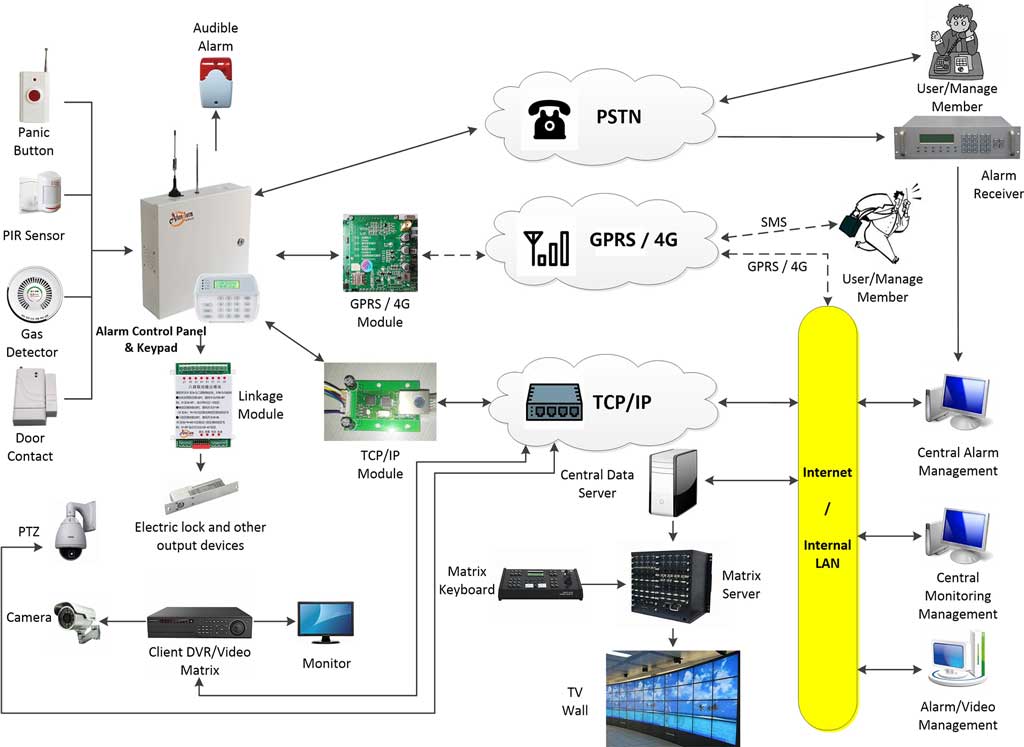
Modern burglar alarm systems rarely operate in isolation. Integrating zone configurations into broader security networks enhances protection and efficiency.
System Integration Considerations
1. Central Monitoring and Reporting
Ensure all zones communicate using standardized formats (e.g., Contact ID, SIA format). Properly labeled signals allow monitoring centers to interpret alarms quickly and reduce dispatch time.
2. Smart Building Automation
Many advanced systems allow zone-triggered automation:
- Lights turning on during zone violations
- Access control lockouts
- CCTV camera cueing
- Mobile notifications for facility managers
These integrations require precise zone mapping.
3. Scalability for Multi-Site or Multi-Partition Environments
Commercial buildings with multiple tenants or separate departments often require:
- Partition-specific arming profiles
- User permissions
- Schedules for auto-arming
Procurement teams should evaluate products based on their zone scalability and partitioning flexibility.
Testing and Maintenance Protocols
- Conduct quarterly zone walk-tests
- Update firmware to support new zone logic functions
- Reassess high-risk zones annually as layouts change
A well-maintained zone configuration significantly reduces false alarm rates and improves system longevity.
4. Compliance and Safety Considerations
Compliance with industry standards ensures consistent performance and reduces legal exposure.
Key Industry Standards
- UL 681 – Installation and Classification of Burglar and Holdup Alarm Systems
- EN 50131 – European standard governing intrusion alarm systems
- IEC 62642 – International security system standard
- SIA CP-01 – False alarm reduction guidelines
These standards influence how zones should be programmed, supervised, and tested.
Risk Reduction and Accountability
- Misconfigured zones may lead to negligence claims in the event of unauthorized access.
- Ensure all 24-hour or panic zones comply with local emergency reporting regulations.
- For connected systems, implement data protection practices that meet GDPR or equivalent standards.
Training and Documentation
- Maintain detailed zone programming charts for technicians.
- Train facility managers to interpret zone events and manage bypass permissions safely.
Conclusion
Mastering burglar alarm zone configurations is essential for delivering reliable, scalable, and compliant intrusion detection solutions. Properly programmed zones reduce false alarms, improve monitoring accuracy, and enhance overall security efficiency. By conducting thorough site assessments, assigning the right zone types, leveraging advanced programming techniques, and ensuring standards compliance, professionals can build systems that perform consistently under real-world conditions.
As intrusion detection technologies evolve, expect more intelligent zone analytics, AI-driven verification, and cloud-linked diagnostics to shape the next generation of burglar alarm zone programming. Now is the time for security professionals, product managers, and procurement teams to adopt best practices that future-proof their installations and deliver long-term value.
References
- UL 681 – Installation and Classification of Burglar and Holdup Alarm Systems. Underwriters Laboratories.
- EN 50131 Series – Alarm Systems: Intrusion and Hold-Up Systems. European Committee for Standardization.
- SIA CP-01 Standard – Control Panel Standards for False Alarm Reduction. Security Industry Association.
- Electronic Security Association (ESA). Reducing False Alarms in Commercial Properties.
- ASIS International. Physical Security Principles.
- National Fire Protection Association (NFPA). Integrated Security Systems Guidelines.
- Security Industry Association. The Alarm Science Manual.