

Introduction
Modern intrusion detection environments generate thousands of alarm events each day, but security teams often struggle to identify which events truly signal a threat. In many commercial facilities, traditional alarm systems still rely heavily on fixed rules, resulting in false positives, delayed responses, and missed early warning signs.
Recent advances in AI-driven predictive alarm event analysis are redefining how security products operate. By learning from historical alarm data and real-time patterns, AI enables intrusion systems to forecast suspicious activities before a breach occurs. This article provides product managers and engineers with a practical, technical roadmap for improving system intelligence using predictive analytics.
1. Understanding Predictive Alarm Event Analysis in Security Systems
What Predictive Analysis Means in Alarm Systems
Predictive analysis in intrusion systems refers to the use of machine learning models to forecast potential alarm events before they escalate. Instead of waiting for sensors to trip, predictive systems identify patterns indicating elevated risk—such as repeated door-probe attempts or unusual late-night movements.
Challenges of Traditional Intrusion Detection
Traditional burglar alarm systems face several common issues:
- High false positives caused by pets, weather interference, or sensor drift
- Slow response times because systems react only after an event
- Lack of contextual awareness—alarms are usually isolated signals without historical correlation
- Difficult configuration requiring manual fine-tuning
How AI Changes the Game
AI transforms reactive alarms into proactive intelligence engines by:
- Analyzing long-term and short-term patterns
- Correlating multi-sensor events
- Learning user behavior and environmental context
- Prioritizing alerts based on predicted threat probability
This shift enables security products to operate more like real-time risk assessment platforms rather than simple noise detectors.

2. The Role of AI in Enhancing Alarm Intelligence
Core AI Technologies Behind Predictive Alarms
AI predictive alarm engines commonly rely on:
- Supervised machine learning for recognizing known threat patterns
- Unsupervised modeling to discover anomalies never seen during training
- Time-series forecasting (e.g., LSTM networks) for predicting event likelihood
- Feature extraction algorithms to interpret vibration signals, PIR triggers, or access logs
Integration with Intrusion Detection Hardware
Modern alarm panels and sensors generate continuous streams of data—RF signals, motion patterns, door-open frequencies, temperature changes, and entry schedules. AI processes this live data to detect early-warning anomalies within seconds.
Examples include:
- Identifying repeating micro-motions near restricted areas
- Detecting unusual vibration patterns on windows
- Predicting sensor tampering attempts
Key Benefits
- Up to 30–50% reduction in false alarms (based on commercial building deployments)
- Faster threat identification, reducing response delays
- Improved system reliability, as AI compensates for sensor noise and drift
- Greater value for monitoring centers, thanks to automated event classification
3. AI-Powered Anomaly Detection in Intrusion Systems
Supervised vs. Unsupervised Models
Anomaly detection in intrusion systems typically uses two main methods:
| Method | When to Use | Example |
|---|---|---|
| Supervised learning | You have labeled alarm data (true/false events). | Classifying known intrusion patterns. |
| Unsupervised learning | You have large logs but no labels. | Detecting new tampering or probing behaviors. |
Unsupervised learning—such as Isolation Forest, DBSCAN, and Autoencoders—is particularly effective for identifying rare or long-tail anomalies.
Examples of Detecting Unusual Behaviors
AI can spot subtle signals that traditional systems ignore:
- A window vibration sensor detecting low-frequency tapping every night at 2 a.m.
- A motion detector recording abnormal micro-movements along a facility perimeter
- Repetitive failed attempts to open a service gate outside normal hours
- Temperature anomalies suggesting equipment tampering
These long-tail patterns help prevent breaches by identifying reconnaissance behaviors days before an intrusion attempt.
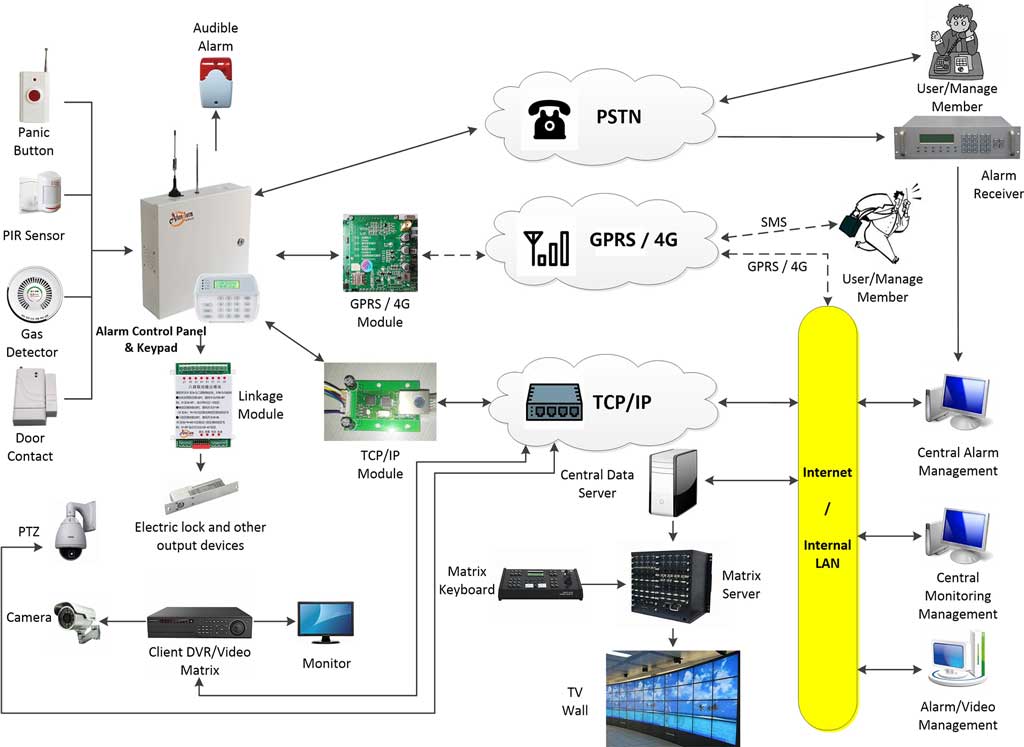
4. Practical Implementation Steps for AI-Driven Predictive Alarms
This section provides a step-by-step, actionable guide for engineers and product managers.
Step 1: Assess Your Current System Architecture
- Identify available data sources: PIR logs, magnetic contact events, vibration readings, network logs.
- Confirm data storage format (CSV, SQL, proprietary logs).
- Check if the alarm panel supports data export, API access, or real-time streaming.
Step 2: Select AI Tools and Build Your Dataset
Recommended datasets include:
- Historical alarm events (minimum 3–6 months)
- Sensor health logs
- Environmental context data (temperature, occupancy patterns)
Common tools:
- Python + scikit-learn for rapid prototyping
- TensorFlow/PyTorch for advanced models
- Lightweight AI engines for embedded alarm panels (e.g., TensorFlow Lite)
Step 3: Train the Predictive Model
Simple pseudocode for training an anomaly detection model:
from sklearn.ensemble import IsolationForest

model = IsolationForest(contamination=0.02)
model.fit(sensor_event_features)

predictions = model.predict(new_event_features)
Step 4: Test and Deploy
- Run A/B testing comparing AI vs. traditional rule-based alerts.
- Validate false alarm reduction with at least 1–2 weeks of live data.
- Deploy on the alarm panel or monitoring center server.
- Enable continuous learning for ongoing model updates.
Step 5: Troubleshooting Common Issues
| Issue | Cause | Fix |
|---|---|---|
| Model bias | Imbalanced data | Re-sample or weight rare events |
| Too many anomalies detected | Threshold too sensitive | Adjust contamination rate |
| Slow processing | Hardware limits | Use lightweight ML models |
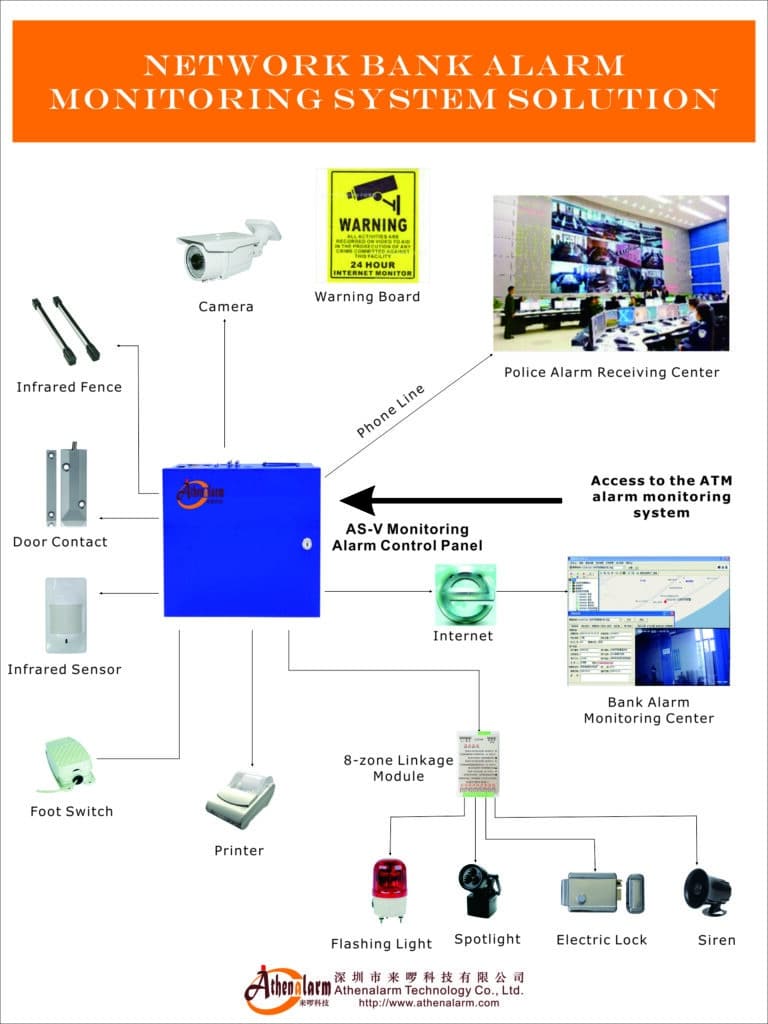
5. Case Studies and Data-Driven Insights
Commercial Building Case Study
A mid-size commercial building deployed an AI predictive alarm engine across 42 sensors. After training on six months of alarm history:
- False alarms decreased by 40% within the first month
- Response time improved by 22% due to automatic event prioritization
- Monitoring center workload dropped by 31%
Industry Insights
Relevant industry standards and research supporting AI-driven alarms include:
- ASIS International: Guidelines on risk assessment and predictive technologies
- NIST SP 800-94: Intrusion detection guidance for cybersecurity integration
- UL 639 & UL 1023: Performance requirements for intrusion detection sensors
- IEEE research papers on anomaly detection algorithms and IoT security
These sources reinforce the growing industry shift toward predictive analytics as a baseline capability for advanced intrusion systems.
Conclusion
AI-powered predictive alarm analysis is transforming how intrusion systems operate. Instead of reacting to sensor triggers, modern systems can analyze behavior patterns, detect anomalies, and forecast potential threats. For product managers and engineers, adopting AI predictive alarm technology offers a measurable path to improving system intelligence, reducing false alarms, and strengthening overall security posture.
Organizations that move early toward predictive intrusion detection gain significant operational and competitive advantages—and set a foundation for the next generation of proactive security systems.