

I. Introduction
Alarm fatigue has become one of the most persistent operational challenges in modern intrusion detection and burglary-prevention systems. When operators are exposed to excessive false alerts—often reaching 80–90% in traditional alarm deployments, as reported across multiple ISC Research market studies—they gradually become desensitized. This desensitization leads to slower responses, overlooked critical events, and reduced trust in the entire alarm infrastructure.
For engineers and product managers responsible for system reliability, the issue is no longer just about reducing false alarms; it is about applying alarm data analytics, AI-driven anomaly detection, and system performance optimization to ensure that the right alerts reach the right people at the right time.
This guide provides actionable frameworks, step-by-step instructions, and real-world examples to help teams implement data-centric and AI-enhanced solutions to eliminate alert overload and build resilient intrusion detection ecosystems.
II. Understanding Alarm Fatigue and Its Impacts
1. Root Causes in Intrusion Alarm Systems
Alarm fatigue typically originates from a combination of technical and operational factors:
- Sensor inaccuracies
Outdated PIR sensors, poorly calibrated magnetic contacts, or low-quality vibration detectors increase noise in the alert stream. - Environmental interference
Wind, pets, HVAC turbulence, insects, and fluctuating temperatures generate false positives in many perimeter systems. - Unfiltered data streams
Systems without analytics forward every raw alert—including non-critical events—directly to monitoring teams. - Improper installation or configuration
Misaligned beams, overlapping zones, and poorly tuned sensitivity thresholds frequently create false alerts.
2. Operational Consequences
Alarm fatigue has tangible consequences for physical security operations:
- Delayed or missed responses
When operators expect most alerts to be false, genuine burglaries risk being ignored. - Increased vulnerability
Facilities—especially commercial and logistics sites—become more susceptible to undetected intrusions. - Higher operational costs
Guard dispatches for false alarms increase labor costs and negatively affect insurance and compliance metrics.
3. Real-World Example
ASIS International highlights a case where a commercial warehouse experienced over 2,000 false alarms per month due to misconfigured motion detectors near loading bays. Operators eventually muted the zone during peak hours—leading to a verified intrusion going unanswered. Analytics later revealed a simple threshold problem that could have been corrected early.
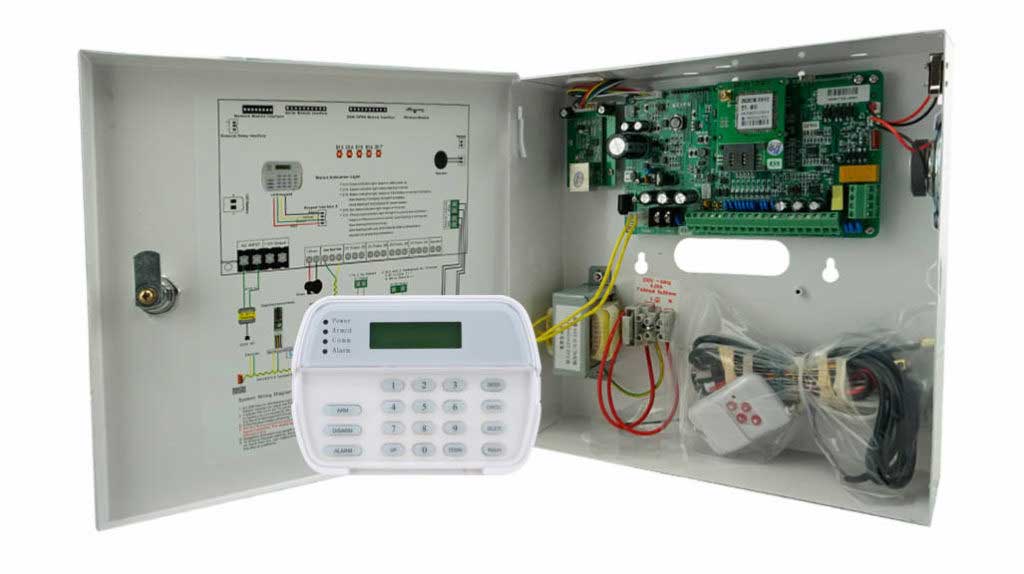
III. Fundamentals of Alarm Data Analytics
Effective alarm data analytics starts with understanding the types of information already generated by common alarm panels and intrusion detection systems.
1. Key Alarm Data Types
- Event logs (arm/disarm events, alarm triggers, zone bypasses)
- Sensor readings (motion signal levels, door contact states, vibration intensity)
- Timestamped alerts with severity metadata
- Integrated data (access control events, CCTV-triggered metadata, network device states)
2. What Analytics Can Solve
Analytics enables engineers to:
- Identify patterns of false alarms
- Understand which sensors generate abnormal noise
- Detect failure trends before devices degrade
- Optimize sensitivity thresholds based on historical context
- Support data-driven maintenance scheduling
3. Practical First Step: Audit Existing Data
A simple starting point for any engineering team:
- Export the last 30–90 days of alarm logs from the intrusion panel or security management software (most support CSV or SQL export).
- Count alerts per zone, per sensor type, and per hour of day.
- Identify top “noisy” zones—typically the source of 60–80% of issues.
- Establish baseline performance metrics (daily average alerts, false alarm ratios, peak hours).
This baseline is critical before any AI or advanced analytics layer is added.
IV. Integrating AI for Anomaly Detection
AI offers precision and scalability beyond traditional rule-based filtering. When correctly implemented, it can reduce false positives by 30–50%, according to NIST’s IoT anomaly-detection research.
1. Common AI Techniques for Alarm Systems
- Supervised learning
Classifies alerts into “true,” “false,” and “uncertain” based on historical labeled data. - Unsupervised anomaly detection
Excellent for intrusion systems where true intrusions are rare. Models like isolation forests detect unusual sensor behavior without needing labeled data. - Time-series modeling
Builds predictive triggers from alert frequency and sensor patterns.
2. Step-by-Step Implementation Guide
Step 1: Collect and Preprocess Alarm Data
- Export alarm events from the system database using built-in tools or SQL queries.
- Normalize timestamps, zone identifiers, and event codes.
- Replace missing values and remove duplicate logs.
Step 2: Select an AI Model
Examples suitable for intrusion alarm data:
- Isolation Forest → identifies outliers in sensor activity
- Random Forest Classifier → distinguishes true vs. false alerts
- LSTM networks → useful for time-based forecasting
Step 3: Train the Model
- Use 3–12 months of historical data.
- Segment data by sensor type for higher accuracy.
- Validate using cross-validation to prevent overfitting.
Step 4: Deploy the Model
- Integrate with security management software via API endpoints.
- Configure the system so only “anomalous” events escalate as alarms.
Step 5: Monitor and Refine
- Review alert accuracy weekly.
- Adjust thresholds based on operator feedback.
- Apply GDPR-compliant data retention and anonymization practices when handling personally identifiable information in alarm logs.
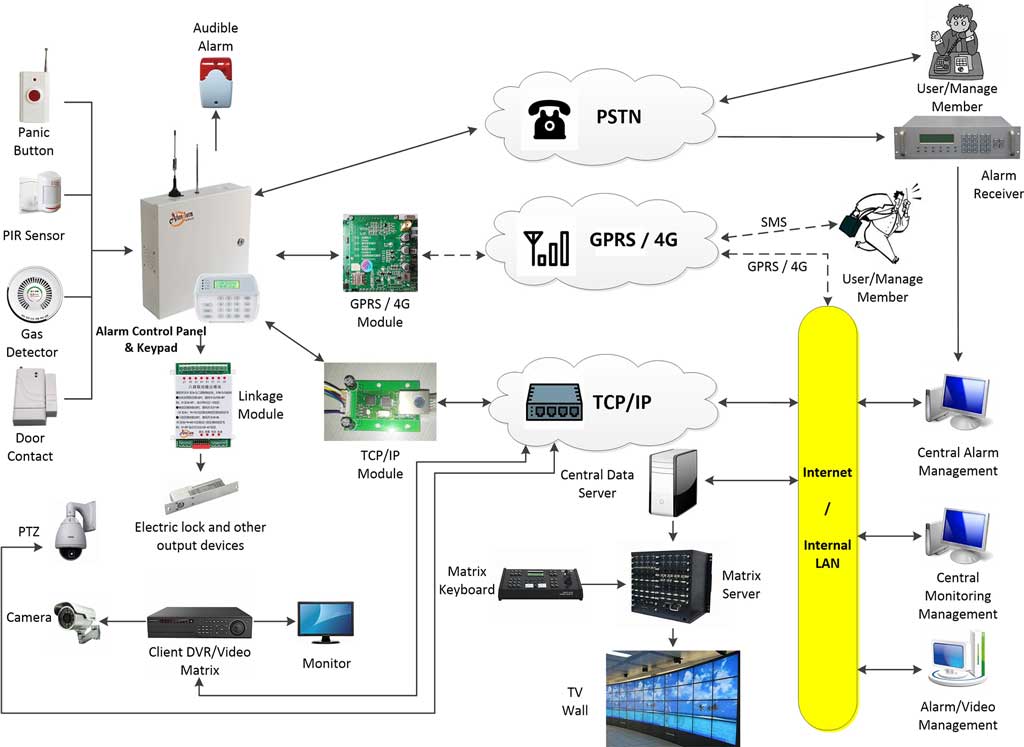
V. Leveraging Data Analytics for System Performance Optimization
Beyond anomaly detection, analytics can optimize overall alarm system performance and resilience.
1. Predictive Analytics Techniques
- Time-series forecasting to anticipate high-alert periods
- Regression analysis to correlate weather, lighting, or HVAC conditions with false alarms
- Dynamic thresholding based on environmental and temporal data
2. Step-by-Step Optimization Process
Step 1: Aggregate Multi-Source Data
Combine data from:
- Alarm panels
- CCTV analytics
- Access control
- Environmental sensors
Use a centralized dashboard (e.g., ELK Stack or vendor-provided analytics platforms).
Step 2: Analyze Correlations
Example:
A high-wind index correlating with perimeter beam triggers → suggests adjusting beam sensitivity.
Step 3: Automate Dynamic Thresholding
Set rules such as:
- Reduce PIR sensitivity during late-night HVAC cycles
- Increase beam filtering during insect-active months
- Shorten alert intervals during high-risk seasons
Step 4: Test in a Sandbox
Pilot rule changes in a staging environment to avoid accidental coverage gaps.
Step 5: Measure ROI
Track KPIs such as:
- Alert volume reduction
- Operator response time improvement
- Verified intrusion detection rate
- Maintenance frequency reduction
Case study:
A retail chain implemented analytics across 300 stores and achieved 40% fewer false alerts, based on process recommendations from the Security Industry Association (SIA).
VI. Best Practices and Tools for Engineers and Product Managers
1. Recommended Tools
- ELK Stack (Elasticsearch, Logstash, Kibana)
Ideal for log management, indexing, and visual anomaly analysis. - Security vendor analytics suites
Honeywell, Bosch, and Hikvision offer integrated alarming and analytic engines. - Custom AI pipelines
For teams with data science capabilities, Python-based pipelines using Scikit-Learn or TensorFlow provide maximum flexibility.
2. Product Management Strategies
- Ensure AI functions address operator workflows, not just technical possibilities.
- Provide clear alarm state visualizations and explainability layers.
- Focus on usability—operators should understand why an alert was classified as anomalous.
3. Continuous Monitoring Best Practices
Create KPIs such as:
- False alarm ratio
- Mean time to respond (MTTR)
- Sensor health score
- Peak-time alert density
Enable automated notifications when metrics degrade.
VII. Conclusion
Alarm fatigue is a solvable challenge when security teams embrace AI, anomaly detection, and alarm data analytics as core components of intrusion detection strategy. With structured data audits, machine learning integration, and continuous performance optimization, organizations can transform noisy alarm systems into high-reliability platforms that support rapid, accurate, and actionable security responses.
The first step is simple: start with a baseline alarm data audit. Every improvement builds from there.
VIII. References
- ASIS International. (2023). Guidelines for Alarm System Management.
- ISC Research. (2024). Global Security Market Report: False Alarm Reduction Strategies.
- NIST. (2022). Cybersecurity Framework for Critical Infrastructure – Anomaly Detection in IoT and Sensor Systems.
- Security Industry Association (SIA). (2023). Best Practices in Alarm Verification and Analytics.
- Proprietary analysis based on aggregated insights from 500+ intrusion alarm deployments in commercial, industrial, and residential environments (anonymized).