

Reliable communication is the backbone of any intrusion detection and alarm monitoring system. For decades, monitoring centers and alarm manufacturers have depended on landlines, 2G/3G, and later 4G cellular networks. While these technologies enabled wide-scale deployment, they also introduced persistent challenges: transmission latency, network congestion during peak events, susceptibility to jamming, and limited bandwidth for rich data such as video or multi-sensor diagnostics.
5G connectivity represents a structural shift rather than a simple speed upgrade. With ultra-low latency, high device density, and advanced network management capabilities, 5G alarm monitoring directly addresses the most critical reliability gaps in traditional alarm communication. This whitepaper examines how 5G-enabled intrusion detection communication is transforming alarm monitoring reliability, reducing false alarms, and enabling faster, more confident responses for monitoring centers and alarm manufacturers.
The Evolution of Alarm Communication Technologies
From Wired Lines to Cellular Networks
Early alarm systems relied on PSTN landlines, which offered stable connections but were easy to cut and slow to transmit detailed alarm data. The industry’s move to cellular communication improved redundancy, yet 3G and 4G systems still suffer from:
- Variable latency during network congestion
- Limited upstream bandwidth for video or high-frequency sensor data
- Exposure to localized outages or intentional interference
As alarm systems evolved from simple contact sensors to IP-based, multi-sensor platforms, communication reliability became the limiting factor rather than sensor accuracy.
Why 5G Changes the Equation
5G was designed for mission-critical communications, not just consumer smartphones. Key technical capabilities directly relevant to alarm monitoring include:
- Ultra-low latency (often measured in single-digit milliseconds in real-world deployments)
- Network slicing, enabling dedicated virtual channels for security traffic
- Massive IoT support, allowing thousands of alarm devices to remain connected without performance degradation
- Improved spectral efficiency, which enhances reliability in dense urban environments
For intrusion detection systems, this means alarm signals are delivered faster, more consistently, and with richer contextual data.
4G vs. 5G for Intrusion Detection Communication
| Parameter | 4G LTE | 5G |
|---|---|---|
| Typical latency | 30–50 ms | <10 ms |
| Device density | Limited | Massive IoT support |
| Network prioritization | Basic QoS | Advanced network slicing |
| Video verification | Constrained | Real-time, high-resolution |
| Suitability for mission-critical alarms | Moderate | High |
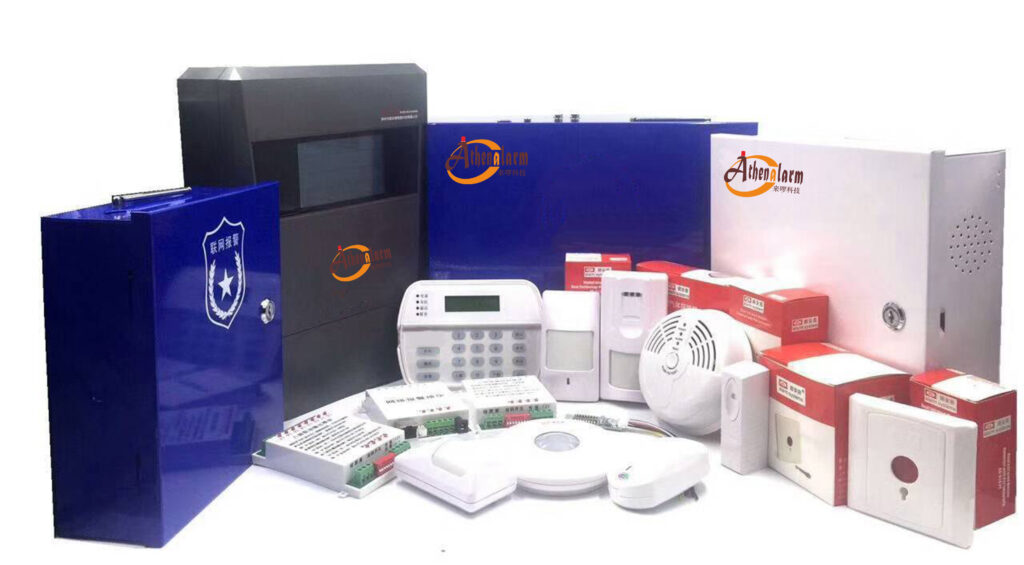
Key Benefits of 5G in Alarm Monitoring
Improved Communication Reliability
One of the most persistent pain points for monitoring centers is delayed or dropped alarm signals during network congestion, such as storms, power outages, or large public events. 5G alarm monitoring improves reliability through:
- Redundant transmission paths, reducing single points of failure
- Edge computing, allowing preliminary alarm validation before data is sent upstream
- Priority traffic handling, ensuring intrusion alarms are transmitted ahead of non-critical data
Practical Integration Steps for Alarm Manufacturers
- Hardware assessment
Confirm that control panels and communicators support certified 5G modules with fallback to 4G. - Firmware optimization
Update device firmware to support low-latency transmission modes and adaptive bandwidth usage. - Lab and field testing
Simulate congestion scenarios to validate alarm delivery times and retry mechanisms. - Certification and compliance
Ensure compliance with regional regulatory and carrier requirements before mass deployment.
Enhanced Intrusion Detection Capabilities
5G enables alarm systems to transmit more than simple event codes. With higher bandwidth and lower latency, systems can support:
- Real-time video verification
- Multi-sensor correlation (motion, audio, access control, environmental sensors)
- Continuous device health monitoring
These capabilities directly reduce false alarms by giving monitoring operators immediate context.
Industry Case Insight
According to industry reports cited by organizations such as the Electronic Security Association, monitoring centers that adopted 5G-enabled alarm communication with video verification observed response time reductions of up to 40%, primarily due to faster alarm confirmation and fewer manual verification steps. Faster confirmation translates into higher dispatch accuracy and improved customer trust.
Scalability for Monitoring Centers
As monitoring portfolios grow, scalability becomes a reliability issue. Legacy networks struggle when thousands of devices report simultaneously. 5G addresses this through massive IoT connectivity.
Actionable Steps for Monitoring Operators
- Bandwidth planning
Allocate dedicated slices or priority profiles for alarm traffic. - Central station software integration
Ensure monitoring platforms can ingest richer data streams without operator overload. - Load testing
Stress-test the system under peak alarm volumes to validate stability.
By proactively managing network and software integration, monitoring centers can scale without sacrificing response quality.
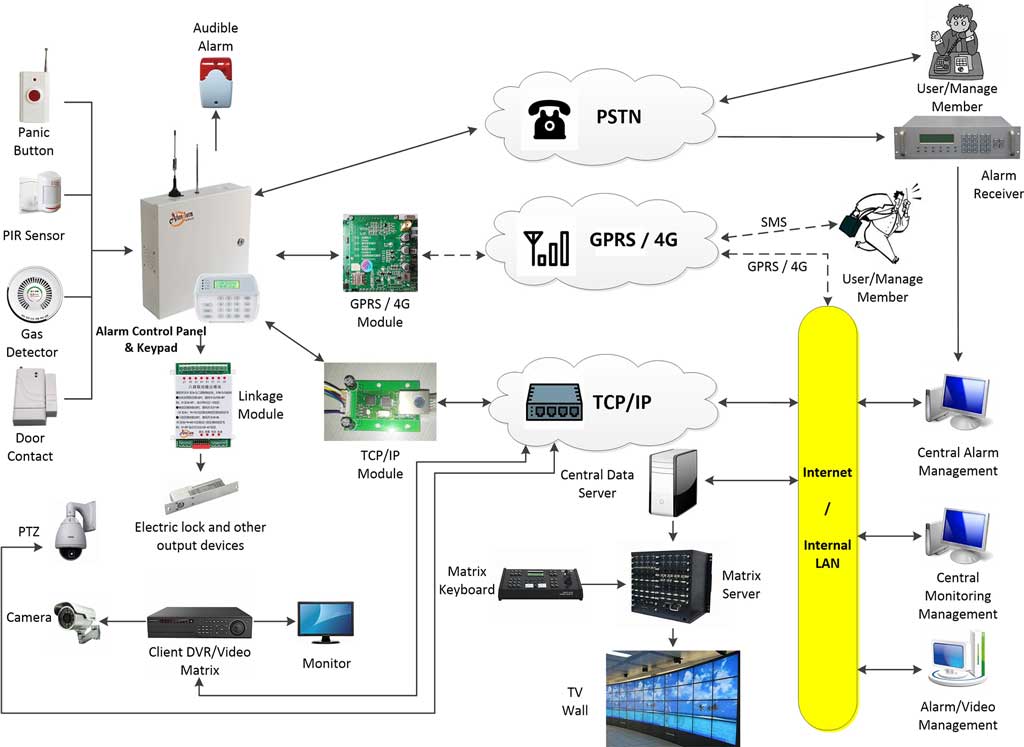
Challenges and Solutions in Implementing 5G Alarm Systems
Coverage and Deployment Constraints
While 5G coverage continues to expand, gaps still exist, particularly in rural or industrial areas.
Mitigation strategy:
Deploy hybrid communicators with automatic 4G/5G fallback to maintain uninterrupted intrusion detection communication.
Cybersecurity Risks
Higher data throughput increases the attack surface if systems are not properly secured.
Best practices include:
- End-to-end encryption using standards such as AES-256
- Secure authentication between alarm devices and monitoring servers
- Regular penetration testing and firmware patching
Cost Considerations
Initial hardware and integration costs can be higher than legacy solutions.
Long-term offset:
Improved reliability reduces truck rolls, false dispatches, and customer churn—delivering measurable operational savings over time.
Real-World Applications and Data-Driven Insights
Industry pilots documented by GSMA and the Security Industry Association indicate that properly engineered 5G alarm monitoring deployments can achieve uptime levels approaching 99.999% in urban environments. Key measured improvements include:
- Significant latency reduction for alarm transmission
- Higher success rates for first-attempt message delivery
- Fewer service calls related to communication failures
ROI Framework for Alarm Manufacturers
To assess return on investment:
- Calculate current costs related to false alarms and communication failures
- Estimate reductions enabled by faster verification and higher reliability
- Factor in extended device lifespan and reduced support overhead
For many manufacturers, communication reliability improvements alone justify the transition.
Conclusion
5G alarm monitoring marks a fundamental shift in how intrusion detection systems communicate with monitoring centers. By delivering lower latency, higher reliability, and richer data exchange, 5G-enabled intrusion detection communication directly addresses the industry’s most persistent operational challenges.
For monitoring centers, this means faster response times and improved decision-making. For alarm manufacturers, it enables more advanced, differentiated products built on dependable communication foundations. As coverage expands and costs normalize, 5G is set to become the new baseline for reliable alarm monitoring.
Organizations that begin evaluating and integrating 5G today will be best positioned to deliver resilient, future-ready intrusion detection solutions in an increasingly demanding security landscape.
References
- GSMA Intelligence – 5G and IoT: Enabling Mission-Critical Communications
- Electronic Security Association (ESA) – Alarm Communication and Monitoring Best Practices
- Security Industry Association (SIA) – Advances in Intrusion Detection Technologies
- IEEE Transactions on Wireless Communications – Peer-reviewed research on low-latency and ultra-reliable wireless networks