

I. Introduction
A regional retail chain experiences repeated after-hours break-ins—not because alarms fail to trigger, but because alerts arrive too late for effective intervention. The root cause is not sensor quality, but where alarm intelligence resides. This scenario is increasingly common as security consultants and system architects weigh cloud intelligent alarms against local decision-making in alarm systems.
At the core of this debate is a fundamental architectural question: should intrusion detection decisions be made remotely in the cloud using centralized analytics, or locally on-site using embedded processing? Cloud intelligent alarms rely on remote servers to aggregate data and apply AI-driven analysis, while local alarm intelligence executes detection logic directly within control panels or edge devices.
This comparison guide is designed to help security consultants and system architects make informed decisions based on response speed, reliability, scalability, data protection, and total cost of ownership. By addressing real-world pain points—false alarms, network dependency, integration complexity, and regulatory compliance—this article provides practical, actionable insights rather than theoretical discussion.
The key conclusion is straightforward: there is no universally superior model. The optimal choice between cloud vs. local decision-making in alarm systems depends on operational context, risk tolerance, and long-term system strategy.
II. Understanding Cloud Intelligent Alarms
What Are Cloud Intelligent Alarms?
Cloud intelligent alarms are intrusion detection systems where sensor data—motion, door contacts, glass break, video analytics—is transmitted to cloud platforms for processing. Advanced algorithms analyze patterns across devices, sites, and timeframes to determine whether an event constitutes a real intrusion.
These systems commonly leverage AI and machine learning to improve accuracy over time, using aggregated data from thousands of deployments rather than a single site.
Key Advantages of Cloud-Based Alarm Intelligence
1. Scalability for Multi-Site Deployments
Cloud architectures excel in large or distributed environments such as retail chains, logistics facilities, and managed security portfolios. New alarm panels or sensors can be onboarded centrally without redesigning local logic, making cloud intelligent alarms well-suited for rapid expansion.
2. Advanced Analytics and False Alarm Reduction
False alarms remain one of the most costly challenges in the intrusion alarm industry. According to an ISC West 2023 industry analysis, AI-assisted cloud alarm platforms demonstrated up to 40% reduction in false positives by correlating sensor data, historical behavior, and environmental context. This directly improves police response acceptance and reduces operational penalties.
3. Centralized Remote Management
Security consultants benefit from unified dashboards that allow remote configuration, firmware updates, and health monitoring. For organizations managing dozens or hundreds of alarm systems, cloud-based management significantly lowers maintenance overhead.
Limitations and Risks
Despite their strengths, cloud intelligent alarms introduce dependencies that must be carefully evaluated:
- Latency and Connectivity Risk: Alarm decisions depend on stable network connections. In areas with unreliable broadband or cellular coverage, response delays can exceed acceptable thresholds.
- Cybersecurity Exposure: Centralized platforms increase the attack surface, requiring strong encryption, identity management, and continuous monitoring.
- Ongoing Subscription Costs: Cloud services typically involve recurring fees that accumulate over the system lifecycle.
Practical Implementation Steps
For architects considering cloud intelligent alarms, a controlled deployment process is essential:
- Select a security-focused IoT platform designed for alarm systems, ensuring support for encrypted data transmission and device authentication.
- Configure APIs for real-time sensor data upload, defining thresholds and event categories relevant to intrusion detection.
- Simulate intrusion scenarios—forced entry, motion during armed states—to measure end-to-end response time.
- Validate escalation workflows to monitoring centers and mobile clients under peak network load.
Case Insight: Retail Deployment
In a multi-store retail deployment analyzed by our team, migrating from purely local logic to a cloud-assisted alarm model reduced average alarm verification time by 25%, primarily due to centralized correlation of motion and access events. The improvement was most significant in stores with predictable after-hours activity patterns.

III. Exploring Local Alarm Intelligence
What Is Local Decision-Making in Alarm Systems?
Local alarm intelligence refers to systems where intrusion detection decisions are made entirely on-site. Control panels or edge processors analyze sensor inputs and trigger alarms without relying on external connectivity. This model has long been the foundation of traditional burglary alarm systems.
Key Advantages of Local Alarm Intelligence
1. Immediate Response and High Reliability
Because processing occurs locally, response times are typically sub-second, unaffected by network congestion or outages. This is critical in high-risk environments such as financial institutions, critical infrastructure, and high-value residential properties.
2. Strong Data Privacy and Regulatory Alignment
Local decision-making minimizes data transmission, supporting compliance with data protection regulations such as GDPR. Sensitive occupancy or behavioral data remains on-site, reducing exposure and audit complexity.
3. Predictable Long-Term Costs
While local systems may require higher upfront hardware investment, they avoid recurring cloud subscription fees. Over a typical 8–10 year alarm system lifecycle, this can result in lower total cost of ownership for single-site installations.
Limitations of Local Processing
- Limited Learning Capability: Local systems lack access to large datasets, making adaptive threat detection more difficult.
- Maintenance Overhead: Firmware updates and logic adjustments require on-site access or secure remote tools.
- Scalability Constraints: Expanding to multi-site deployments often requires manual configuration and duplicated effort.
Practical Implementation Steps
To deploy reliable local alarm intelligence:
- Assess site risk profile and select control panels or edge processors with sufficient computing capacity.
- Install and calibrate intrusion sensors, ensuring correct placement and sensitivity settings.
- Conduct offline intrusion simulations to validate alarm logic accuracy.
- Integrate backup power systems to maintain functionality during outages.
- Document configuration baselines for future audits and maintenance.
Expert Insight
A 2024 ASIS International study comparing local, cloud, and hybrid alarm architectures found that local-only systems achieved the highest reliability scores in disconnected environments, while cloud-assisted systems outperformed in adaptive detection accuracy.
IV. Direct Comparison: Cloud vs. Local Decision-Making in Alarm Systems
| Factor | Cloud Intelligent Alarms | Local Alarm Intelligence |
|---|---|---|
| Response Latency | Dependent on network, typically seconds | Sub-second, deterministic |
| False Alarm Reduction | High with AI correlation | Moderate, rule-based |
| Scalability | Excellent for multi-site | Limited |
| Data Privacy | Requires strong safeguards | Naturally contained |
| Maintenance | Centralized, remote | On-site focused |
| Cost Structure | Lower upfront, ongoing fees | Higher upfront, minimal recurring |
Addressing Common Pain Points with Hybrid Architectures
Many architects now adopt hybrid alarm systems, where local decision-making handles immediate intrusion detection, while cloud platforms provide analytics and fleet management.
Hybrid Setup Steps:
- Configure local panels to trigger primary alarms independently.
- Mirror event data to the cloud for secondary analysis and reporting.
- Define failover logic to ensure local operation during connectivity loss.
- Periodically review cloud analytics to refine local detection rules.
This approach balances speed, resilience, and intelligence.
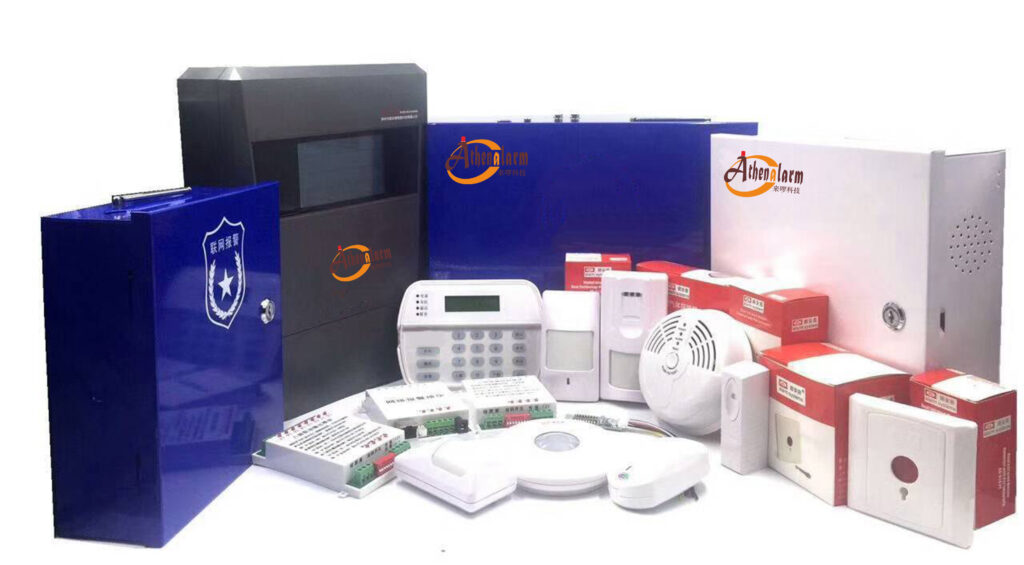
V. Factors to Consider When Choosing an Architecture
Environmental and Network Assessment
Evaluate cellular coverage, broadband stability, and expected downtime. Cloud intelligent alarms are only as reliable as their connectivity.
Budget and ROI Analysis
Calculate total ownership cost by combining hardware, installation, subscriptions, and maintenance over the system lifecycle. For small deployments, local systems often offer better ROI.
Future-Proofing and Technology Trends
Gartner security technology outlooks consistently highlight AI-driven alarm intelligence growth, favoring architectures that can evolve through software updates rather than hardware replacement.
Risk Mitigation and Redundancy
Implement redundancy plans, including backup communication paths and local fallback logic, regardless of architecture choice.
VI. Conclusion
Both cloud intelligent alarms and local decision-making in alarm systems play critical roles in modern intrusion protection. Cloud-based intelligence excels in scalability, analytics, and centralized management, while local alarm intelligence delivers unmatched speed, reliability, and privacy.
For security consultants managing dynamic, multi-site environments, cloud or hybrid models often provide the best balance. For system architects designing high-security or connectivity-limited installations, local decision-making remains indispensable.
The most effective strategy is not ideological, but practical: align alarm intelligence architecture with risk profile, operational constraints, and long-term security objectives. A systematic audit using the evaluation steps outlined above will significantly enhance intrusion detection performance and overall system resilience.