
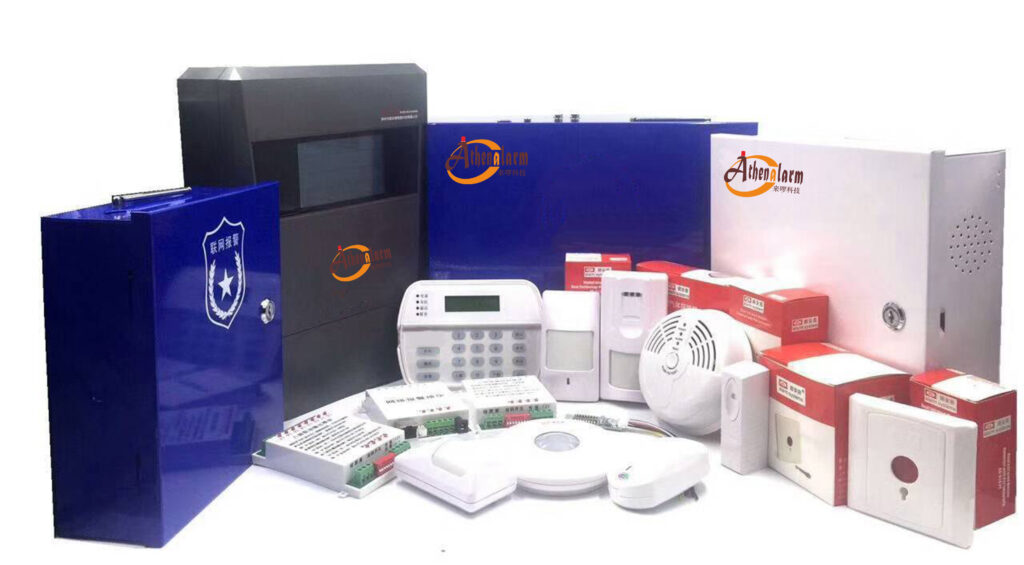
In many intrusion detection deployments, system failures do not happen suddenly—they develop quietly over time. A passive infrared (PIR) detector slowly loses sensitivity due to dust ingress, a standby battery degrades below its effective capacity, or a corroded terminal introduces intermittent resistance on a zone loop. The result is familiar to every engineer and technician: rising false alarms, unexplained troubles, or—worse—missed intrusions.
Predictive maintenance for intrusion detection systems addresses this problem by shifting maintenance from a reactive or time-based model to a data-driven, condition-based approach. Instead of waiting for faults or replacing components on a fixed schedule, predictive maintenance alarms use operational data to forecast failures before they disrupt protection.
This article is written for engineers and technicians working with burglar alarm systems. It explains how predictive diagnostics for burglar alarm components work, which tools are practical today, and how to implement a repeatable workflow that improves reliability, reduces service costs, and supports compliance with standards such as EN 50131.
Understanding Predictive Maintenance in Intrusion Detection
What Predictive Maintenance Means in Alarm Systems
In the context of intrusion detection, predictive maintenance refers to the continuous or periodic analysis of system health indicators—electrical, environmental, and behavioral—to identify abnormal trends. When thresholds are crossed, the system generates predictive maintenance alarms that warn of an impending fault rather than a confirmed failure.
This approach differs fundamentally from:
- Reactive maintenance, where action is taken only after a fault occurs.
- Preventive maintenance, where components are replaced on a fixed schedule regardless of condition.
Predictive maintenance focuses on actual degradation, not assumptions.
High-Risk Burglar Alarm Components
Not all components age at the same rate. Field data consistently shows higher failure probability in the following areas:
- Power subsystems: standby batteries, charging circuits, and power supplies.
- Detection devices: PIR sensors, dual-technology detectors, outdoor beams.
- Transmission paths: wired loops affected by corrosion, wireless links affected by RF noise or antenna detuning.
- Actuators: sirens and sounders with mechanical or piezo element wear.
Environmental exposure—temperature extremes, humidity, vibration, insects—accelerates degradation, especially for outdoor or semi-outdoor detectors.
Predictive Diagnostics Techniques
Practical predictive diagnostics for intrusion systems include:
- Electrical trend analysis: monitoring battery voltage under load, loop resistance drift, and current consumption.
- Signal integrity checks: tracking RF signal strength, packet loss, and supervision intervals in wireless alarms.
- Thermal inspection: identifying overheating power supplies or control panel regulators.
- Behavioral analysis: detecting abnormal alarm patterns, such as repeated activations during stable conditions.
Individually, these indicators are weak. Combined, they provide reliable early warnings.
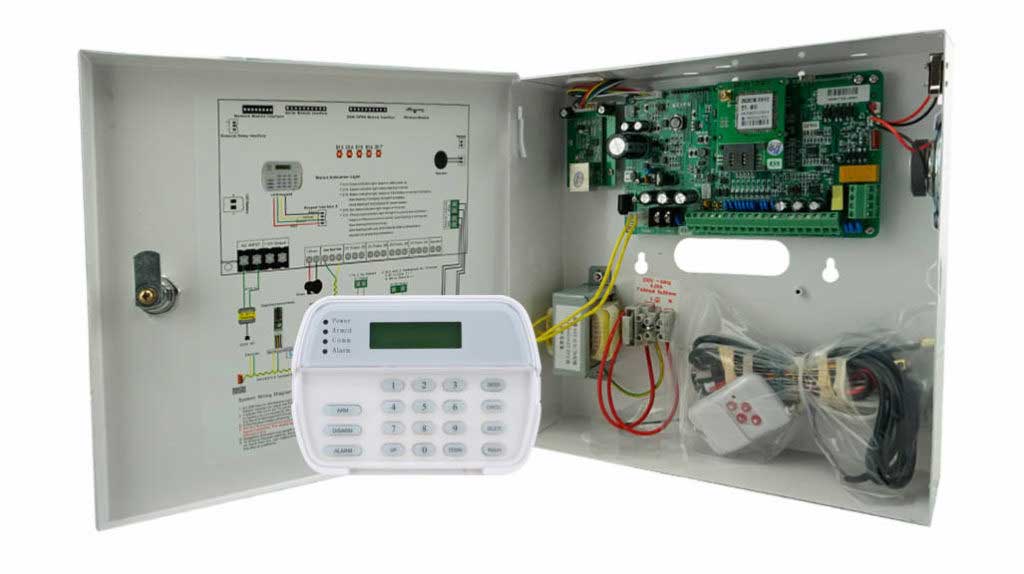
Tools and Technologies for Predictive Diagnostics
Software and Hardware Platforms
Most major alarm manufacturers now offer platforms that support predictive analytics, either directly or via APIs. Common capabilities include:
- Health dashboards for detectors and control panels
- Long-term log analysis of alarms, troubles, and restorals
- Automated alerts when trends exceed defined thresholds
In parallel, IoT-enabled auxiliary sensors—temperature, humidity, power quality—can be added to critical enclosures to enrich diagnostic data.
Data Sources and Integration
Effective predictive maintenance depends on data quality. Typical inputs include:
- Alarm and trouble logs from control panels
- Battery voltage and charge current measurements
- Wireless signal metrics (RSSI, supervision loss)
- Environmental sensor data
- Historical maintenance records
For mixed environments, data from legacy panels can often be normalized using protocol converters or middleware, allowing older wired alarms to participate in modern predictive workflows.
Field-Based Case Analysis
Aggregated industry data from commercial installations shows measurable benefits. In a mid-sized office complex with approximately 180 detection points, introducing predictive diagnostics reduced nuisance alarms by approximately 40% within the first year. The largest gains came from early identification of battery degradation and marginal wireless links—issues that previously triggered repeated service calls without a clear root cause.
Step-by-Step Workflow for Implementing Predictive Maintenance
Step 1: System Assessment and Baseline Audit
Begin with a structured audit of the existing intrusion detection system:
- Inventory all detectors, power supplies, batteries, and communication paths
- Review at least 12 months of alarm and trouble history
- Inspect wiring terminations for corrosion or mechanical stress
- Measure standby battery voltage under load (target: >12 V in standby for typical systems)
- Record last calibration or replacement dates for detectors
This baseline defines what “normal” looks like for your site.
Step 2: Data Collection Setup
Install or enable monitoring for key parameters:
- Enable detailed logging on control panels where available
- Pair wireless detectors with supervision reporting enabled
- Add environmental sensors to enclosures exposed to heat or moisture
For prototyping or test environments, open platforms can be used to collect and visualize data centrally, allowing engineers to validate which indicators are most predictive before scaling.
Step 3: Analytics and Threshold Modeling
Once data flows are stable, define actionable thresholds:
- Battery health alerts when capacity drops below a defined percentage
- Detector sensitivity warnings if response consistency drops below 80%
- Wireless alerts for increasing supervision latency or packet loss
Dashboards should show trends, not just current values. Gradual change is the key signal in predictive diagnostics.
Step 4: Alerting and Response Protocols
Not every prediction requires immediate intervention. Define escalation rules:
- Informational alerts for early drift (email or dashboard notification)
- Maintenance tickets for medium-risk predictions
- Immediate alerts for critical failures affecting system coverage
Clear response procedures prevent alert fatigue and ensure predictions lead to action.
Step 5: Testing and Iteration
Validate the system deliberately:
- Simulate partial obstruction of a PIR detector
- Introduce controlled RF attenuation for a wireless device
- Verify that predictive alerts are generated within the expected timeframe
Refine thresholds based on results. Predictive maintenance improves with iteration.

Common Challenges and Solutions in Burglar Alarm Predictive Maintenance
Data Privacy and Compliance
Alarm logs may contain sensitive operational information. To align with GDPR and similar regulations:
- Minimize personally identifiable data in logs
- Anonymize zone names where possible
- Restrict access to predictive dashboards by role
Security diagnostics should enhance protection, not introduce new risks.
Legacy System Integration
Older wired alarm systems often lack native analytics. Practical solutions include:
- External measurement modules for voltage and loop resistance
- Protocol adapters to extract event logs
- Hybrid architectures combining local processing with centralized analysis
This avoids full system replacement while enabling predictive capabilities.
Cost and Return on Investment
According to recent industry studies, predictive maintenance in physical security environments typically reaches positive ROI within 18 months, driven by reduced service visits, fewer false alarms, and improved system availability. High-risk or high-availability sites benefit fastest.
Expert Insight: Hybrid Architectures
A balanced approach—local processing for critical alerts combined with cloud-based trend analysis—offers resilience and scalability. It also ensures continued operation during network outages, a key consideration for intrusion detection.
Best Practices for Engineers and Technicians
- Training: Formal education in diagnostics and analytics significantly improves outcomes. Industry certification programs help standardize skills.
- Maintenance Scheduling: Use predictive outputs to drive quarterly maintenance plans instead of fixed calendars.
- Environment-Specific Design: Residential systems prioritize simplicity; commercial and industrial systems require environmental hardening and redundancy.
Consistency and documentation are as important as tools.
Conclusion
Predictive maintenance transforms intrusion detection from a reactive necessity into a controlled, optimized process. By applying predictive maintenance alarms and predictive diagnostics for burglar alarm components, engineers and technicians can reduce false alarms, prevent coverage gaps, and extend system lifespan.
The most effective implementations start small: audit one system, enable one predictive indicator, and act on the results. From there, the benefits compound quickly.
As analytics and AI continue to mature, predictive maintenance will become a standard expectation—not an optional upgrade—in professional intrusion detection systems.