
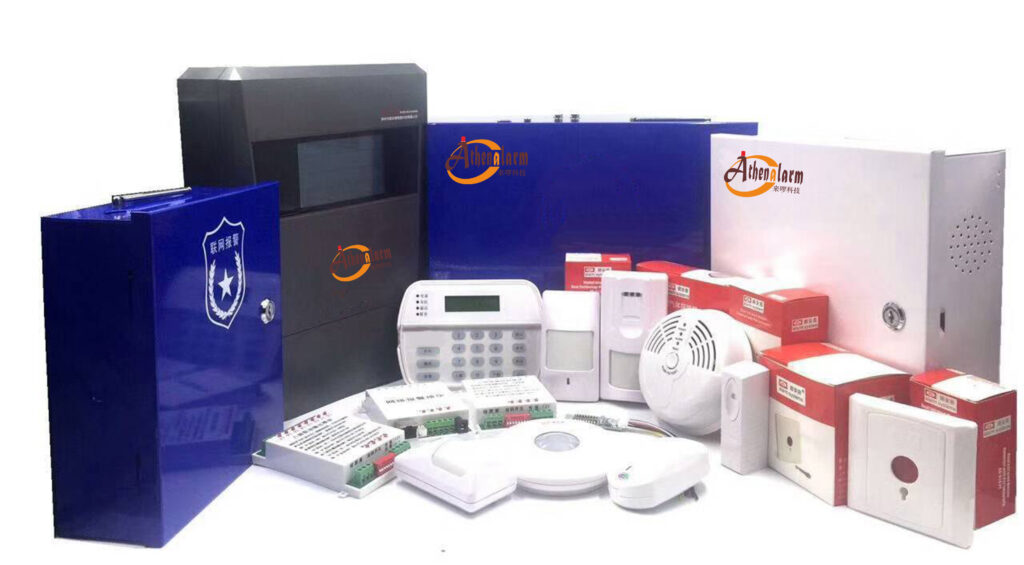
Introduction: Why Burglar Alarm System Installation Still Defines Modern Security
In an age increasingly shaped by AI-driven analytics, cloud-managed platforms, and deeply integrated security ecosystems, burglar alarm system installation remains the foundational pillar of effective intrusion protection. Regardless of how advanced video surveillance, access control, or centralized monitoring platforms may become, the overall reliability of any security infrastructure ultimately depends on how competently its burglar alarm system is designed, installed, configured, tested, documented, and maintained.
For professional buyers across the security value chain—system integrators, distributors, facility managers, security consultants, and enterprise procurement teams—burglar alarm system installation is far from a commodity task. It represents a risk management decision, a regulatory and insurance obligation, and a long-term operational investment that directly affects loss prevention outcomes, liability exposure, and incident response effectiveness.
This guide is written from the perspective of a senior alarm industry professional with hands-on field experience, engineering expertise, and buyer-side accountability. It deliberately avoids consumer-level simplifications and instead provides a practical, technically grounded, end-to-end framework for burglar alarm system installation—rooted in real-world deployment conditions, engineering trade-offs, compliance requirements, and decision-maker responsibility.
If you are responsible for specifying, approving, purchasing, deploying, auditing, or scaling burglar alarm systems, this guide is written for you.
1. Understanding the Role of Burglar Alarm Systems in Professional Security Architecture
1.1 Burglar Alarms as the First Line of Intrusion Defense
A burglar alarm system is not simply a noise-generating device or a regulatory formality. Within professional security architecture, it fulfills three irreplaceable functions:
- Early intrusion detection before physical loss or damage occurs
- Immediate psychological deterrence that disrupts attacker intent and behavior
- Actionable event signaling to occupants, monitoring centers, response teams, and automated systems
When properly installed and configured, a burglar alarm system identifies unauthorized access attempts before intruders reach critical assets, enabling faster response and significantly reducing both loss severity and recovery costs.
1.2 Why Installation Quality Matters More Than Hardware Branding
In professional environments, alarm system failures are rarely the result of defective hardware. In the overwhelming majority of cases, failures stem from design and installation shortcomings, including:
- Incorrect detector placement, coverage gaps, or orientation errors
- Poor zoning logic that obscures actionable intelligence
- Inadequate power supply design and battery sizing
- Improper grounding and insufficient surge protection
- Single-point or weak communication paths
- Incomplete functional testing and inadequate documentation
A premium alarm panel installed poorly will underperform a mid-range system installed correctly. For this reason, burglar alarm system installation must be treated as an engineering discipline, not a mechanical task or box-moving exercise.
2. Pre-Installation Planning: The Most Critical Phase
2.1 Site Risk Assessment and Threat Modeling
Every professional alarm installation begins with a structured risk assessment. Skipping or compressing this phase is one of the most common causes of ineffective alarm systems.
Before any equipment is selected, the following questions must be clearly answered:
- What specific assets require protection (inventory, cash, equipment, data, people)?
- What is the site’s threat profile (opportunistic theft, organized burglary, insider risk)?
- Which intrusion methods are most likely (forced entry, tailgating, internal access)?
- What response actions are required following alarm activation (guard dispatch, police notification, internal escalation)?
A logistics warehouse, a jewelry retailer, a data center, and a corporate office cannot share the same alarm design philosophy—even if they deploy similar hardware.
2.2 Environmental and Structural Analysis
Alarm detectors do not operate in isolation. Installation teams must assess environmental and structural variables that directly influence detection accuracy and system stability:
- Wall and ceiling construction materials (concrete, drywall, steel, glass)
- Ceiling height, open spans, and obstructions
- HVAC airflow patterns and temperature gradients
- Ambient vibration from machinery, elevators, or nearby traffic
- Lighting conditions and direct sunlight exposure
- Dust levels, humidity, and temperature extremes
Ignoring these factors is a leading cause of false alarms, nuisance dispatches, and missed detections.
3. Selecting the Right Burglar Alarm System Architecture
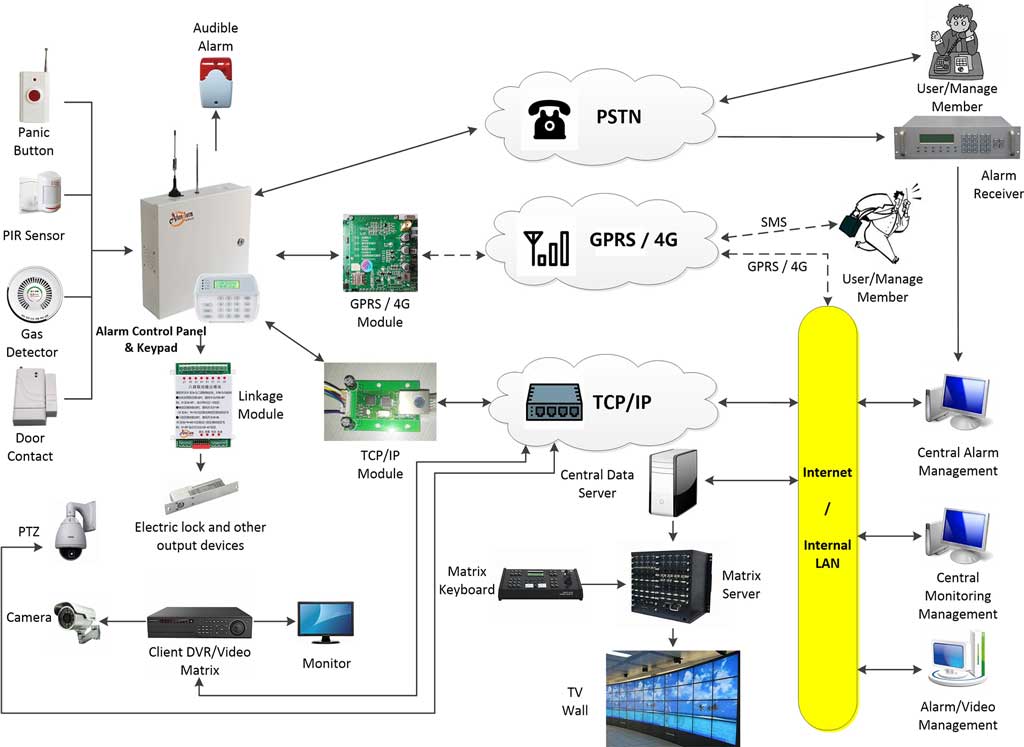
3.1 Wired, Wireless, and Hybrid Systems: Real-World Trade-Offs
Professional buyers must evaluate alarm architectures based on risk tolerance, lifecycle cost, and operational realities—not marketing narratives.
Wired Systems
- Highest signal integrity and reliability
- Ideal for new construction and permanent facilities
- Lower long-term maintenance requirements
- Higher upfront labor and installation cost
Wireless Systems
- Faster deployment and cleaner retrofits
- Well-suited for leased or frequently reconfigured spaces
- Performance dependent on RF environment quality
- Requires disciplined battery management programs
Hybrid Systems
- Industry best practice for most commercial installations
- Wired perimeter protection combined with wireless interior flexibility
- Simplified future expansion and reconfiguration
- Strong balance between resilience, scalability, and cost control
From an installation and lifecycle perspective, hybrid architectures offer the most practical advantages for professional environments.

4. Burglar Alarm System Components and Installation Considerations
4.1 Control Panels: Installation Best Practices
The alarm control panel is the operational core of the system and must be installed accordingly.
Professional installation standards include:
- Mounting in a secure, concealed, access-controlled location
- Enclosure tamper protection and supervision
- Use of a dedicated, protected power circuit
- Backup battery capacity sized for required standby and alarm duration
- Proper grounding, bonding, and surge protection
Installers must design for failure scenarios, not just normal operation—power outages, network loss, and deliberate tampering must all be anticipated.
4.2 Intrusion Detectors: Precision Over Quantity
Door and Window Contacts
- Install on all primary access points
- Maintain precise magnet alignment
- Secure mounting surfaces to prevent long-term drift
- Assign critical openings to individual zones
Motion Detectors (PIR / Dual-Technology)
- Install strictly at manufacturer-specified heights and angles
- Avoid direct sunlight, reflective surfaces, and HVAC airflow
- Use pet-immune models only when operationally justified
- Avoid coverage toward glass, fans, or moving machinery
Glass Break Detectors
- Match detector technology to glass type and construction
- Respect maximum coverage radius
- Avoid flexible or vibrating mounting surfaces
- Verify detection using approved acoustic test methods
In professional systems, false alarms are almost always installation failures—not product failures.
4.3 Sirens, Sounders, and Visual Deterrents
Deterrence is a deliberate design objective in professional burglar alarm installations.
Best practices include:
- Indoor sirens to alert occupants and disrupt intruders
- Outdoor sirens to increase perceived detection risk
- Strobe lights to improve responder visibility
- Tamper-protected housings and supervised cabling
Placement must balance audibility, visibility, tamper resistance, and local noise regulations.
5. Zoning Strategy: Turning Alarms into Intelligence
5.1 Why Zoning Is a Strategic Decision
A poorly zoned system produces noise. A properly zoned system delivers actionable intelligence.
Effective zoning enables:
- Faster alarm verification
- Targeted and proportional response
- Reduced false dispatches
- Accurate forensic reconstruction after incidents
5.2 Professional Zoning Models
Common zoning structures include:
- Perimeter Zones: Doors, windows, external barriers
- Interior Zones: Area-based motion detection
- High-Value Zones: Safes, server rooms, cages
- 24-Hour Zones: Panic buttons, tamper circuits
Every zone must be clearly labeled, documented, tested, and explained during system handover.
6. Communication Path Installation and Redundancy
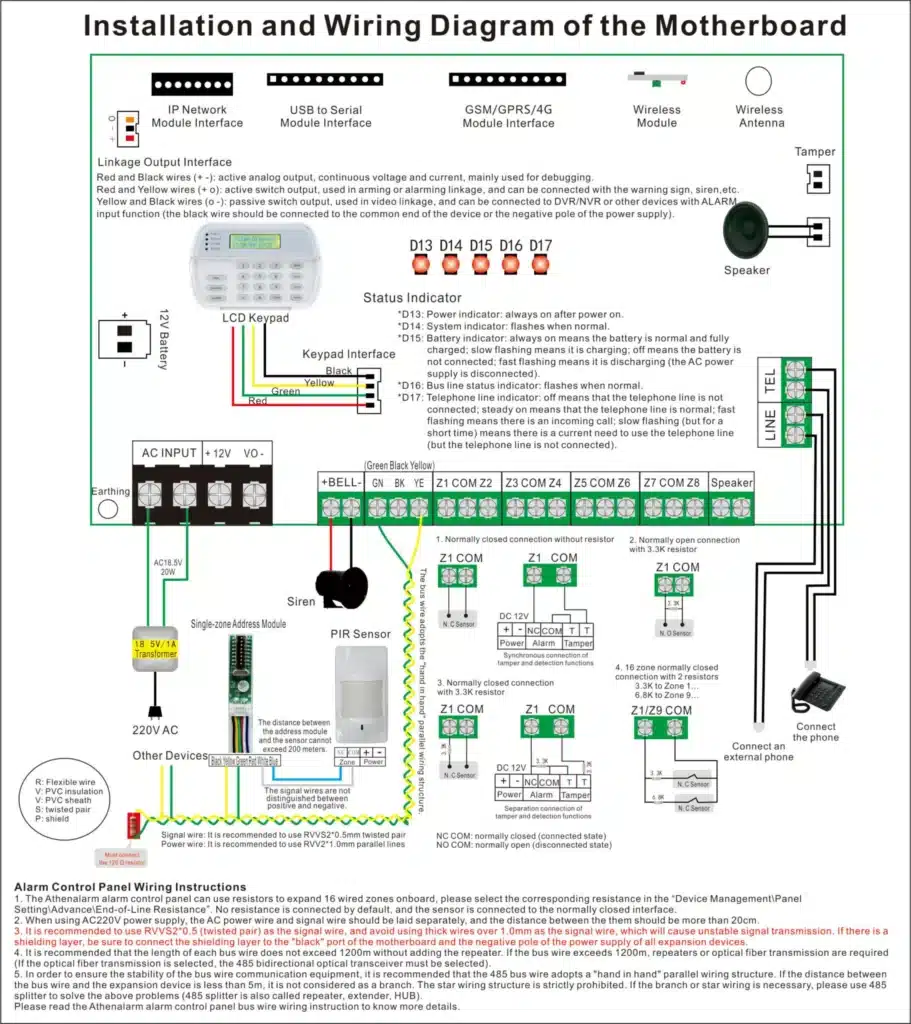
6.1 Multi-Path Communication as a Baseline Requirement
Professional burglar alarm systems must never rely on a single communication path.
Typical configurations include:
- Ethernet/IP as the primary channel
- Cellular (4G/5G) as a redundant backup
- PSTN where required by regulation or insurer mandate
Redundant communication ensures alarms reach monitoring centers even during outages, infrastructure failures, or sabotage attempts.
6.2 Supervision and Health Monitoring
An installed system must continuously confirm its own reporting capability.
Installers should:
- Configure communication supervision intervals
- Enable alerts for signal loss or degradation
- Test communication failure scenarios during commissioning
An alarm system that cannot verify connectivity is a latent security liability.
7. Step-by-Step Burglar Alarm System Installation Process
Step 1: System Design Documentation
- Device schedules
- Zone maps
- Wiring diagrams
- Power and battery calculations
- Communication path architecture
Step 2: Infrastructure Preparation
- Cable routing and containment
- Conduit installation
- Mounting surface reinforcement
- Power and grounding verification
Step 3: Device Installation
- Control panel mounting
- Detector placement
- Siren and strobe installation
- Tamper protection implementation
Step 4: Wiring and Connectivity
- Cable labeling and identification
- Polarity and termination compliance
- Correct cable selection
- Avoidance of EMI-prone routes
Step 5: Programming and Configuration
- Zone definitions
- Entry and exit delays
- Alarm logic and escalation rules
- User roles and permissions
Step 6: Testing and Commissioning
- Individual device verification
- Full-zone activation testing
- Power loss and communication failure simulations
Step 7: Documentation and Handover
- As-built drawings
- User and administrator manuals
- Maintenance schedules
- Compliance and certification records

8. Integration with Broader Security Systems
8.1 Alarm and Video Verification
Integration with video systems enables:
- Event-triggered recording
- Visual alarm verification
- Reduced false dispatch rates
- Increased response confidence
8.2 Access Control Interlocks
Advanced environments benefit from:
- Automated arming and disarming based on access events
- Authorized bypass logic
- Unified audit trails across systems
Integration should be planned during installation, not retrofitted after deployment.
9. Compliance, Standards, and Regulatory Considerations
9.1 Applicable Standards and Regulations
Depending on jurisdiction and industry, installations may need to comply with:
- EN 50131
- UL standards
- Local police and fire authority requirements
- Insurance and risk underwriter mandates
Non-compliance introduces financial, legal, and reputational exposure.
9.2 Documentation as Risk Mitigation
Professional buyers should require:
- Installation certificates
- Commissioning and test reports
- Ongoing maintenance records
Proper documentation demonstrates due diligence and supports post-incident investigation.
10. Common Installation Mistakes Experienced Professionals Avoid
- Overlapping or conflicting detector coverage
- Ignoring environmental influences
- Undersized backup batteries
- Single-path communication designs
- Inadequate end-user training
Seasoned professionals design systems around real-world behavior, not ideal assumptions.
11. Maintenance, Testing, and Lifecycle Management
A burglar alarm system is a living operational asset.
Professional lifecycle management includes:
- Scheduled inspections and functional testing
- Battery replacement programs
- Firmware and software updates
- Configuration reviews following layout or usage changes
Well-maintained systems deliver higher reliability and lower total cost of ownership over time.
12. Buyer Considerations: What Professional Purchasers Should Demand
Professional buyers should insist on:
- Transparent installation methodologies
- Proven field experience
- Complete system documentation
- Scalable, future-ready architecture
- Long-term technical and service support
The lowest upfront price rarely equates to the lowest operational risk.
Conclusion: Burglar Alarm System Installation as a Strategic Security Investment
Burglar alarm system installation is not a technical afterthought—it is a strategic security investment that directly influences loss prevention, operational continuity, regulatory exposure, and organizational resilience.
The difference between average and exceptional alarm systems is not defined by marketing claims, but by installation discipline, engineering judgment, and lifecycle planning.
A properly installed burglar alarm system:
- Detects intrusions early
- Minimizes false alarms
- Integrates seamlessly with broader security layers
- Protects people, assets, and operations over the long term
The quality of your installation today defines your security resilience tomorrow.