

Introduction: Why the Home Burglar Alarm Market Demands Professional Thinking
The modern burglar alarm system for home has evolved far beyond basic door contacts and loud sirens. Today, residential intrusion protection is a technically mature, risk-driven discipline—one that integrates intrusion detection, electronic communications, power redundancy, cybersecurity resilience, human behavior analysis, and layered deterrence into a single, cohesive security framework.
For professional buyers across the security ecosystem—including system integrators, distributors, residential developers, project contractors, security consultants, and institutional purchasers—home burglar alarm systems are no longer consumer gadgets. They are mission-critical residential security infrastructures that must deliver consistent reliability, predictable performance, regulatory compliance, cyber resilience, and long-term operational value.
This guide is written from the perspective of a senior burglar alarm and residential security systems expert. It deliberately avoids marketing hype and instead focuses on technical clarity, deployment methodology, and buyer-level decision intelligence. Each section is designed to help professional decision-makers reduce risk, avoid costly design errors, and deliver measurable, real-world security outcomes for residential end users.
1. Understanding the True Role of a Burglar Alarm System for Home
1.1 More Than Intrusion Detection
At its foundation, a burglar alarm system for home is engineered to achieve several essential objectives:
- Detect unauthorized entry attempts
- Deter criminal activity through visible and audible measures
- Generate timely, actionable alerts
- Enable rapid human or automated response
- Preserve event data and forensic evidence
- Reduce financial loss and legal exposure
In modern residential environments, however, the system also serves broader strategic functions:
- A residential risk management instrument
- An insurance and regulatory compliance enabler
- A foundational layer for smart-home and security integration
- A reputation and liability safeguard for developers, landlords, and security service providers
A professionally designed burglar alarm system must therefore address technology, human behavior, response workflows, and lifecycle management simultaneously, rather than treating them as isolated components.
1.2 The Real Residential Threat Landscape
Professional buyers must design systems that respond to realistic, recurring residential threats, including:
- Forced entry through doors, windows, and garage access points
- Opportunistic daytime burglaries when occupants are absent
- Night-time perimeter breaches while residents are sleeping
- Insider threats involving cleaning staff, contractors, or temporary workers
- Utility power outages and deliberate power sabotage
- RF jamming or communication interference
- False alarms triggered by pets, HVAC airflow, sunlight exposure, or poor sensor placement
A credible burglar alarm system for home mitigates these risks systematically and predictably, not through disconnected or poorly coordinated devices.
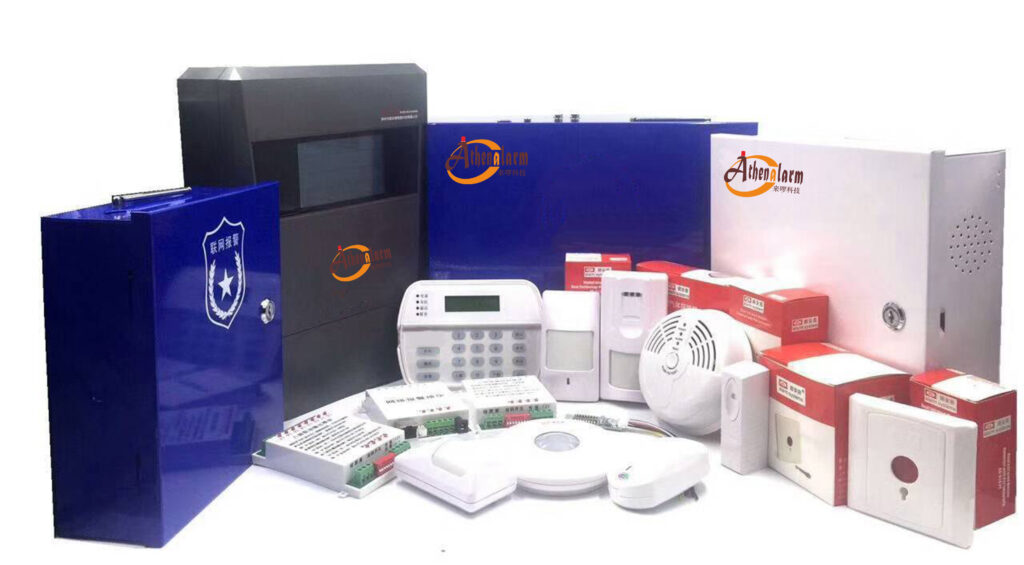
2. Core Architecture of a Professional Home Burglar Alarm System
2.1 Control Panel: The Operational Brain
The control panel represents the decision-making core of any burglar alarm system for home. From a professional buyer’s standpoint, minimum technical expectations include:
- Multi-zone scalability (commonly 8–64 zones or higher)
- Hybrid architecture support for both wired and wireless devices
- Encrypted communication protocols
- Robust event logging with adequate memory retention
- Integration interfaces such as APIs or supported protocols
- Dual-path or multi-path communication capability
Buyer insight:
The control panel determines the system’s long-term upgrade ceiling. Entry-level panels frequently impose architectural limitations that later force full system replacement rather than modular expansion.
2.2 Intrusion Sensors: Accuracy Over Quantity
2.2.1 Door and Window Contacts
Professional-grade installations prioritize:
- High-quality magnetic or solid-state contact technology
- Tamper protection on all accessible openings
- Recessed mounting wherever structurally feasible
- Secure mechanical installation to prevent long-term misalignment
In professional deployments, reliability and consistency outweigh cosmetic concealment.
2.2.2 Motion Detectors (PIR and Dual-Technology)
Key professional considerations include:
- Accurate Passive Infrared (PIR) detection geometry
- Dual-technology sensors (PIR + microwave) for high-risk areas
- Verified pet-immune algorithms with defined weight thresholds
- Anti-masking and anti-tamper protection
Critical operational reality:
False alarms erode end-user confidence, overload monitoring centers, and increase operational costs. Sensor selection and placement must follow engineering discipline—not trial-and-error assumptions.
2.2.3 Glass Break Detection
Often underutilized, glass break detectors provide early intrusion awareness for:
- Large window assemblies
- Sliding glass doors
- Glass façades, sunrooms, and conservatories
Professional systems employ calibrated acoustic analysis or combined shock-and-audio detection to significantly reduce false activations.
2.3 Alarm Signaling and Communication Paths
A modern burglar alarm system for home must never depend on a single communication channel.
Recommended professional architecture:
- Primary path: IP (Ethernet or secured Wi-Fi)
- Secondary path: Cellular (4G/LTE, LTE-M, or NB-IoT)
- Optional path: PSTN in legacy environments
Professional-grade systems include:
- Continuous communication path supervision
- Automatic failover logic
- Strong encryption and authentication
- Anti-jamming detection and reporting
2.4 Power Redundancy and Operational Continuity
Power disruption remains a common vulnerability during burglary attempts.
Professional systems must incorporate:
- Properly sized backup batteries
- Battery health monitoring and reporting
- Low-voltage protection logic
- Optional extended or external backup power solutions
Professional baseline:
A minimum of 24–72 hours of standby operation, adjusted for risk profile and regional regulatory requirements.
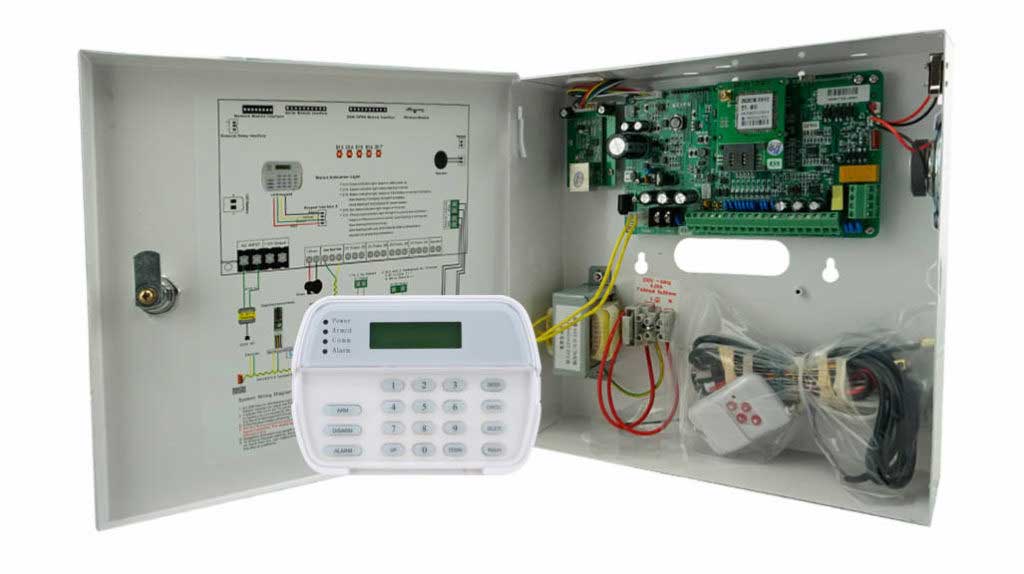
3. Wired vs. Wireless Burglar Alarm Systems for Home
3.1 Wired Systems: Stability and Longevity
Advantages:
- Superior signal reliability
- Immunity to RF interference
- Long operational lifespan
- Reduced long-term maintenance
Limitations:
- Higher initial installation complexity
- Reduced flexibility in finished buildings
Best suited for:
- New residential construction
- High-end villas and estates
- Long-term owner-occupied properties
3.2 Wireless Systems: Speed and Flexibility
Advantages:
- Rapid deployment
- Minimal structural disruption
- Simple expansion and reconfiguration
Limitations:
- Battery dependency
- RF congestion exposure
- Range management and supervision requirements
Professional rule:
Only encrypted, supervised wireless protocols purpose-built for security applications should be considered acceptable.
3.3 Hybrid Systems: Professional Best Practice
Hybrid architectures combine:
- Wired perimeter protection for critical access points
- Wireless flexibility for interior zones and future expansion
This balanced approach delivers optimal reliability, scalability, and cost efficiency—making it the preferred choice for professional residential security projects.
4. Designing a Burglar Alarm System for Home: A Professional Methodology
Step 1: Risk Assessment and Site Survey
Evaluate:
- Property layout and construction materials
- Entry points and sightlines
- Occupancy patterns
- Asset concentration zones
- Environmental conditions
- Local crime trends
No two residential properties share identical risk exposure.
Step 2: Zoning Strategy
Professional best practices include:
- Clear separation between perimeter and interior zones
- Dedicated zones for high-risk rooms or asset areas
- Logical, descriptive zone naming for response clarity
Effective zoning simplifies monitoring, diagnostics, and emergency response.
Step 3: Sensor Placement and Coverage Planning
Key placement principles:
- Avoid direct sunlight, HVAC airflow, and heat sources
- Follow manufacturer-recommended detection geometry
- Overlap coverage in vulnerable areas
- Secure all accessible openings—not only primary doors
Step 4: Control Panel Configuration
Professional configuration includes:
- Defining arming modes (Stay, Away, Night)
- Setting appropriate entry and exit delays
- Assigning user roles and access permissions
- Activating tamper, fault, and supervision alerts
Step 5: Communication and Monitoring Setup
Professional response options may include:
- Certified alarm monitoring centers
- Private security response services
- Secure mobile applications
- Law enforcement integration where permitted
Step 6: Testing, Commissioning, and Handover
Professional commissioning requires:
- Zone-by-zone functional testing
- Communication path verification
- Simulated power failure scenarios
- End-user training and full documentation handover

5. Integration Within a Broader Residential Security Ecosystem
A burglar alarm system for home should function as the core detection layer—not an isolated product.
5.1 Video Surveillance Integration
Key benefits include:
- Visual alarm verification
- Reduced false dispatches
- Evidence capture and post-event analysis
5.2 Access Control and Smart Locks
Integration enables:
- Forced-entry detection
- Alarm-triggered locking responses
- Occupancy-aware automation
5.3 Smart Home Integration (Controlled)
Professional systems support limited, security-first integration with:
- Lighting systems for deterrence scenarios
- Automation controllers
- Voice assistants with restricted permissions
Security integrity must always take precedence over convenience.
6. Cybersecurity in Connected Home Alarm Systems
Modern burglar alarm systems for home are network-connected—and therefore potential cyber targets.
Professional safeguards include:
- End-to-end encrypted communication
- Secure firmware update processes
- Role-based access control
- Network segmentation and isolation
Buyer warning:
Many consumer-grade devices fail basic penetration testing and resilience assessments.
7. Regulatory Compliance and Industry Standards
Professional buyers must consider:
- EN 50131 (Europe)
- UL 1023 / UL 985 (North America)
- CE, FCC, and regional certifications
- Insurance and authority requirements
Compliance directly influences liability exposure, insurability, and long-term property value.
8. Total Cost of Ownership (TCO): A Professional Perspective
8.1 Initial Investment
Includes:
- Hardware selection
- System design
- Installation labor
- Commissioning and documentation
8.2 Ongoing Operational Costs
- Monitoring fees
- Battery replacement cycles
- Software and firmware maintenance
- Preventive servicing
8.3 The Hidden Cost of Failure
Missed intrusions, excessive false alarms, system downtime, and reputational damage often exceed the original system investment.
9. Common Mistakes in Home Burglar Alarm Projects
- Over-reliance on wireless-only architectures
- Poor sensor placement
- Inadequate backup power design
- Insufficient end-user training
- Selection of closed systems with no upgrade path
Avoiding these errors clearly distinguishes professional deployments from amateur installations.
10. Why Professional Buyers Must Think Long-Term
A burglar alarm system for home is not a disposable product—it is a long-term residential security asset.
Professional buyers create enduring value by delivering:
- Scalable system architectures
- Standards-compliant designs
- Dependable after-sales support
- Clearly defined upgrade pathways
These elements build trust, reduce customer churn, and support sustainable business growth.
Conclusion: Delivering Real Security Through Professional Home Alarm Systems
The modern burglar alarm system for home operates at the intersection of technology, risk management, and human behavior. For professional buyers and security decision-makers, success is not measured by feature lists, but by predictable protection outcomes.
By applying disciplined design principles, selecting proven technologies, and planning for long-term operation, security professionals can deploy systems that protect both homes and professional reputations.
A well-designed home burglar alarm system does more than detect intrusion.
It builds confidence, deters crime, and delivers lasting value.