
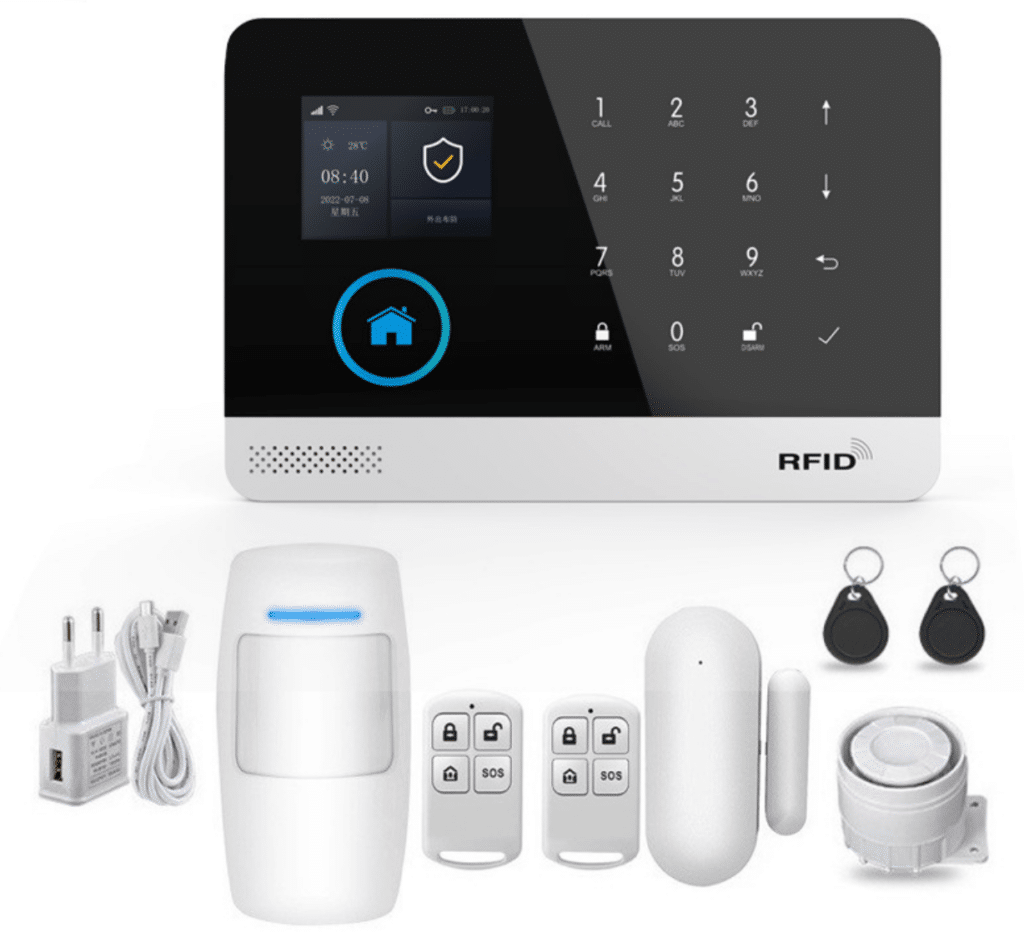
As a seasoned professional with more than twenty years of hands-on experience in the intrusion alarm industry—spanning system architecture, mass deployment for national distributors, and deep technical integration across residential portfolios—I have seen time and again that the alarm control panel is the single most decisive component in any burglary protection system. When the panel is chosen or configured incorrectly, even the most advanced sensors and monitoring services fail to deliver real security value.
For professional buyers responsible for large-volume sourcing—whether for residential developers, property management groups, installer networks, or security service providers—the Wireless Home Alarm Control Panel has emerged as the defining technology reshaping modern residential intrusion protection. In 2025, it is no longer a convenience-driven alternative to wired systems; it is the strategic backbone of scalable, intelligent, and cost-efficient home security deployments.
Why Wireless Alarm Control Panels Now Define Residential Security
The era in which wired alarm panels were considered inherently more reliable is firmly behind us. Today’s wireless home alarm control panels deliver military-grade encryption, long-range and resilient RF communication, multi-path connectivity, and deep smart ecosystem integration, all while reducing installation time and labor costs dramatically.
In real-world deployments, modern wireless panels routinely reduce installation labor by 60–70% compared to traditional hardwired systems. This efficiency gain is one of the primary reasons why, in 2025, over 90% of new residential alarm installations globally are wireless-based.
More importantly, the technology itself has matured. Current-generation wireless home alarm control panels now integrate:
- On-device AI processing for anomaly detection and false alarm reduction
- 5G-ready cellular communicators for ultra-low latency alarm reporting
- Native Matter and Thread compatibility, enabling true vendor-agnostic smart home integration
- Advanced supervision and diagnostics, dramatically lowering service callbacks
However, selecting, deploying, and optimizing the right panel is not a trivial exercise. Poor planning can lead to predictable—and costly—failures: signal loss in reinforced concrete structures, false alarms that undermine end-user trust, or unstable integrations across mixed smart home environments.
This guide is designed to eliminate those risks.
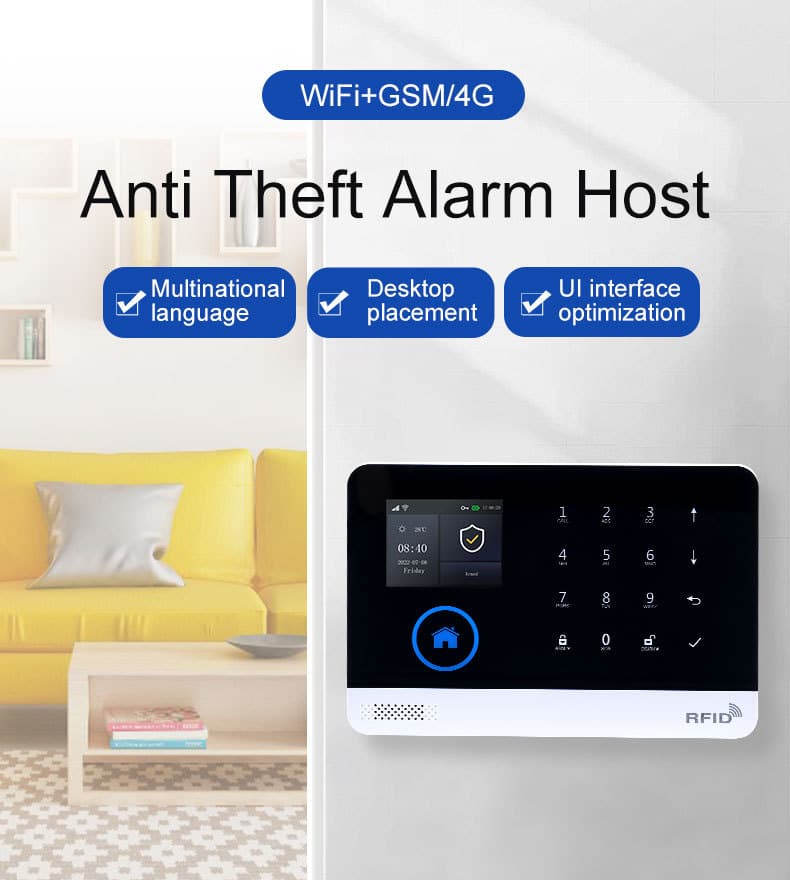
What This Guide Delivers for Professional Decision-Makers
This is not a marketing overview. It is a field-tested, professional deployment guide created for security decision-makers managing bulk procurement and multi-site installations.
Inside, you will find:
- A deep technical breakdown of wireless alarm control panel architecture
- Clear selection criteria for volume purchasing in 2025
- Step-by-step installation and programming best practices
- Proven strategies for reducing false alarms and service costs
- Smart home and video integration frameworks
- Scalability guidance for projects involving hundreds or thousands of units
- Forward-looking insights into 2025–2030 technology trends
By the end, you will be equipped to deploy wireless alarm systems that meet or exceed UL and EN Grade 2 requirements, reduce false dispatch rates, and maximize both operational efficiency and long-term margins.
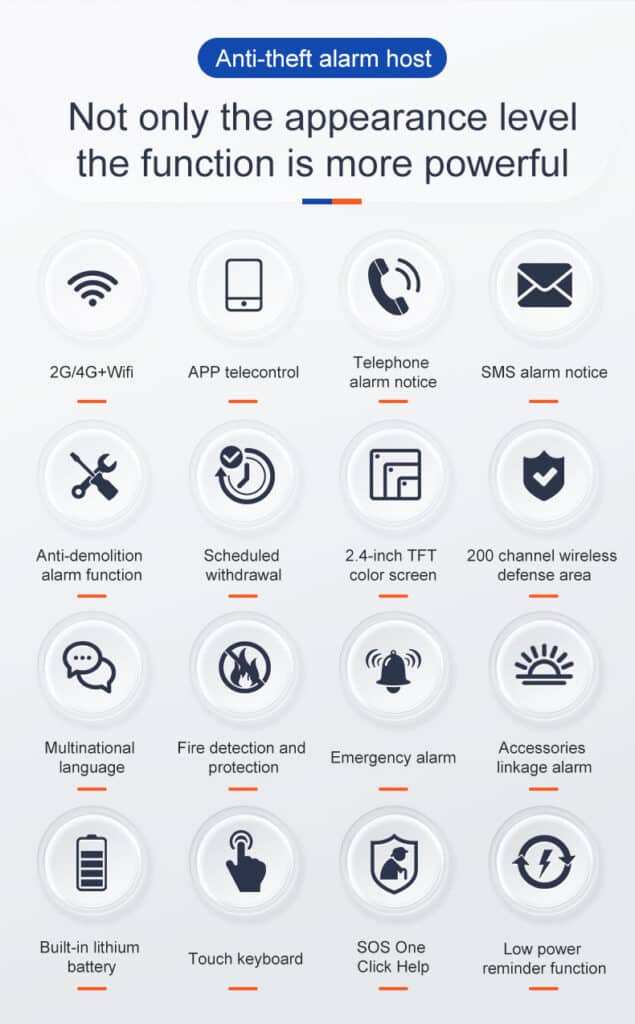
Understanding the Core Role of the Wireless Home Alarm Control Panel
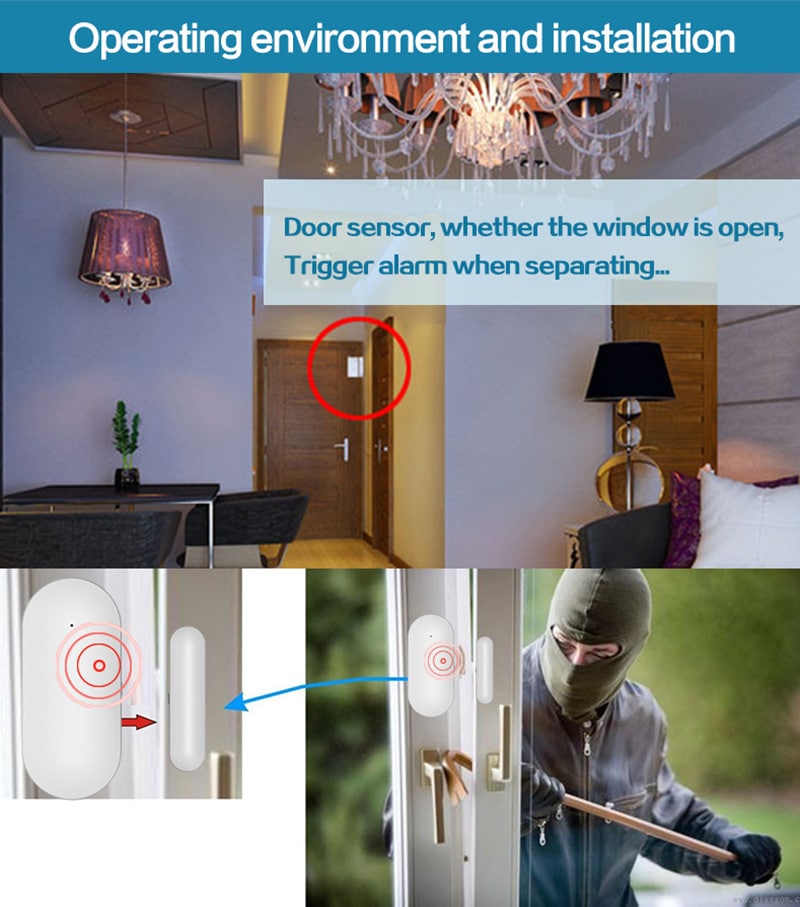
At its core, a Wireless Home Alarm Control Panel is the central intelligence hub of a radio-frequency–based intrusion detection system. It continuously receives encrypted signals from peripheral devices—door and window contacts, PIR motion detectors, glass-break sensors, smoke and CO detectors, environmental sensors, and increasingly AI-assisted cameras—then processes those events locally and in real time.
Based on predefined logic and AI-assisted decision rules, the panel executes responses such as:
- Local siren activation
- Mobile push notifications
- Cellular reporting to monitoring centers
- Automated smart home actions
- Proactive deterrence, including voice warnings or lighting activation
Modern panels operate across dedicated sub-GHz frequencies—typically 433 MHz, 868 MHz, or 915 MHz—using proprietary encrypted protocols, often combined with Z-Wave, Zigbee, or Matter for automation. In 2025, leading platforms include:
- Qolsys IQ Panel 4 / IQ4 Series
- 2GIG Edge
- Resideo (Honeywell Home) PROA7PLUS
- Ring Alarm Pro
- SimpliSafe’s latest touchscreen hub
- DSC PowerSeries Neo with wireless transceivers
- Alarm.com–powered hubs (ADC series)
What Truly Differentiates Modern Wireless Panels from Legacy Wired Systems
- No physical zone wiring Eliminates conduit runs, drywall damage, and termination labor.
- Advanced RF mesh and repeater architectures Technologies such as PowerG+ and encrypted 345 MHz protocols routinely deliver 300–500 feet of reliable coverage, even in multi-story homes.
- Dual-path and multi-path communication Wi-Fi and cellular (LTE-M and 5G-ready) with automatic failover are now standard.
- Intuitive touchscreen interfaces Seven- to ten-inch capacitive displays simplify programming and reduce training time.
- Local AI processing On-panel AI minimizes cloud dependency, enhances privacy, and improves alarm accuracy.
For bulk buyers, these advances translate into faster deployment cycles, predictable performance, and significantly lower lifetime service costs.
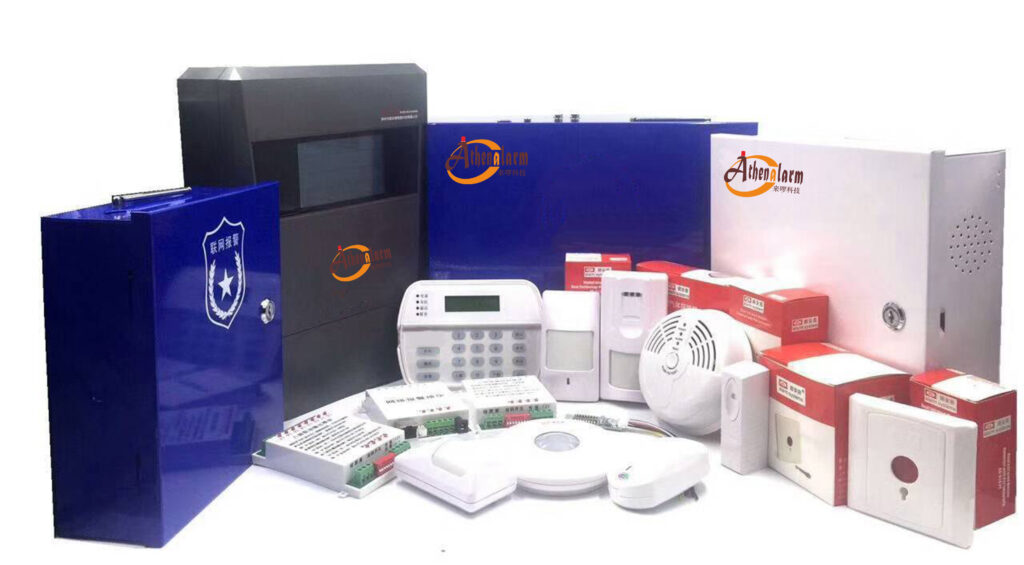
Wireless vs. Wired: A Professional Buyer’s Balanced Assessment
While wireless solutions dominate residential security in 2025, informed buyers must understand the trade-offs.
Advantages of Wireless Home Alarm Control Panels
- Rapid, non-invasive installation, ideal for finished homes and rentals
- Exceptional scalability, allowing zones to be added or reconfigured instantly
- Lower total cost of ownership when labor, service, and false alarm penalties are considered
- Advanced user-facing features, including mobile apps, OTA updates, and automation
- Clean aesthetics, critical in modern residential markets
Battery technology has also improved substantially. High-quality wireless sensors now routinely deliver five to ten years of battery life, with proactive low-battery supervision.
Potential Limitations—and How Professionals Mitigate Them
- RF interference and range challenges Addressed through site surveys, signal diagnostics, repeaters, and sub-GHz protocols.
- Battery dependency Mitigated via supervised devices and fleet-level battery management.
- Jamming risks Countered with anti-jamming detection, frequency hopping, and AES-256 encryption.
- Higher upfront hardware costs Offset by labor savings, volume pricing, and reduced service interventions.
For large developments, hybrid configurations—wireless panels with selective hardwired zones—often deliver the optimal balance.
Key Features to Prioritize When Sourcing in Volume
For 2025 procurement programs, the following criteria are non-negotiable:
- Encrypted wireless protocols with anti-replay protection
- High zone capacity (128–256+ zones)
- Redundant communication paths (IP + 5G cellular)
- Extended power backup (24–48 hours minimum)
- Professional-grade programming interfaces
- Regulatory certifications (UL, EN 50131, CP-01)
- Deep smart ecosystem integration (Z-Wave, Zigbee, Matter)
- AI-assisted verification and analytics
Leading platforms such as Qolsys, 2GIG, and Resideo now report annual failure rates below 0.3%, reflecting the maturity of the category.
Step-by-Step Installation and Configuration Best Practices
Successful large-scale deployments follow a disciplined, repeatable process:
Phase 1: Pre-Installation Planning
- Conduct RF surveys targeting –70 dBm or better
- Design logical zone groupings
- Confirm firmware and component compatibility
- Map automation and integration workflows
Phase 2: Panel Placement and Power
- Centralized, elevated mounting
- Avoid RF noise sources
- Verify transformer and battery sequencing
Phase 3: Sensor Enrollment
- Enroll sensors methodically
- Assign correct zone types and supervision
- Validate signal strength and redundancy
Phase 4: System Programming
- Configure delays, user hierarchies, and duress codes
- Program dual-path communication
- Enable AI and false alarm reduction features
Phase 5: Testing and Handover
- Full system walk-tests
- Simulated fault conditions
- Monitoring center verification
- End-user education and documentation
With trained crews, this workflow consistently delivers two to three hours per unit, even at scale.
Advanced Smart Home and Video Integration
In 2025, wireless alarm control panels function as true smart home hubs:
- Locks, lights, thermostats, and garages tied to arming states
- Voice assistant integration with secure command logic
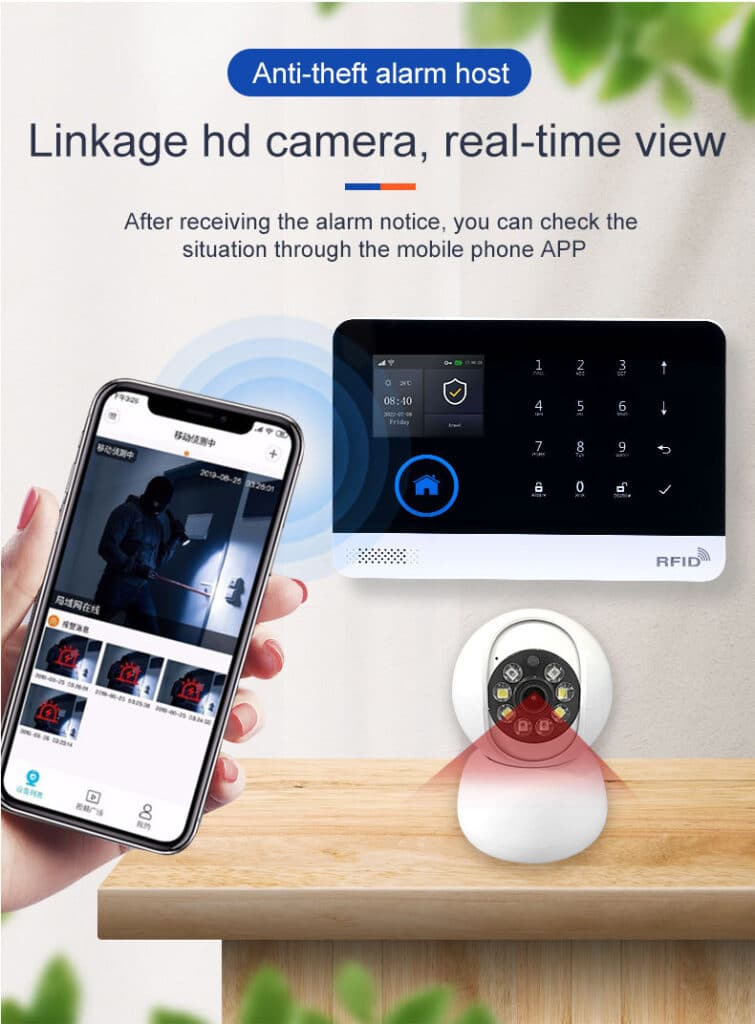
- Video verification and AI analytics for rapid response
- Fleet-level remote management via platforms like Alarm.com
Standardization is the key to maintaining efficiency across large portfolios.
Common Issues and Professional Mitigation Strategies
The most frequent challenges—and their solutions—include:
- False alarms → Cross-zoning, AI verification, proper PIR placement
- Signal instability → Repeaters, repositioning, sub-GHz protocols
- Battery issues → Improved placement and supervision analytics
- Firmware inconsistencies → Pre-deployment OTA updates
- Cybersecurity risks → Encrypted communications and MFA
Future-Proofing Wireless Home Alarm Control Panels
The next evolution of residential intrusion protection is already underway:
- Autonomous AI-driven deterrence
- Universal Matter adoption
- Expanded on-device analytics
- Deeper integration with energy and environmental systems
Wireless home alarm control panels are no longer static devices—they are evolving security platforms.
Final Thoughts
The Wireless Home Alarm Control Panel is no longer just another component in a security system. It is the foundation upon which modern residential intrusion protection is built.
When selected and deployed correctly, it delivers:
- Faster installations
- Fewer service calls
- Lower false alarm rates
- Higher customer satisfaction
- Stronger long-term profitability
If you are planning upcoming residential projects or evaluating volume procurement strategies, aligning with the right wireless control platform in 2025 is not optional—it is decisive.