
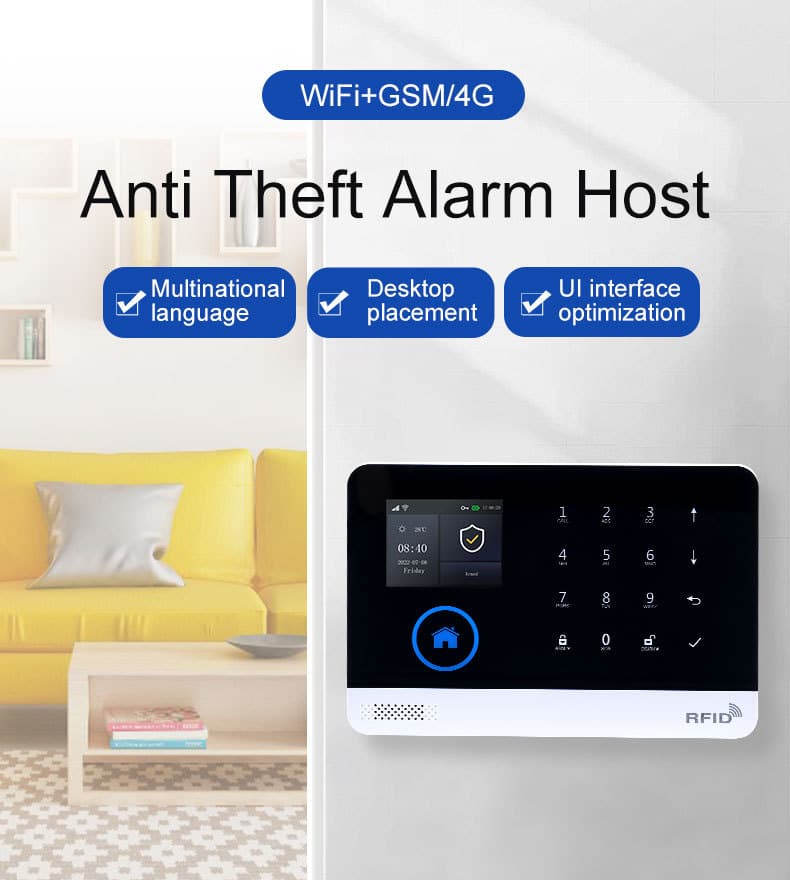
As a senior professional in the intrusion alarm and security industry with more than twenty years of hands-on experience designing, deploying, and optimizing alarm systems for private residences, multi-family housing, and large-scale mixed-use developments, I have consistently observed one unchanging truth: the control panel is the unquestionable backbone of any effective home intrusion alarm system.
While sensors, cameras, and smart peripherals often receive the spotlight, it is the control panel that ultimately determines whether a security system responds decisively—or fails silently—when a real intrusion occurs. In today’s increasingly sophisticated threat environment, where experienced burglars actively exploit weak system logic, communication gaps, or outdated panels, the choice of control panel can mean the difference between a resilient, professionally reliable intrusion defense and a fragile system plagued by false alarms, downtime, or catastrophic failure.
For professional buyers—including system integrators, security engineers, procurement managers, property developers, and large-scale project decision-makers—the task of selecting the best home security system control panel goes far beyond consumer convenience or aesthetic appeal. It is a strategic decision centered on long-term reliability, scalability across multiple deployments, seamless subsystem integration, regulatory compliance, and total cost of ownership over the system’s lifecycle.
This guide is grounded in real-world installations, proven engineering practices, and applicable international standards—such as EN50131 Grade 2/3 requirements—while incorporating the most relevant technological developments shaping the 2025–2026 security market. Its purpose is simple: to equip professionals with clear, actionable guidance on how to evaluate, configure, install, and maintain a control panel that delivers consistent, verifiable intrusion alarm performance, while avoiding the common design and procurement mistakes that undermine system integrity.
Whether you are specifying systems for new residential construction, upgrading aging alarm infrastructure for property management portfolios, or standardizing intrusion protection across dozens—or hundreds—of residential units, this guide focuses on practical strategies that maximize protection, reduce liability exposure, and streamline operational efficiency.
Understanding the Critical Role of the Control Panel in Modern Intrusion Alarm Systems
The control panel—often referred to as the system hub, main controller, or “brain” of the alarm system—serves as the central processing unit for all intrusion-related activity. It receives signals from perimeter and interior detection devices, including door and window contacts, motion detectors, glass-break sensors, shock sensors, and increasingly, environmental detectors such as smoke, heat, flood, and CO sensors. These inputs are analyzed in real time, triggering alarms, activating deterrents, and communicating events to monitoring centers and user interfaces.
In professional-grade intrusion alarm systems, the control panel does far more than simply arm and disarm zones. It functions as a real-time decision engine responsible for accuracy, speed, and system resilience:
- Event Processing and Decision Logic Advanced control panels employ refined signal processing algorithms—often enhanced with basic AI-driven pattern recognition—to distinguish genuine intrusion events from nuisance triggers caused by pets, airflow changes, or environmental noise. In professionally deployed systems, this level of intelligence can reduce false alarms by as much as 90–95%, a critical metric for large portfolios where excessive dispatches result in fines, lost monitoring contracts, and reputational damage.
- Redundant Communication Architecture Professional panels support dual-path or triple-path communications—combining LTE cellular, IP, Ethernet, and increasingly 5G backups—to ensure alarm signals reach the monitoring center even during power failures, network outages, or deliberate line-cut attempts. Built-in supervision and line-fault detection immediately report tampering or signal loss.
- Advanced Zone and Partition Management High-capacity panels support dozens to hundreds of zones, with expandable partitions that allow independent control of different areas within a property. This enables a single panel to protect everything from compact residences to large homes with detached garages, basements, or guest units—without sacrificing control granularity.
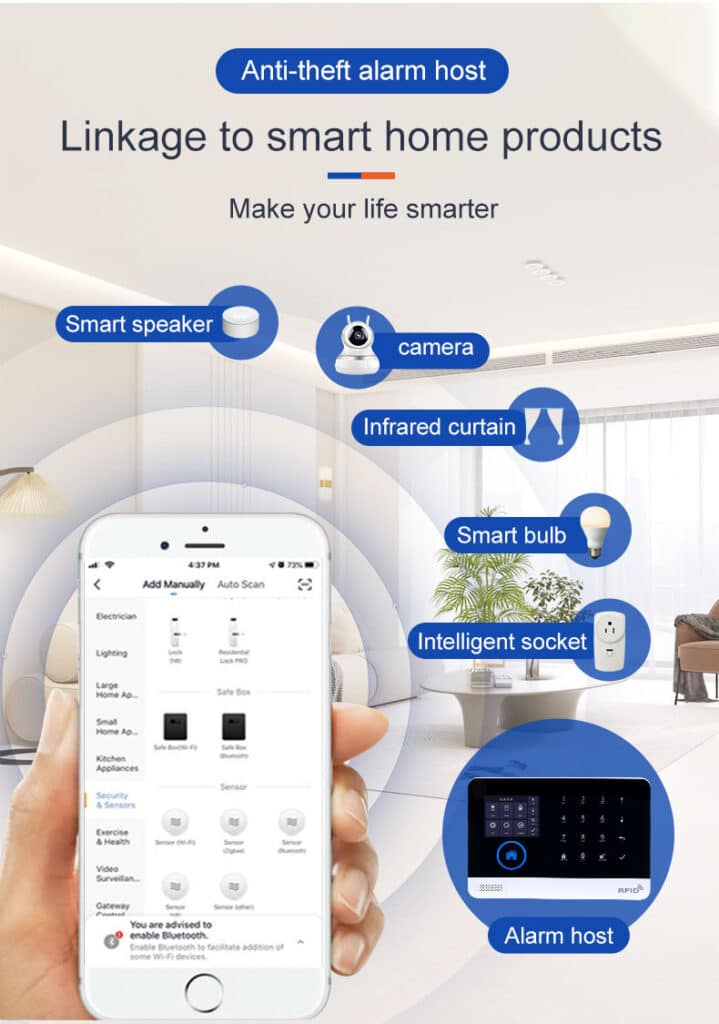
- System Integration Hub Modern control panels act as the integration core for video verification, access control, fire and life-safety devices, and smart automation platforms. Support for Z-Wave, Zigbee, and emerging Matter/Thread standards allows intrusion alarms to operate as part of a unified security ecosystem rather than isolated components.
- Installer and Operator Efficiency Features such as remote programming, secure dealer portals, over-the-air firmware updates, and advanced diagnostics dramatically reduce installation time and long-term maintenance costs. These capabilities are essential for professional deployments where labor efficiency directly impacts profitability.
Poorly selected control panels inevitably lead to frequent service calls, frustrated occupants, higher insurance premiums, and increased system abandonment. In contrast, the best panels deliver continuous uptime, effortless scalability, verifiable compliance, and proactive deterrence—forming the foundation of a truly reliable intrusion alarm solution.
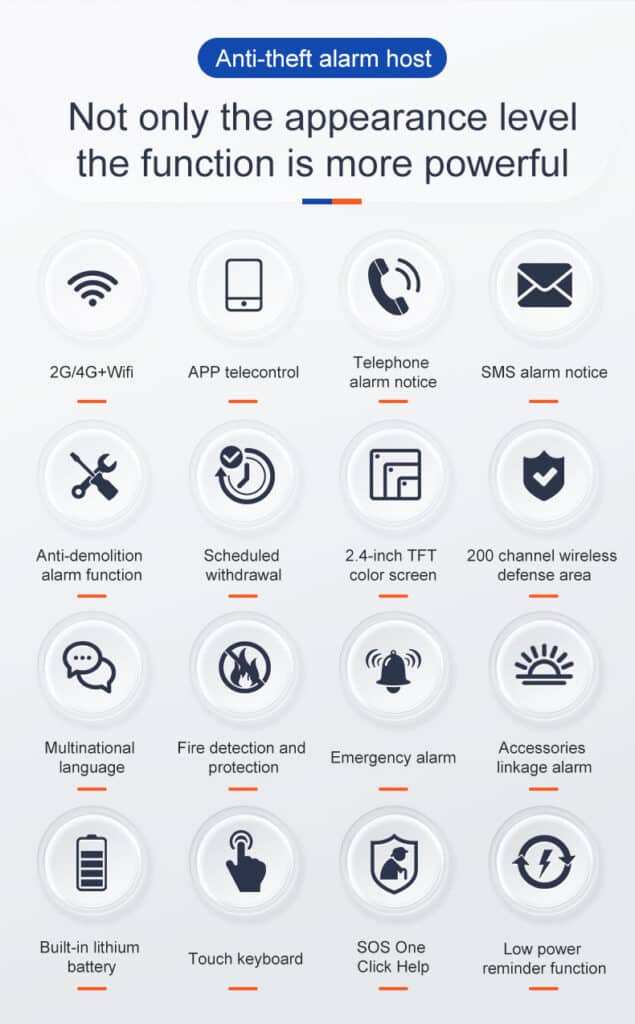
Key Features to Prioritize When Sourcing the Best Home Security System Control Panel for Bulk Procurement
For professional and bulk procurement, evaluation criteria differ significantly from consumer purchasing decisions. The focus must remain on reliability under diverse conditions, ease of large-scale deployment, and total cost of ownership.
1. Hybrid Wired and Wireless Architecture
Leading professional panels—such as the Qolsys IQ Pro series, Honeywell/Resideo Vista hybrids, Bosch B/G Series, and DSC PowerSeries Neo—support both traditional hardwired zones and modern encrypted wireless protocols like PowerG+. This hybrid flexibility allows seamless retrofitting of existing properties while enabling wireless expansion in new builds, often reducing labor costs by 30–50% in mixed environments.
2. Scalability and Zone Capacity
A single panel platform should comfortably support 64 to 128 zones out of the box, with expansion options exceeding 200 zones. This minimizes SKU complexity and technician retraining while ensuring consistent performance across diverse property sizes.
3. Multi-Path Communication Resilience
Built-in LTE cellular (preferably multi-carrier), combined with IP or Ethernet connectivity, ensures uninterrupted alarm reporting. Platforms integrated with professional ecosystems such as Alarm.com provide encrypted signaling, crash-and-smash protection, and secure remote access for dealers and monitoring centers.
4. Cybersecurity and Encryption Standards
AES-128 or AES-256 encryption across sensor communications and backend signaling is essential to prevent jamming, spoofing, and replay attacks. Secure boot processes, authenticated firmware updates, and long-term manufacturer support are no longer optional—they are mandatory.
5. Power Backup and System Reliability
Professional intrusion panels must provide at least 24 hours of standby battery backup, supervised power monitoring, and long-life sensor batteries. UL-listed components and predictive low-battery alerts ensure failures are identified before protection is compromised.
6. Integration and Interoperability
Native support for IP cameras, Z-Wave Plus, Bluetooth disarming, and Matter/Thread interoperability future-proofs deployments. For professional environments, API access and multi-protocol gateways enable custom workflows and third-party integrations.
7. User Interface and Programming Efficiency
Large touchscreens, logical menu structures, voice prompts, and remote programming tools significantly reduce installation time while improving end-user satisfaction—without diluting security integrity.
8. Diagnostics and Reporting
Advanced signal testing, walk-test modes, detailed event logs, and remote diagnostics allow technicians to resolve issues proactively, minimizing costly site visits.
9. Certifications and Compliance
EN50131 Grade 2/3, UL 1023/985, CP-01 false alarm reduction, and relevant SIA standards ensure regulatory acceptance and insurance eligibility.
10. Commercial Viability for Volume Deployment
Competitive dealer pricing, strong warranty coverage, reliable distribution channels, and avoidance of proprietary lock-in are critical for sustainable, large-scale deployments.
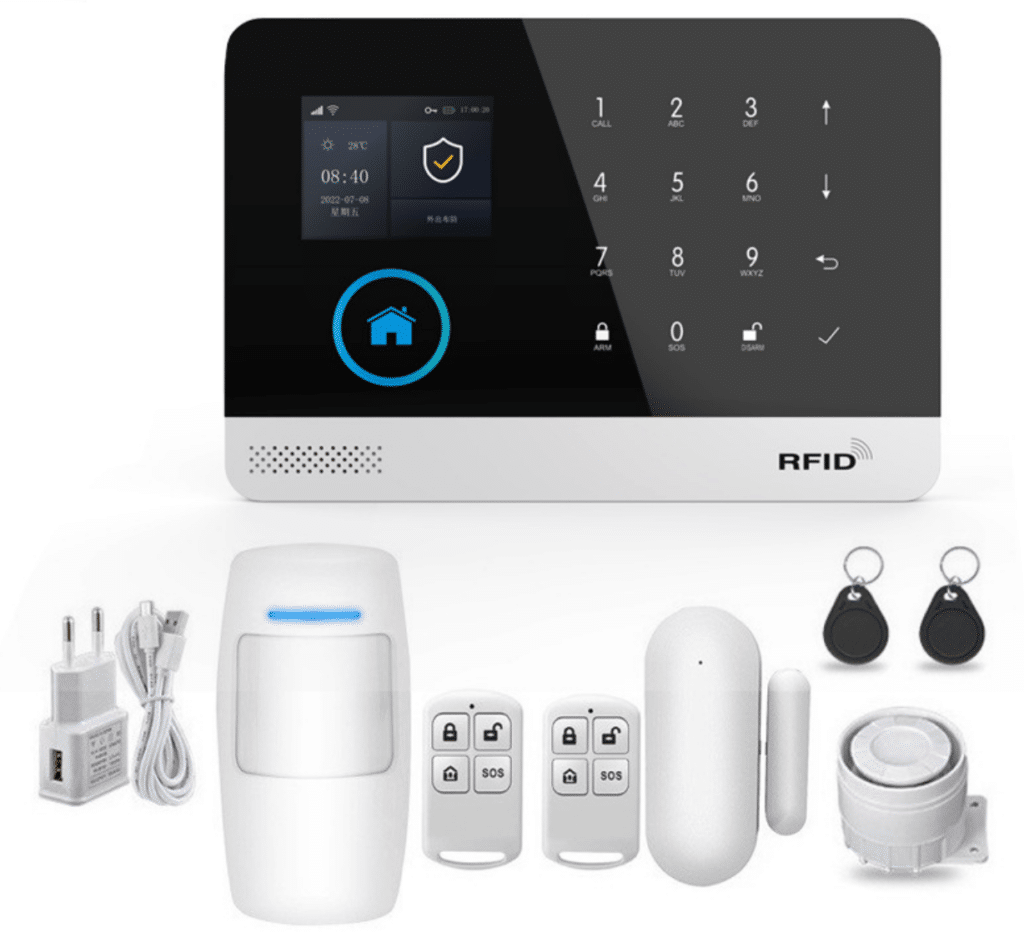
Step-by-Step Framework for Selecting the Right Control Panel
Selecting the right control panel for a professional intrusion alarm deployment should never be based on brand reputation alone or isolated feature lists. In professional practice, a structured, repeatable evaluation framework is essential to ensure technical suitability, operational efficiency, and long-term reliability across multiple projects.
The following step-by-step framework has been refined through years of real-world system specification and bulk procurement experience.
1. Assessment: Define the Operational and Risk Profile
Begin by establishing a clear understanding of the deployment environment and protection objectives.
Key assessment points include:
- Property type and scale: Single-family homes, multi-unit residences, gated communities, or mixed-use developments.
- Typical zone count: Average and maximum number of perimeter, interior, and environmental zones per site.
- Risk profile: Urban burglary trends, rural isolation risks, or high-value targets requiring enhanced verification.
- Infrastructure constraints: Existing wired loops, power reliability, network availability, and RF interference conditions.
- Operational model: Professionally monitored vs. self-monitored, centralized management vs. standalone systems.
This assessment phase ensures the control panel is selected based on real operational demands rather than theoretical capability.
2. Shortlisting: Identify Professionally Proven Platforms
With requirements defined, narrow the field to control panels designed explicitly for professional intrusion alarm applications—not consumer-grade systems.
At this stage, priority should be given to platforms with:
- Established installer ecosystems
- Long-term firmware support
- Proven performance in large-scale deployments
- Documented compliance with relevant standards
Shortlisting reduces evaluation complexity and prevents costly detours into unsuitable products.
3. Comparison: Conduct a Structured Technical Evaluation
Shortlisted panels should be compared using a standardized matrix rather than subjective impressions.
Core comparison criteria include:
- Maximum zone and partition capacity
- Wired and wireless protocol support
- Communication paths and redundancy
- Encryption standards and cybersecurity architecture
- Integration capabilities (video, access control, automation)
- Installer programming workflow and remote management tools
This structured comparison exposes practical limitations that marketing materials often obscure.
4. Field Testing: Validate Performance in Real Environments
No control panel should be approved for bulk deployment without hands-on testing.
Field testing should include:
- Wireless range and signal stability testing in realistic construction environments
- Enrollment speed and sensor supervision reliability
- Communication failover simulations (power loss, IP failure, cellular fallback)
- User interface responsiveness under real-world usage
- Monitoring signal verification and event latency
Field testing frequently reveals performance gaps that are invisible in lab specifications.
5. Total Cost of Ownership (TCO) Analysis
Beyond upfront hardware cost, evaluate the full lifecycle cost of the control panel.
Key TCO factors:
- Installation labor time
- False alarm rates and dispatch-related costs
- Battery replacement cycles
- Firmware maintenance requirements
- Warranty coverage and RMA efficiency
- Training and support overhead
In professional deployments, a slightly higher hardware cost often yields significantly lower long-term operating expenses.
6. Supplier and Ecosystem Validation
Finally, validate the supply chain and support ecosystem.
This includes:
- Distributor reliability and inventory consistency
- Availability of certified training programs
- Technical documentation quality
- Responsiveness of manufacturer support
- Long-term product roadmap stability
A technically strong panel without a reliable ecosystem quickly becomes a liability in large-scale projects.
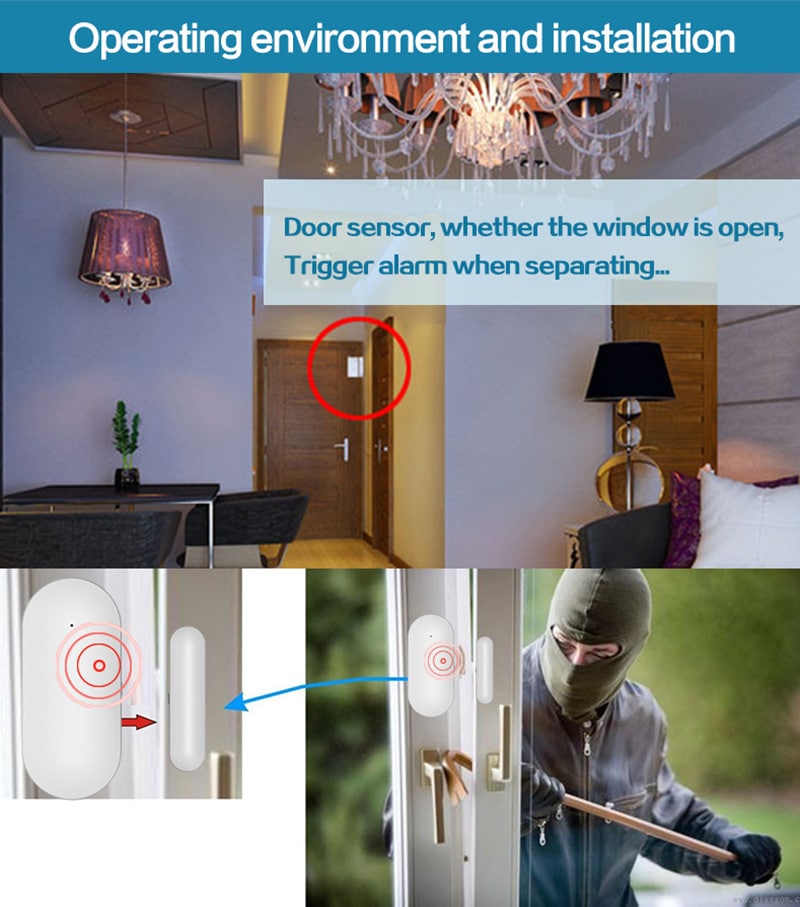
Professional Installation Workflow for Maximum Reliability
A professionally installed control panel is the foundation of a dependable intrusion alarm system. Even the most advanced hardware will underperform if installation discipline is lacking.
The following workflow reflects best practices established across thousands of successful deployments.
Pre-Installation Planning
- Conduct a comprehensive site survey to identify optimal panel placement: centrally located, concealed but accessible, protected from environmental hazards.
- Confirm power availability, grounding quality, and communication pathways.
- Review floor plans and finalize zone layout before any hardware is mounted.
Thorough planning prevents costly rework and post-installation issues.
Panel Mounting and Power Setup
- Secure the control panel enclosure using tamper-resistant hardware.
- Install the primary power supply and verify proper voltage.
- Connect and test the backup battery before proceeding with programming.
- Ensure all tamper circuits are correctly supervised.
Power integrity is the single most critical factor in system reliability.
Sensor Enrollment and Zone Programming
- Enroll wireless sensors methodically, verifying signal strength and supervision status.
- Program each zone with precise definitions, descriptions, and attributes.
- Apply appropriate zone types (perimeter, interior, 24-hour, environmental).
- For wired zones, verify loop resistance and end-of-line supervision.
Meticulous zone programming directly impacts alarm accuracy and false alarm prevention.
Communication and Monitoring Configuration
- Register all communication paths with the monitoring platform.
- Test alarm, trouble, supervisory, and restore signals.
- Verify communication redundancy by simulating failures.
A system that cannot reliably communicate is not a security system—it is a liability.
Commissioning and User Handover
- Perform a full walk-test of every zone.
- Validate local alarms, remote notifications, and monitoring responses.
- Train end users thoroughly, emphasizing correct arming procedures and alarm response.
- Document the system configuration in detail.
A properly commissioned system dramatically reduces future service calls.
Advanced Configuration Strategies to Enhance Intrusion Detection Accuracy
Professional-grade control panels offer configuration capabilities that significantly improve detection reliability when used correctly.
Intelligent Partitioning
Partition large properties into logically independent areas to enable selective arming and reduce unnecessary alarms.
Cross-Zoning and Verification Logic
Require multiple correlated events before triggering full alarm responses in high-risk or false-alarm-prone environments.
Customized Entry and Exit Delays
Tailor delay times by zone to match real-world user behavior without compromising perimeter protection.
Automation and Deterrence Rules
Use the control panel to trigger lighting, audio warnings, or notifications when suspicious activity is detected—often preventing intrusions before they escalate.
Video Verification Integration
Link cameras to critical zones to provide visual confirmation, accelerating response and reducing false dispatches.
Firmware and Analytics Management
Maintain up-to-date firmware and leverage emerging analytics features for anomaly detection and system optimization.
Troubleshooting Common Field Issues
In professional service environments, most system issues fall into predictable categories.
- Communication failures are typically caused by improper path configuration or signal interference.
- False alarms often trace back to sensor placement, sensitivity settings, or environmental factors.
- Power-related issues result from aging batteries, poor grounding, or inadequate supervision.
- Firmware inconsistencies can disrupt app connectivity and automation behavior.
Disciplined diagnostics and standardized service procedures resolve the vast majority of these issues efficiently.
Deployment Case Studies
In large-scale residential retrofits, professionally selected control panels have consistently demonstrated measurable benefits:
- Significant reductions in false alarm rates
- Faster installation times
- Improved user satisfaction
- Lower long-term maintenance costs
These outcomes are not the result of brand selection alone, but of disciplined system design and execution.
Preparing for 2026 and Beyond: Future-Proofing Your Control Panel Investments
The next generation of intrusion alarm systems will be shaped by:
- AI-assisted behavioral analysis
- Universal interoperability through Matter and Thread
- High-reliability 5G communication paths
- Increased edge processing for privacy and resilience
Selecting control panels designed with these trends in mind ensures long-term relevance and protects capital investment.
Final Professional Recommendations
In 2026, the best home security system control panel for professional and bulk deployment is one that delivers:
- Hybrid wired and encrypted wireless flexibility
- Robust multi-path communication resilience
- Advanced configuration and diagnostic capabilities
- Long-term manufacturer and ecosystem support
Platforms such as the Qolsys IQ Pro series, Resideo Vista hybrid systems, and Bosch professional panels consistently meet these criteria in real-world deployments.
For organizations planning large-scale residential intrusion alarm projects, partnering with experienced suppliers who provide training, pre-configuration, and ongoing technical support is often the decisive factor between operational success and long-term system failure.