
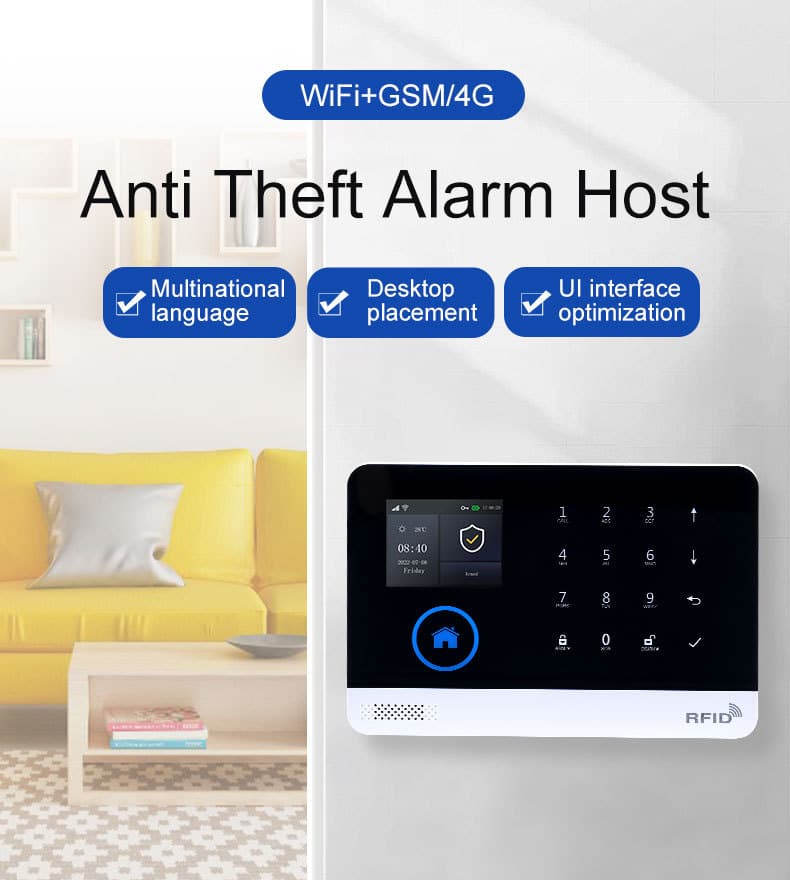
In the high-stakes arena of professional intrusion alarm procurement, the choice of a wireless security system base station panel is never a trivial decision. For security integrators, distributors, and enterprise buyers, the panel is not merely a control device—it is the operational core that determines whether a large-scale deployment becomes a resilient, future-proof intrusion detection system or degrades into an unstable collection of disconnected components.
Across multi-site commercial portfolios, logistics warehouses, office campuses, healthcare facilities, and national retail chains, large-scale deployments impose demands that far exceed those of residential or light commercial installations. Decision-makers routinely encounter persistent challenges: RF signal degradation in steel-reinforced structures, unreliable sensor supervision across long distances, integration friction with legacy wired zones, escalating false alarm rates that erode operational efficiency, and systems that collapse under expansion without costly reengineering.
This guide is designed to cut through marketing noise and deliver field-proven, expert-level guidance on how to select, deploy, configure, and maintain a professional-grade wireless security system base station panel. Drawing on decades of hands-on experience in intrusion alarm design and deployment—and incorporating late-2025 advancements such as AI-assisted verification and next-generation encrypted RF protocols—you will gain a practical framework for making confident technical decisions at scale. By the end, you will be equipped to specify panels that exceed compliance requirements, minimize total cost of ownership, and dramatically reduce false alarms through intelligent verification and system hardening.
Understanding the Core Role of the Wireless Security System Base Station Panel
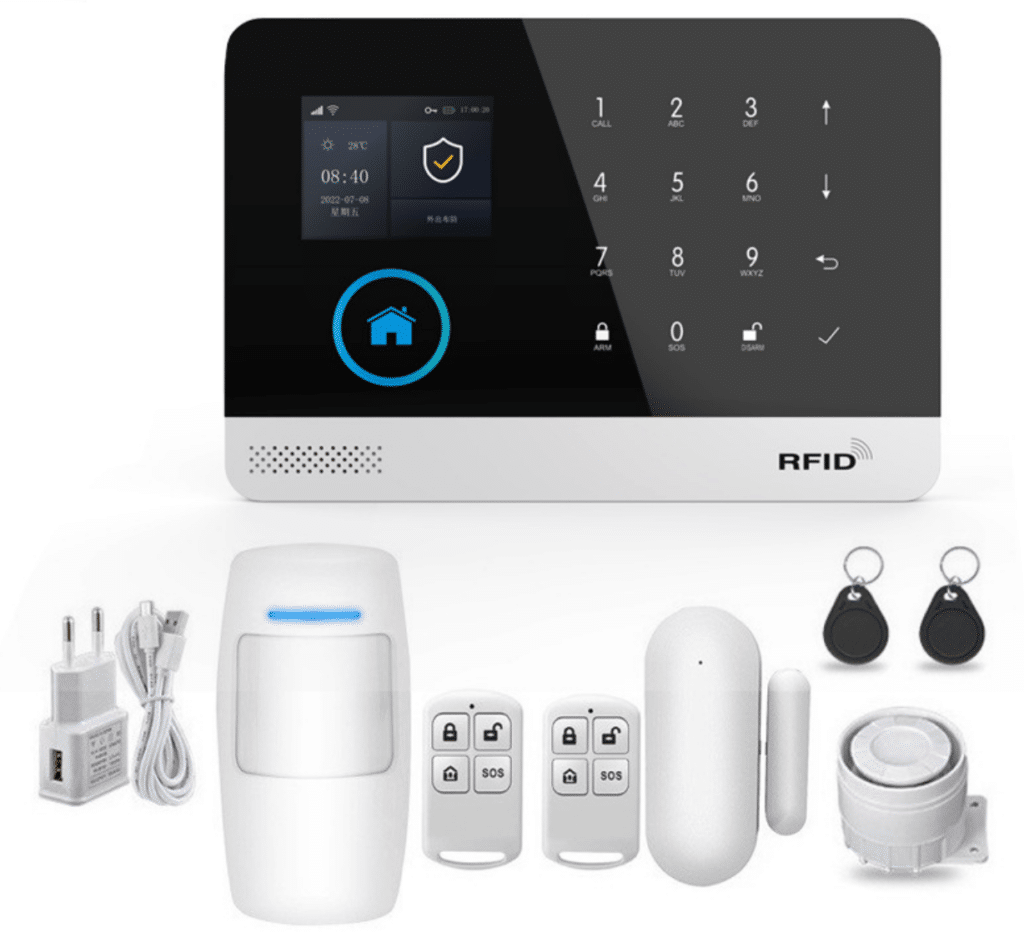
At its core, the wireless security system base station panel—also referred to as the control panel, central hub, or system brain—coordinates every operational element of a modern wireless burglar alarm system. Unlike legacy wired panels constrained by fixed cabling paths, modern wireless base stations communicate via encrypted radio frequency protocols such as Z-Wave, Zigbee, and proprietary long-range technologies. Leading examples include DSC PowerG, operating on the 915 MHz band with adaptive frequency hopping, bi-directional supervision, and AES-grade encryption.
In professional and enterprise environments, the panel is responsible for orchestrating several mission-critical functions:
- Zone and Partition Management Supporting well over 100 wireless zones natively, with scalability into the thousands through wireless repeaters, hybrid expanders, or bus modules. Advanced partitioning enables precise control across multi-tenant buildings, departments, or operational zones.
- Redundant Communication Paths Dual- or triple-path signaling—typically combining cellular LTE/5G, IP (Ethernet or Wi-Fi), and optional landline—to ensure alarm transmission continuity during network outages, sabotage attempts, or infrastructure failures.
- Power Continuity and Supervision Integrated battery backup systems delivering 24 to 72 hours of runtime, automatic AC loss reporting, battery health monitoring, and tamper-resistant enclosures designed to withstand deliberate attack.
- Real-Time Event Processing Continuous evaluation of inputs from perimeter contacts, PIR and dual-technology motion detectors, glass-break sensors, vibration detectors, and environmental sensors such as smoke, CO, flood, and temperature monitors.
Professional-grade panels from manufacturers such as Honeywell (ProSeries and Lyric), Johnson Controls/DSC (PowerSeries Neo with PowerG), Qolsys (IQ Panel 4 with dual-RF architecture), Bosch (B and G Series), Ajax Systems, and Alarm.com-powered enterprise hubs are fundamentally different from consumer DIY solutions. These systems offer UL listings (including UL 1023, UL 1610, and UL 2610), EN Grade 2/3 compliance, extensive user hierarchies, and partitioned arming models essential for organizations with rotating staff, contractors, and complex access policies.
For bulk purchasers, the implications are clear. A weak panel introduces systemic risk: dropped sensor supervision in RF-hostile environments, delayed alarm transmission during peak network congestion, and non-compliance in regulated sectors such as healthcare or finance. By contrast, a robust wireless security system base station panel delivers enterprise-grade uptime, dramatically lowers nuisance dispatches, and supports long-term scalability without architectural compromise.
Key Selection Criteria: Choosing the Right Panel for Large-Scale Deployments
When procuring at scale, feature lists alone are insufficient. What matters is architectural resilience, interoperability, and lifecycle economics. The following criteria reflect real-world best practices as of 2025.
1. Wireless Range and RF Reliability
Panels should support long-range encrypted communication capable of penetrating dense construction materials. Open-field ranges of 1–2 km and reliable in-building coverage of 300–500 meters—with repeaters—are now standard among professional platforms. Frequency hopping and dual-band support are essential in RF-congested environments.
2. Zone Capacity and Expansion Flexibility
A baseline capacity of 64–128 wireless zones is a minimum expectation. Enterprise-grade panels should scale into hundreds or thousands of zones through wireless expansion, hybrid wired integration, or cloud-linked modules—without performance degradation.
3. Communication Redundancy
Cellular connectivity is mandatory for mission-critical intrusion detection. Panels should support dual-path IP and cellular signaling by default, with automatic supervision and failover testing. Triple-path configurations are strongly recommended for high-risk sites.
4. Processing Intelligence and Integration
Modern panels increasingly leverage on-board or cloud-based analytics to reduce false alarms. API support enables integration with video management systems, access control, PSIM platforms, and building management systems, allowing the intrusion alarm to function as part of a unified security ecosystem.
5. Cybersecurity and Anti-Attack Measures
End-to-end encryption, anti-jamming detection, supervision polling, and crash-and-smash protection are no longer optional. Panels must report alarm conditions even under physical attack or deliberate signal disruption.
6. Regulatory Compliance
Compliance with UL, EN, SIA CP-01, and regional codes is non-negotiable for professional installations. For international deployments, GDPR-aligned data handling and cybersecurity hardening are increasingly relevant.
7. Lifecycle Cost and Support
Beyond initial pricing, consider firmware longevity, OTA update capability, remote diagnostics, warranty coverage, and manufacturer support infrastructure. In large deployments, these factors dominate total cost of ownership.
Step-by-Step Deployment in Large and Complex Facilities
Successful deployment depends less on hardware quality than on execution discipline.
Phase 1: Pre-Installation Planning
A professional RF site survey is essential. Identify attenuation sources such as steel framing, elevator shafts, HVAC infrastructure, and high-density shelving. Zoning strategy should reflect operational reality, separating perimeter, interior, environmental, and 24-hour zones with appropriate supervision levels.
Phase 2: Panel Installation
Install the base station in a secure, concealed location with optimal RF coverage. Maintain separation from interference sources and ensure proper grounding, surge protection, and battery installation. All communication paths must be tested under fault conditions.
Phase 3: Sensor Enrollment and Testing
Enroll sensors methodically, confirming serial numbers, signal strength, zone attributes, and partition assignment. Walk-test every zone under armed conditions, verifying RSSI consistency and repeater coverage across floors and wings.
Phase 4: Advanced Programming
Configure user hierarchies, duress codes, arming schedules, outputs, and automation logic. Integrate central station reporting using standardized formats such as Contact ID or SIA, and validate alarm, supervisory, and trouble signals.
Phase 5: Commissioning and Documentation
Simulate failures, document system architecture, and train onsite personnel. Proper commissioning eliminates the majority of post-installation service calls.
Advanced Capabilities Defining 2025-Era Panels
Today’s wireless base station panels increasingly function as intelligent security platforms:
- AI-assisted alarm verification and deterrence
- Video-verified intrusion detection
- Two-way voice for remote intervention
- Geo-fencing-based automation
- OTA firmware management and predictive diagnostics
These capabilities dramatically reduce false alarms while enhancing response confidence.
Troubleshooting and Long-Term Reliability
Even high-end systems require proactive maintenance. Common issues—signal loss, false alarms, communication failures, and battery degradation—are best addressed through regular testing, analytics-driven supervision, and disciplined replacement schedules. Preventive maintenance resolves the vast majority of issues before they impact operations.
Integration and Enterprise Scalability
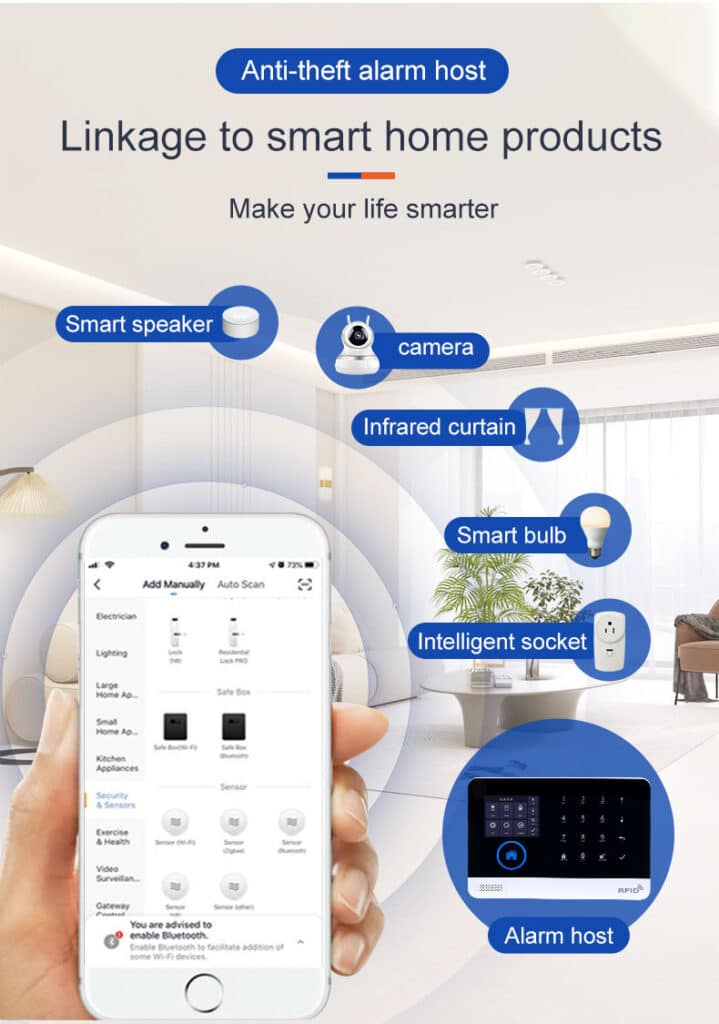
The true strength of a wireless security system base station panel lies in its ecosystem compatibility. Integration with video surveillance, access control, fire alarm reporting, and cloud-based fleet management platforms transforms isolated alarm systems into cohesive, enterprise-wide security architectures.
Conclusion: Building a Resilient Intrusion Detection Strategy
Mastering the wireless security system base station panel is not about chasing features—it is about deploying resilient, intelligent infrastructure that performs reliably under real-world conditions. By applying the principles outlined in this guide, security professionals can deliver scalable, compliant, and future-ready intrusion alarm systems that protect assets, reduce operational friction, and stand up to evolving threats.
For organizations planning large-scale deployments, the right panel is not an expense—it is a strategic investment in long-term security integrity.