

In the intrusion and burglary alarm industry, communication protocols are not a low-level technical detail—they are a long-term strategic decision. For product managers and engineers responsible for platforms expected to operate reliably for 10 to 20 years, an alarm protocol comparison between open and proprietary approaches directly determines maintainability, scalability, cybersecurity posture, and lifecycle cost.
This article focuses exclusively on the intrusion alarm and related security domains. It addresses a core planning dilemma: vendor lock-in vs open architecture. Beyond theory, it provides practical guidance, decision frameworks, and actionable steps that security professionals can apply immediately when designing, upgrading, or standardizing alarm systems.
What Alarm Protocols Really Do in Intrusion Systems
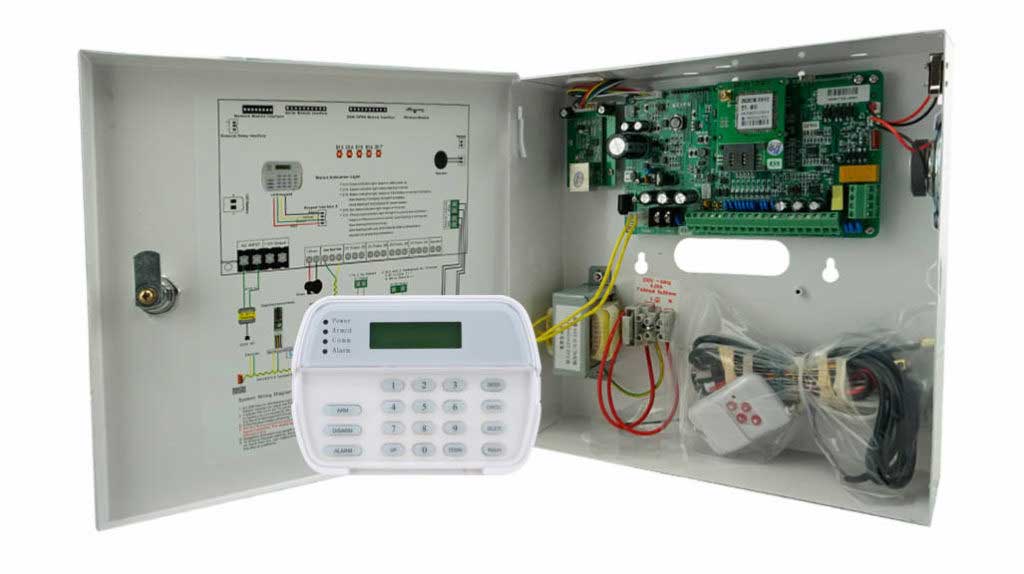
In burglary and intrusion alarm systems, protocols define how alarm panels, expanders, detectors, keypads, sirens, and monitoring interfaces communicate. They govern:
- Alarm event transmission and prioritization
- Device enrollment and authentication
- Supervision polling and tamper detection
- Firmware updates and diagnostics
- Integration with monitoring centers and third-party systems
In regulated markets, protocols must support compliance with standards such as EN 50131, UL 681, and local certification schemes. The choice between open and proprietary protocols determines whether these functions remain adaptable—or become rigid constraints—over the system’s lifetime.
Proprietary Alarm Protocols: Short-Term Convenience, Long-Term Risk
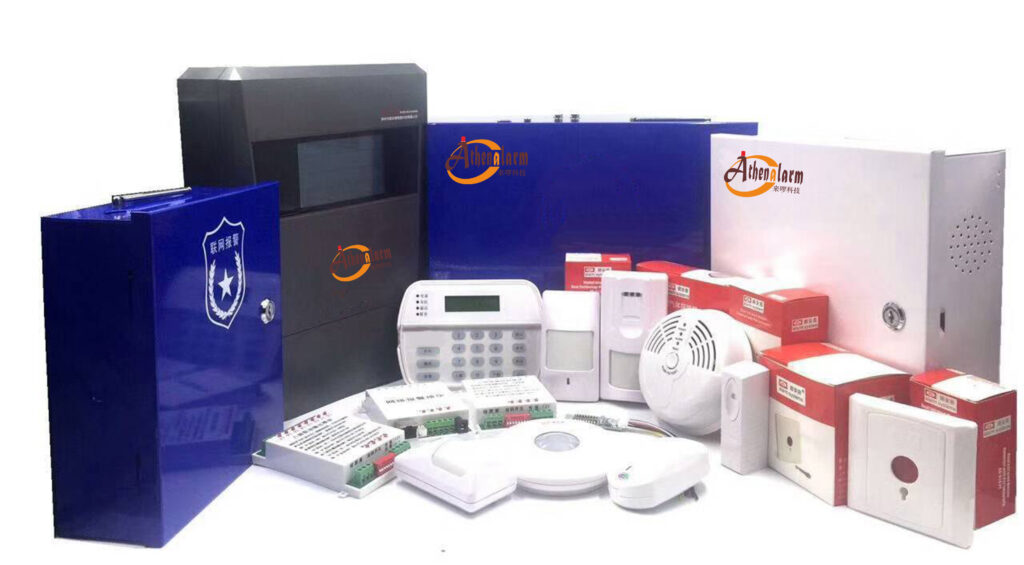
Proprietary protocols are controlled exclusively by a single manufacturer. They are common in closed alarm ecosystems where panels, sensors, and accessories are designed to work seamlessly together.
Vendor Lock-In as a Structural Risk
The most critical drawback is dependency. Once a system is built around a proprietary protocol:
- Hardware sourcing is limited to one vendor
- Component discontinuation forces full or partial system replacement
- Pricing leverage shifts entirely to the manufacturer
During recent global component shortages, many integrators discovered that proprietary alarm peripherals had lead times extending beyond 6–9 months, while functionally equivalent open-protocol devices remained available from alternative suppliers. This is a textbook example of vendor lock-in translating directly into operational risk.
Maintenance and Service Constraints
Proprietary alarm protocols often require:
- Vendor-specific configuration software
- Licensed or certified technicians
- Restricted access to diagnostic data
This increases mean time to repair (MTTR) and inflates service costs, particularly in geographically distributed or mission-critical installations.
Mitigation strategy for existing proprietary systems
- Document all protocol-dependent devices and interfaces
- Identify IP, relay, or bus gateways that expose partial openness
- Migrate non-critical zones (e.g., perimeter sensors) first
- Preserve the core panel while reducing dependency at the edges
This phased approach reduces disruption while gradually improving maintainability.
Security by Obscurity Limitations
Many proprietary alarm protocols rely on undocumented message formats and closed encryption implementations. While this limits casual inspection, it also reduces independent security review.
From a cybersecurity standpoint, lack of transparency increases exposure to long-lived vulnerabilities—particularly as alarm systems become IP-connected and remotely managed.
Open Alarm Protocols: Designing for Longevity and Flexibility
Open protocols are defined by published specifications and implemented by multiple vendors. In intrusion systems, this typically applies to field buses, IP communication layers, APIs, and integration interfaces.
Reduced Dependency and Stronger Supply Resilience
Open architectures allow engineers to qualify multiple vendors for the same functional role. For example:
- Multiple detector brands on a common bus
- Alternative expanders without panel replacement
- Parallel sourcing strategies for large projects
This directly addresses vendor lock-in vs open architecture concerns and protects long-term system availability.
Implementation steps for product teams
- Select protocols with publicly available specifications
- Require at least two qualified vendors per device category
- Perform interoperability tests focused on supervision, fault states, and alarm latency
- Maintain a compatibility matrix as part of system documentation
Maintainability Across a 10–20 Year Lifecycle
Open alarm protocols simplify long-term maintenance by enabling:
- Independent diagnostic tools
- Easier firmware lifecycle management
- Modular system expansion without rip-and-replace
In practice, this means a system designed today can integrate future sensors, communication modules, or monitoring platforms without architectural redesign.
Stronger Compliance and Audit Readiness
Open protocols support independent testing and third-party validation, which aligns well with EN 50131 grading, UL classifications, and insurer-driven audits.
From a security engineering perspective, transparency allows encryption, authentication, and key management to be evaluated against recognized best practices rather than vendor assurances alone.
Alarm Protocol Comparison: Open vs Proprietary
| Dimension | Proprietary Protocols | Open Protocols |
|---|---|---|
| Vendor Dependency | High | Low |
| Long-Term Maintainability | Limited | High |
| Supply Chain Flexibility | Weak | Strong |
| Cybersecurity Auditability | Restricted | Transparent |
| Integration Options | Vendor-bound | Modular and extensible |
| Initial Deployment Speed | Fast | Moderate |
| 10–20 Year Ownership Cost | Higher | Lower |
This alarm protocol comparison highlights why open architectures consistently outperform proprietary ones in long-term system planning.
A Practical Decision Framework for Product Managers and Engineers
To move beyond abstract debate, use the following structured approach:
1. Define System Horizon
If the expected operational life exceeds 8–10 years, treat proprietary lock-in as a high-risk factor, especially for commercial and industrial alarm systems.
2. Identify Critical Failure Points
Focus on components with high replacement probability—wireless sensors, expanders, communication modules. Protocol openness here delivers the greatest risk reduction.
3. Model Lifecycle Costs
Compare:
- Proprietary panel replacement cycles
- Open-protocol incremental upgrades
Even conservative models typically show a significant advantage for open architectures beyond year five.
4. Prototype Before Commitment
Build a pilot system using mixed-vendor open components. Validate alarm reporting, supervision behavior, and fault recovery under real-world conditions.
5. Contract with an Exit Strategy
If a proprietary core is unavoidable, negotiate:
- API access guarantees
- Long-term firmware support clauses
- Migration paths to open interfaces
Hybrid designs—closed cores with open peripheral layers—are increasingly used to balance control with flexibility.
Conclusion: Protocol Strategy Is a Business Risk Decision
In modern intrusion and burglary alarm systems, protocol selection is inseparable from risk management. Proprietary protocols may simplify short-term deployment, but they amplify long-term exposure to vendor lock-in, maintenance constraints, and obsolescence.
Open architectures, when properly specified and tested, deliver superior maintainability, stronger compliance alignment, and resilience against market and technology shifts. For product managers and engineers planning sustainable alarm platforms, the alarm protocol comparison clearly favors openness as the foundation for future-proof security systems.
Authoritative References and Standards
- EN 50131-1: Intrusion and Hold-Up Systems – System Requirements, CENELEC
- UL 681: Installation and Classification of Burglar and Holdup Alarm Systems, Underwriters Laboratories
- Security Industry Association (SIA): Open Standards in Physical Security
- ASIS International: Security Technology and Supply Chain Risk Reports
- NIST IR 8259: IoT Device Cybersecurity Guidance for Manufacturers
- Open Security & Safety Alliance (OSSA): Open Architecture Specifications for Security Systems