
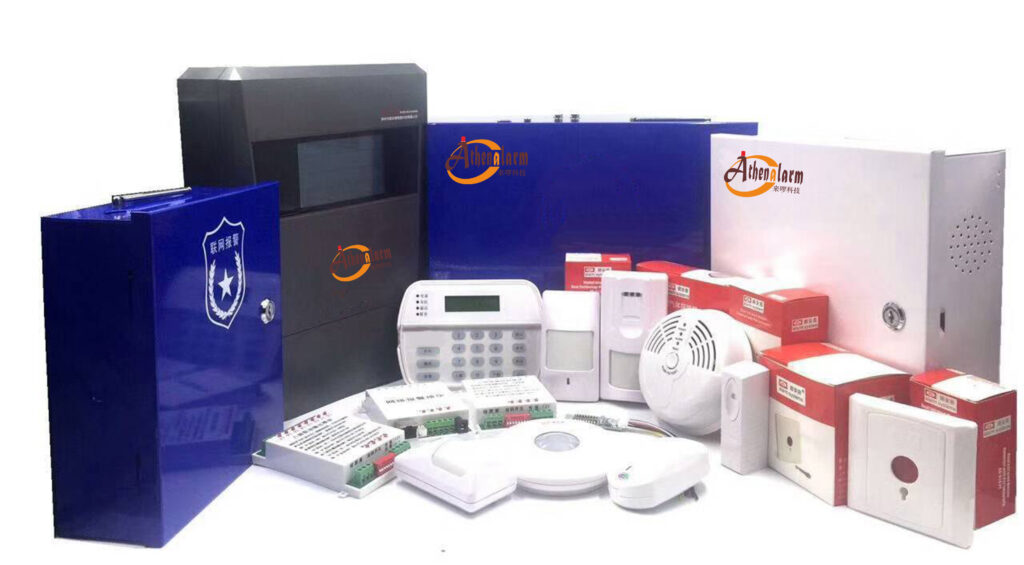
Wireless sensors are the most failure-sensitive components in modern intrusion alarm systems. Unlike control panels or wired detectors, wireless alarm sensors depend on finite battery capacity, radio stability, and mechanical integrity over time. Poor lifecycle management directly results in false alarms, missed intrusions, excessive service calls, and premature system replacement.
This guide provides technicians and engineers with a practical, end-to-end approach to managing the full lifecycle of wireless sensors in alarm systems, covering installation baselines, battery replacement strategy, tamper detection maintenance, and structured end-of-life planning.
1. Defining the Wireless Sensor Lifecycle in Intrusion Alarm Systems
In professional alarm deployments, a wireless sensor lifecycle consists of five distinct phases:
- Commissioning and enrollment
- Stable operation
- Degradation monitoring
- Predictive maintenance
- End-of-life replacement
Unlike wired zones, wireless alarm sensors experience non-linear aging. Battery chemistry degradation, RF output drift, and mechanical wear do not progress evenly. Industry field data shows that over 60% of wireless sensor failures occur in the final 20% of their usable life, often without obvious early warnings if lifecycle tracking is absent.
For engineers, lifecycle awareness must begin at system design. Sensor models, battery type, supervision interval, and tamper logic must align with UL 639, EN 50131, and local false alarm reduction requirements. For technicians, lifecycle management becomes a maintenance discipline rather than a reactive task.
2. Battery Replacement Strategy: Beyond Low-Battery Alerts
Battery replacement is not a simple reaction to a low-battery warning. In professional alarm maintenance, it is a planned intervention designed to preserve detection reliability and tamper integrity.
Typical Battery Lifespan in Alarm Sensors
- PIR motion sensors: 3–5 years
- Door/window contacts: 4–7 years
- Glass break sensors: 2–4 years
- Outdoor wireless sensors: 1.5–3 years (environment-dependent)
Environmental temperature, transmission frequency, and signal retries can shorten real-world lifespan by 20–40% compared to datasheet values.
Recommended Battery Replacement Procedure
- Verify sensor status at the panel
Confirm signal strength, supervision state, and tamper history before intervention. A sensor showing marginal RF levels should be flagged for closer inspection. - Place the system in service or test mode
This prevents central station dispatch and avoids tamper-triggered alarms during housing access. - Open the enclosure deliberately
Observe tamper switch behavior. A delayed or absent tamper signal often indicates mechanical fatigue or misalignment. - Replace with manufacturer-approved batteries
Mixing battery chemistries or using unapproved brands increases leakage risk and voltage instability, leading to intermittent faults. - Re-seat the housing and confirm tamper restoration
The system should report tamper clear within the defined supervision window. - Perform a live detection test
Trigger the sensor and confirm event reporting at the panel and monitoring platform. - Log replacement data
Record date, battery type, and sensor ID. This data is critical for future end-of-life planning.
Organizations that shift from reactive to scheduled battery replacement typically reduce service calls by 20–30% annually, according to Electronic Security Association maintenance benchmarks.

3. Maintaining Tamper Detection Reliability Over Time
Tamper detection is often treated as a static feature, but in reality it degrades mechanically and electrically throughout the sensor lifecycle.
Common Tamper-Related Failure Modes
- Plastic housing deformation causing incomplete tamper switch engagement
- Adhesive mount creep leading to intermittent wall tamper faults
- Micro-switch oxidation in high-humidity environments
- Accelerometer drift in vibration-based tamper designs
Field studies indicate that false tamper alarms account for approximately 15–25% of non-intrusion alarm events in wireless systems.
Lifecycle-Focused Tamper Maintenance
- Physical inspection during every battery service
Confirm firm mounting, intact housings, and clean switch contacts. - Sensitivity adjustment where supported
Sensors installed on metal frames, rolling doors, or vibration-prone surfaces should use moderated tamper thresholds. - Firmware and protocol updates
Modern alarm ecosystems improve tamper filtering algorithms through firmware revisions, reducing nuisance alerts without compromising security. - Trend analysis
Repeated tamper alerts from the same device often signal approaching end-of-life rather than installation error.
Proper tamper lifecycle management protects system integrity and prevents unnecessary dispatches that erode customer confidence.
4. Supervision, RF Health, and Aging Indicators
Wireless alarm sensors communicate periodic supervision signals. As sensors age, three measurable parameters degrade first:
- Battery voltage recovery time
- RF signal margin
- Transmission consistency
Engineers should configure supervision intervals that balance battery consumption with fault visibility. Technicians should treat declining RF quality as an aging indicator, not just a coverage issue.
A sensor that requires repeated signal retries is consuming battery faster and approaching functional exhaustion, even if no low-battery alert is present.

5. End-of-Life Planning for Wireless Alarm Sensors
End-of-life planning is the most overlooked phase of sensor lifecycle management, yet it delivers the highest long-term reliability gains.
Typical End-of-Life Triggers
- Repeated battery replacements within short intervals
- Persistent supervision or tamper anomalies
- Incompatibility with updated control panels or RF protocols
- Manufacturer support discontinuation
Most wireless intrusion sensors reach practical end-of-life between 7 and 10 years, even if still operational.
Structured End-of-Life Strategy
- Maintain a sensor inventory
Track installation date, model, firmware version, and service history. - Apply phased replacement
Replace high-risk perimeter and life-safety sensors first, interior zones later. - Align upgrades with panel migrations
Avoid hybrid systems where aging sensors operate on legacy RF stacks. - Ensure compliant disposal
Follow WEEE and local battery recycling regulations for lithium cells and electronic waste.
In commercial alarm portfolios, formal end-of-life planning has been shown to reduce unexpected system failures by over 30% compared to reactive replacement models.
Conclusion: Lifecycle Discipline as a Reliability Multiplier
Effective lifecycle management of wireless sensors in alarm systems is not optional—it is a core reliability discipline. Battery replacement, tamper detection maintenance, supervision monitoring, and end-of-life planning must operate as a unified process.
For technicians, this approach reduces emergency service calls and false alarms. For engineers and system designers, it ensures long-term compliance, scalability, and customer trust. Most importantly, it keeps intrusion detection performance consistent throughout the sensor’s operational life.
A well-managed sensor lifecycle transforms wireless alarms from convenience devices into professionally reliable security infrastructure.
Authoritative References
- Underwriters Laboratories (UL). UL 639 – Intrusion-Detection Units
- EN 50131. Intrusion and Hold-Up Alarm Systems – System Requirements
- Electronic Security Association (ESA). Wireless Security System Maintenance Guidelines
- Security Industry Association (SIA). False Alarm Reduction and System Reliability Reports
- ASIS International. Physical Security Systems Performance Studies