

Introduction
IoT alarm integration has become a strategic topic for modern intrusion alarm system design. As alarm panels, detectors, and control devices increasingly connect to smart-building platforms, product managers and engineers face a clear dilemma: IoT alarm integration can significantly improve operational efficiency and situational awareness, yet it can also introduce new security, reliability, and compliance risks if poorly planned.
This guide focuses specifically on intrusion and alarm security systems and their integration with smart-building platforms. It explains the real benefits, the hidden risks, and—most importantly—how to plan and implement IoT alarm integration safely and effectively. The goal is to support system planning decisions with practical, engineering-level guidance rather than marketing claims.
What IoT Alarm Integration Really Means in Alarm Security
In the alarm industry, IoT alarm integration typically refers to connecting intrusion alarms, control panels, expanders, sensors, and signaling devices to IP-based or cloud-connected smart-building platforms. These platforms may include:
- Building Management Systems (BMS)
- Centralized security management platforms
- Remote monitoring and maintenance systems
- Access control and video surveillance platforms
Unlike consumer smart-home devices, professional alarm systems must maintain deterministic behavior, high availability, and fail-safe operation. IoT alarm integration does not replace traditional alarm logic—it overlays connectivity, data exchange, and remote management capabilities on top of established alarm architectures.
When integrating alarms with smart-building platforms, the alarm system must remain secure and functional even if the IP layer fails. This principle is critical and often overlooked in early system planning.
Core Benefits of IoT Alarm Integration
Real-Time Visibility and Faster Incident Response
IoT-enabled alarm systems provide continuous, real-time visibility into alarm status, zone conditions, and system health. Engineers can monitor intrusion events, tamper alerts, and communication failures through centralized dashboards instead of relying solely on local panels.
In large commercial buildings, this visibility can reduce incident response time by more than 40%, especially when alarms are integrated with mobile notifications and remote command functions. Faster response directly improves loss prevention outcomes and operational efficiency.
Improved Alarm Accuracy and Event Correlation
One of the most practical benefits of integrating alarms with smart-building platforms is event correlation. Instead of treating each alarm trigger as an isolated event, the system can correlate data from:
- Motion detectors
- Door contacts
- Access control logs
- Video analytics
This multi-source validation significantly reduces false alarms, a long-standing pain point in intrusion alarm systems. Field data from integrated security deployments shows false alarm reductions in the 25–35% range when alarm events are validated across multiple subsystems.
Predictive Maintenance and Reduced Downtime
IoT alarm integration enables condition monitoring of alarm panels, power supplies, batteries, and communication paths. Engineers can detect early signs of degradation—such as rising internal resistance in backup batteries or intermittent bus communication errors—before a system failure occurs.
For organizations managing hundreds or thousands of alarm systems, predictive maintenance can reduce emergency service visits by up to 20%, while improving overall system availability.
Scalable System Expansion
Integrating alarms with smart-building platforms allows security systems to scale without redesigning the core alarm architecture. New zones, expanders, or wireless sensors can be added and managed centrally, which is especially valuable in campuses, logistics facilities, and multi-tenant buildings.

Key Risks of IoT Alarm Integration
Cybersecurity Exposure of Alarm Systems
The most significant risk of IoT alarm integration is the expansion of the attack surface. Traditional alarm systems were largely isolated. Once connected to IP networks, they become potential targets for:
- Unauthorized remote access
- Credential brute-force attacks
- Exploitation of unpatched firmware vulnerabilities
If attackers gain access to alarm system interfaces, they may disable intrusion detection, suppress alarms, or generate false events as distractions. In alarm security, this is not a theoretical risk—it directly affects physical safety.
Loss of Alarm System Independence
A poorly designed integration can make the alarm system dependent on the smart-building platform or cloud connectivity. This is a critical design error.
Alarm systems must continue to operate locally during:
- Network outages
- Cloud service failures
- Cyber incidents affecting IT infrastructure
If intrusion detection or alarm signaling fails because a smart-building platform is unavailable, the integration has compromised core security principles.
Data Privacy and Compliance Risks
IoT alarm systems collect sensitive data, including occupancy patterns, access times, and alarm histories. When integrated with cloud-based platforms, this data may cross geographic boundaries or be stored in shared environments.
Without strong encryption, access controls, and clear data governance, organizations may face compliance risks related to regulations such as GDPR or industry-specific security standards.
Interoperability and Reliability Issues
Alarm systems often include legacy devices using proprietary protocols. Integrating these with modern IoT platforms can create reliability problems, including delayed events, missed alarms, or synchronization failures.
Interoperability issues are one of the leading causes of post-deployment alarm system faults in integrated environments, especially when integration is rushed without adequate testing.
System Planning Principles for Secure IoT Alarm Integration
Preserve Alarm Autonomy by Design
The alarm system must remain operational as a standalone security layer. Integration should be additive, not foundational.
Practical rule:
If the IP network or smart-building platform fails, the alarm system must still detect intrusions, trigger local alarms, and signal through independent communication paths where required.
Segment Alarm Networks from IT Networks
Alarm devices should be deployed in segmented network zones, separated from general-purpose IT systems. This limits lateral movement if other building systems are compromised.
In practice, this means:
- Dedicated VLANs for alarm devices
- Restricted firewall rules
- No direct internet exposure of alarm panels or gateways
Enforce Strong Authentication and Encryption
Default credentials are a common weakness in integrated alarm systems. All alarm-related interfaces must use:
- Unique credentials
- Role-based access control
- Encrypted communication channels (e.g., TLS)
Firmware and software updates should follow a controlled lifecycle with documented testing, not ad-hoc patching.
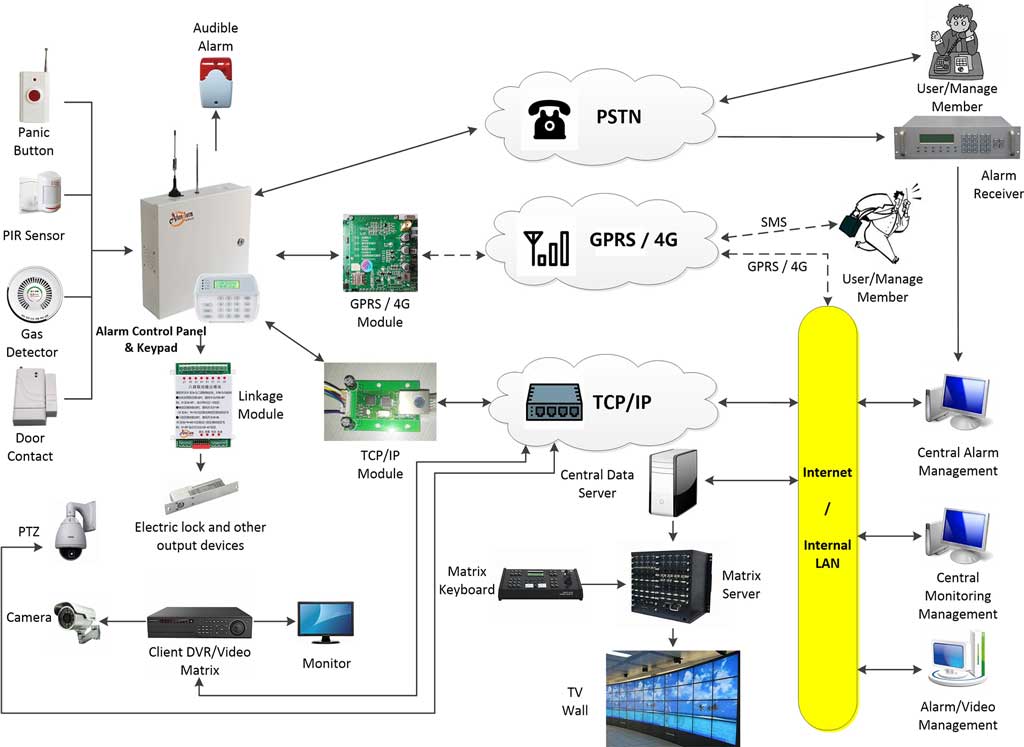
Step-by-Step: Integrating Alarms with Smart-Building Platforms Safely
- Inventory the Existing Alarm System
Document all alarm panels, expanders, sensors, communication paths, and firmware versions. Identify which components support secure IP communication. - Define Integration Scope
Decide which alarm data will be shared with the smart-building platform (events, status, diagnostics) and which functions remain strictly local. - Select Secure Integration Interfaces
Use documented APIs or certified gateways rather than custom protocol converters. Avoid exposing raw alarm bus traffic to IP networks. - Implement Network Segmentation
Place alarm devices in a dedicated network segment with controlled access from the smart-building platform. - Configure Authentication and Roles
Assign roles for monitoring, maintenance, and administration. Ensure no single account has unrestricted access. - Test Failure Scenarios
Simulate network outages, platform downtime, and communication loss. Confirm that the alarm system behaves correctly in all cases. - Establish Ongoing Monitoring and Audits
Review logs regularly, monitor system health, and conduct periodic security assessments aligned with industry standards.
Lessons from Integrated Alarm Deployments
In commercial office buildings and healthcare facilities, IoT alarm integration has successfully reduced nuisance alarms and improved maintenance efficiency. However, post-incident analyses consistently show that security failures are linked to weak integration design—not the alarm technology itself.
Common root causes include shared credentials, direct internet exposure of alarm interfaces, and failure to maintain alarm autonomy. These issues are preventable with proper system planning.
Conclusion
IoT alarm integration offers real, measurable benefits for intrusion alarm systems, including improved visibility, higher alarm accuracy, and lower operational costs. However, these benefits come with equally real risks if integration is treated as a purely IT exercise.
For product managers and engineers, successful IoT alarm integration requires disciplined system planning, respect for core alarm principles, and alignment with recognized security standards. When implemented correctly, integrating alarms with smart-building platforms strengthens—not weakens—overall security.