
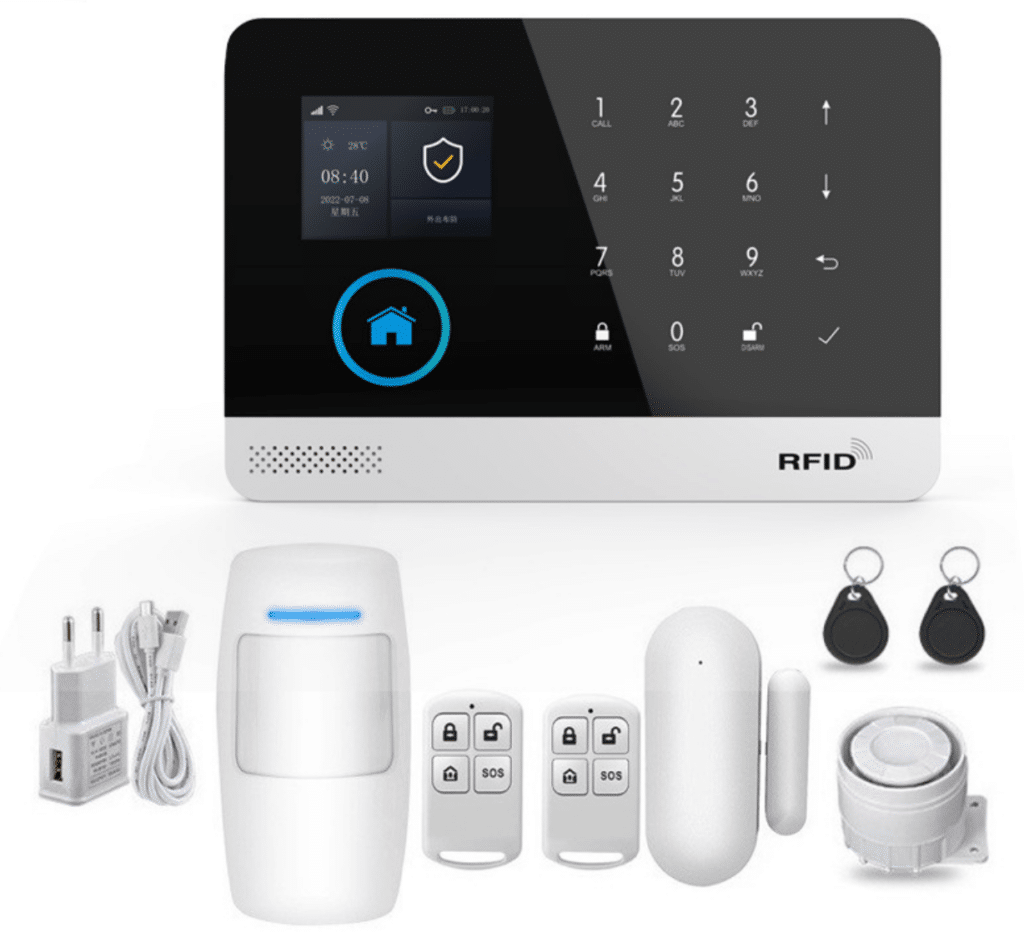
In the rapidly evolving home security landscape of 2026, burglary remains a persistent—and increasingly sophisticated—criminal threat. While smart cameras, AI-powered analytics, and connected locks often dominate industry headlines, seasoned security professionals understand a fundamental truth:
The control panel is still the single most critical component of any effective burglar alarm system.
It is the system’s brain, decision engine, and communications hub. More importantly, it determines whether a break-in is merely detected—or decisively disrupted before meaningful loss occurs.
With more than two decades of hands-on experience designing, deploying, and auditing burglar alarm systems across private residences, multi-family housing, rental portfolios, and mixed-use developments, one conclusion has been repeatedly validated in real-world conditions:
The architecture, reliability, and resilience of the control panel ultimately define the real-world effectiveness of the entire burglar alarm system.
This professional-grade guide delivers a field-tested, intrusion-focused comparison of the top home security control panels in 2026, evaluated exclusively through the lens that matters most—burglar alarm dominance.
We intentionally avoid marketing hype and feature clutter. Instead, we focus on what actually:
- Stops intrusions in progress
- Reduces alarm transmission latency
- Minimizes false alarms and dispatch failures
- Maintains reliability during power, network, or sabotage events
- Scales cleanly across single homes and bulk residential deployments
This is not a promotional roundup. It is an operational decision framework built from deployment data, failure analysis, and procurement consulting for security professionals.
Why Control Panels Decide the Outcome of Burglar Alarm Systems
Independent crime prevention studies consistently show that properties without active alarm systems are up to three times more likely to be targeted by burglars. However, field data from real installations reveals a more nuanced—and often overlooked—reality:
A poorly designed or poorly deployed control panel negates most of the theoretical protection an alarm system promises.
In practice, burglar alarm systems fail when:
- Sensors trigger but alarm signaling is delayed or suppressed
- Panels lose communication during power or internet outages
- Excessive false alarms lead to user fatigue or police non-response
- Intruders locate and neutralize the panel before alerts are transmitted
In large-scale environments—apartment complexes, rental portfolios, gated communities—the control panel’s sensor capacity, redundancy architecture, and anti-tamper resilience are no longer optional. They are operational requirements.
For this reason, the following comparison evaluates panels based on how they perform under real burglary conditions, not brochure specifications or consumer convenience claims.
Key Criteria for Comparing Home Security Control Panels
Before reviewing individual systems, it is essential to establish non-negotiable evaluation criteria grounded in real intrusion scenarios, not consumer marketing priorities.
1. Core Burglar Alarm Architecture
A professional-grade control panel must reliably support:
- Door and window contacts
- Motion detectors (PIR and dual-technology)
- Glass-break sensors
- Panic and duress inputs
- Full tamper detection (panel removal, enclosure breach, sensor interference)
Minimum professional baseline requirements:
- Support for 50–100+ sensor zones
- Zone-level logic configuration (instant, delayed, 24-hour zones)
- Independent cellular backup not reliant on local internet
Any panel unable to meet these thresholds is fundamentally unsuitable for serious burglar alarm deployments.
2. Alarm Transmission Reliability & Redundancy
Experienced intruders frequently cut power and internet connections as their first action.
A credible control panel must therefore provide:
- Dual-path communication (cellular + Wi-Fi or Ethernet)
- Minimum 24-hour battery backup under active load
- Encrypted alarm signaling to monitoring centers
- Fully automatic failover without user intervention
Panels lacking autonomous cellular signaling represent a single point of failure and should be avoided.
3. Anti-Sabotage & “Crash-and-Smash” Resistance
Modern burglary tactics increasingly target the control panel itself.
Professional-grade systems must:
- Transmit alarms immediately upon enclosure tamper
- Continue signaling even if the panel is physically damaged
- Support hidden or secondary sirens to maintain deterrence
This capability marks the true dividing line between consumer-grade alarms and professional burglar alarm platforms.
4. False Alarm Mitigation & Alarm Verification
In many jurisdictions, false alarms account for up to 90% of police dispatches, leading to fines, response delays, or outright refusal.
Effective control panels mitigate this risk through:
- Intelligent entry/exit delay logic
- Multi-sensor confirmation workflows
- Video or audio verification capabilities
- Intuitive arming interfaces that reduce user error
5. Scalability & Access Control
For property managers and bulk buyers, the control panel must support:
- Multiple user codes and access levels
- Role-based permissions
- Tool-free sensor expansion
- Fleet-level app or dashboard management
6. Compliance, Certification & Monitoring Standards
For insurance eligibility and lawful dispatch:
- UL or equivalent alarm certification
- Proven third-party testing
- Documented monitoring and escalation procedures
Top Home Security Control Panels Compared (2026)
The following six platforms represent the strongest real-world performers in burglar alarm–centric deployments for 2026.
1. ADT Command Panel
The ADT Command Panel remains the benchmark for professionally monitored burglar alarm systems. Its architecture prioritizes reliability, redundancy, and rapid dispatch—critical factors during real intrusions.
Burglar Alarm Strengths
- Supports up to 232 sensors
- Built-in cellular with smash-resistant signaling
- Panel-level video alarm verification
- Consistently proven sub-35-second monitoring response
Best Use Cases
- High-value residences
- Multi-unit housing requiring insurance and compliance recognition
- Buyers prioritizing monitoring reliability over system flexibility
Key Limitation
- Long-term contracts reduce adaptability for short-term or experimental deployments
2. SimpliSafe Base Station + Keypad
SimpliSafe has matured into one of the most cost-efficient and operationally reliable DIY-friendly burglar alarm platforms available today.
Burglar Alarm Strengths
- Loud 95 dB siren
- Cellular + Wi-Fi redundancy
- Robust tamper detection
- Extremely fast deployment at scale
Best Use Cases
- Rental portfolios
- Bulk residential installations
- Buyers requiring contract-free scalability
Key Limitation
- Limited deep automation compared to premium integrated platforms
3. Vivint Smart Hub
Vivint emphasizes active deterrence by combining alarms with AI-driven visual and audible escalation.
Burglar Alarm Strengths
- Smart Deterr automation (lights, sirens, voice warnings)
- Professionally optimized sensor placement
- Tight integration with cameras and smart locks
Best Use Cases
- High-end residences
- Properties with recurring perimeter loitering threats
Key Limitation
- Higher total cost of ownership
4. Ring Alarm Hub
Ring offers one of the most balanced alarm-plus-video ecosystems for budget-conscious buyers.
Burglar Alarm Strengths
- Extremely loud siren output
- Rapid video-linked verification
- Simple, intuitive app-based control
Best Use Cases
- Small commercial properties
- Cost-driven bulk residential deployments
5. Abode Iota All-In-One
Abode excels in custom alarm logic and automation, appealing to technically inclined users and integrators.
Burglar Alarm Strengths
- Built-in camera verification
- Advanced rule-based alarm triggers
- No mandatory contracts
Best Use Cases
- Smart-home-heavy environments
- Apple HomeKit–centric deployments
6. Frontpoint Hub
Frontpoint prioritizes communication redundancy and operational reliability.
Burglar Alarm Strengths
- Always-on dual-path communication
- Strong siren output
- Straightforward DIY scalability
Best Use Cases
- Rural locations
- Areas with unstable internet infrastructure
Critical Deployment Mistakes to Avoid
- Installing control panels near primary entry doors
- Relying exclusively on Wi-Fi for alarm transmission
- Poor zone configuration leading to chronic false alarms
- Failing to test cellular failover quarterly
- Undersizing battery backup in sensor-dense systems
Correcting these errors alone often improves real-world alarm effectiveness more than adding additional sensors.
Professional Procurement & Deployment Strategy
- Conduct physical intrusion risk mapping
- Define minimum sensor count plus growth margin
- Pilot two to three panels in live environments
- Validate monitoring response times with test alarms
- Negotiate volume pricing and replacement SLAs
- Standardize installation and testing procedures
- Document compliance for insurers and law enforcement
Final Verdict: Choosing the Right Panel to Dominate Burglar Alarm Protection
There is no universally “best” control panel—only the right panel for a specific threat model, scale, and operational reality.
- Maximum reliability & compliance: ADT Command
- Best cost-to-performance ratio: SimpliSafe
- Most aggressive active deterrence: Vivint
- Best budget ecosystem: Ring
- Best automation flexibility: Abode
- Best redundancy for unstable networks: Frontpoint
When properly selected and professionally deployed, the control panel transforms a burglar alarm system from a passive notifier into a true active intrusion defense platform.