
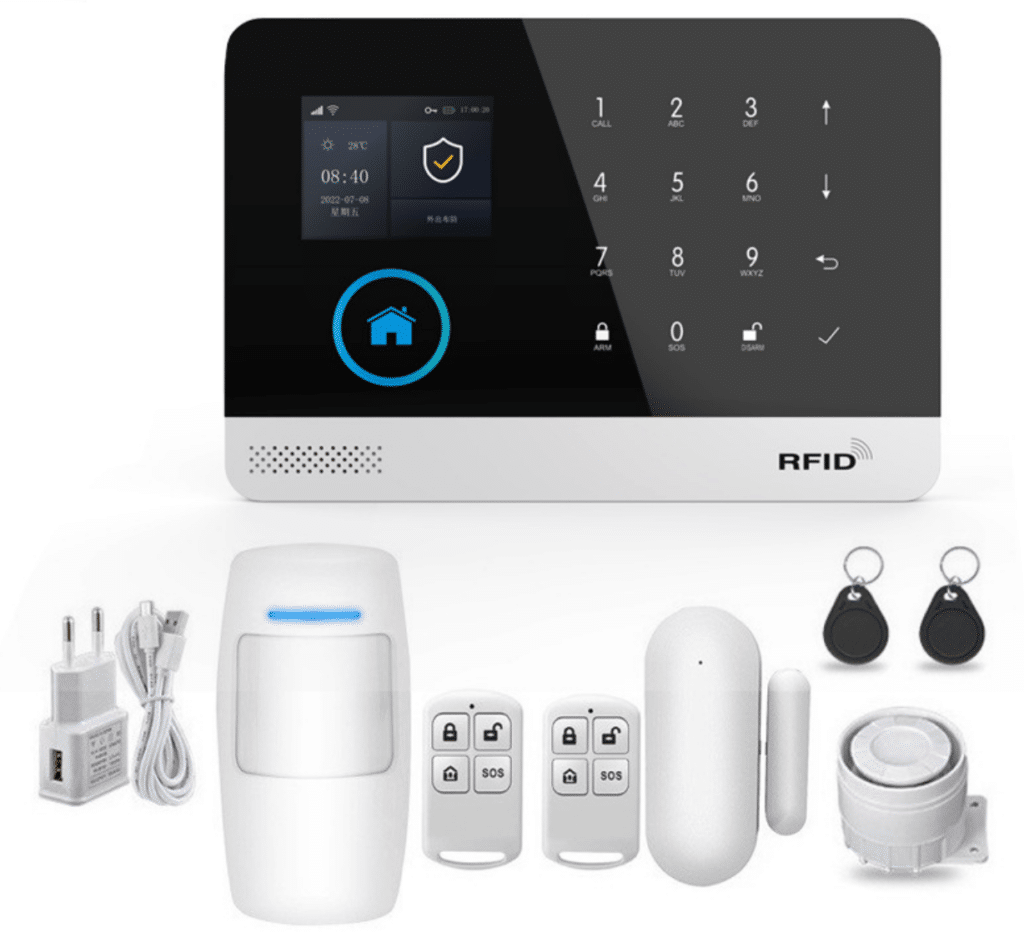
As a seasoned professional with more than twenty years of hands-on experience in the burglar alarm and security industry—covering system architecture, large-scale deployment, failure analysis, and long-term optimization—I have learned one critical truth: the control panel defines the ceiling of your entire burglar alarm system. Sensors, sirens, cameras, and locks can only perform as well as the intelligence coordinating them.
In today’s rapidly evolving intrusion landscape, burglars no longer rely solely on brute force. They exploit wireless interference, predictable alarm behaviors, delayed response workflows, and poorly configured smart systems. As a result, selecting the best smart home security control panel is no longer a consumer-level decision—it is a strategic security decision that directly impacts deterrence strength, detection accuracy, response speed, and long-term operational reliability.
This guide is written from the perspective of a burglar alarm professional for professionals—system integrators, security technicians, installers, procurement managers, and advanced end users who demand real-world performance, not marketing promises. Building upon the original content, I have expanded this article to cover overlooked but mission-critical aspects such as alarm logic design, anti-tamper strategies, operational configuration pitfalls, and scalable deployment practices. By the end, you will possess a practical, field-tested framework to select, deploy, and maintain the best smart home security control panel for robust, future-proof burglar alarm protection.
Understanding the Core Role of a Smart Home Security Control Panel in Burglar Alarm Systems
At its core, a smart home security control panel functions as the decision-making engine of a burglar alarm system. While traditional alarm panels merely reacted to sensor triggers, modern smart panels actively interpret, correlate, and prioritize events across multiple zones and devices.
In a properly designed burglar alarm architecture, the control panel performs five critical functions:
- Signal Aggregation – Collects inputs from intrusion sensors (door/window contacts, PIR motion detectors, glass-break sensors, vibration sensors).
- Event Correlation – Determines whether simultaneous or sequential triggers indicate a legitimate intrusion or a benign event.
- Alarm Logic Execution – Applies programmed rules such as entry delays, zone dependencies, and escalation thresholds.
- Response Coordination – Activates sirens, sends mobile alerts, triggers cameras, locks doors, or notifies monitoring centers.
- System Supervision – Continuously monitors power status, communication links, device health, and tamper conditions.
In large-scale deployments—such as retail chains, logistics warehouses, or multi-dwelling residential complexes—the panel’s ability to manage partitions, zones, and user permissions becomes a decisive factor. The best smart home security control panels support granular partitioning, allowing different areas to operate independently while remaining centrally monitored.
Equally important is false alarm management. Industry data consistently shows that poorly configured alarm systems generate excessive nuisance alarms, eroding user trust and increasing operational costs. Advanced panels mitigate this through adaptive sensitivity, cross-zone verification, and contextual logic—features that are no longer optional in professional burglar alarm deployments.
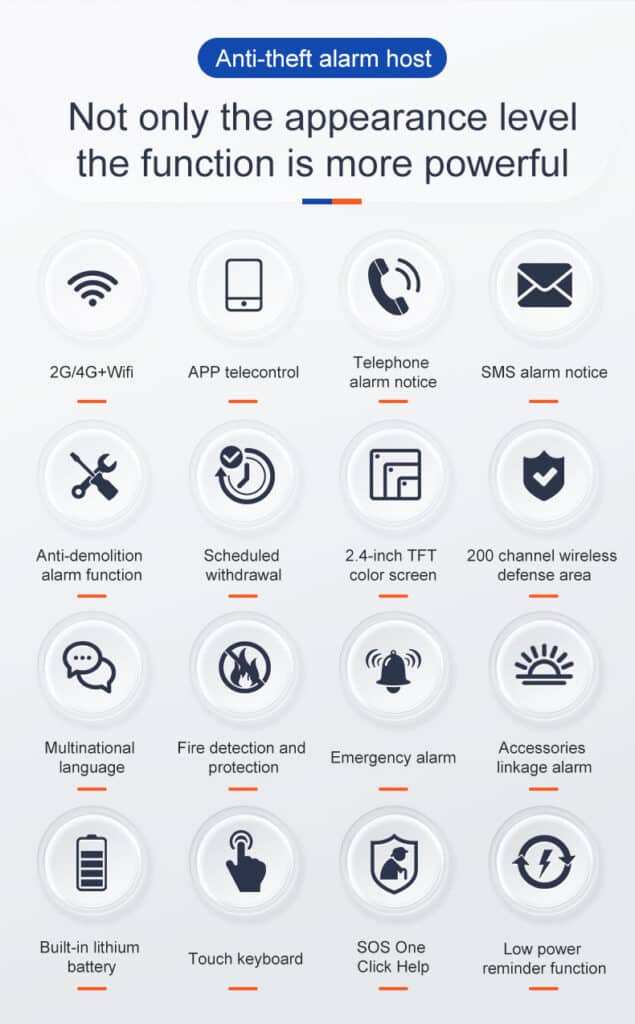
Essential Features to Demand in the Best Smart Home Security Control Panel for Burglar Alarms
Selecting a panel without understanding its real-world defensive capabilities is one of the most common and costly mistakes in alarm system design. Below are the non-negotiable features I insist on when specifying panels for serious burglar alarm applications.
1. Multi-Layer Communication Redundancy
A burglar alarm is only effective if it can communicate during an attack. The best smart home security control panels must support dual or triple-path communication, typically combining:
- Ethernet or Wi-Fi for primary connectivity
- Cellular (LTE/4G, moving toward 5G) as failover
- Local siren activation for on-site deterrence
This redundancy ensures alarm signals reach users or monitoring centers even during power outages or deliberate network sabotage.
2. Professional-Grade Zone and Partition Management
High-quality panels allow:
- Separate entry/exit delays per zone
- Interior vs perimeter logic
- Multiple armed states (Stay, Away, Night, Partial)
This flexibility is essential for real-life usage patterns and dramatically reduces accidental alarms.
3. Advanced Anti-Tamper and Supervision Functions
From a burglar’s perspective, disabling the panel is a primary objective. The best panels actively defend themselves through:
- Enclosure tamper switches
- Wall removal detection
- Sensor supervision (heartbeat signals)
- Instant alerts on communication loss
These features convert the control panel from a passive target into an active defensive component.
4. Intelligent Alarm Verification Capabilities
Modern panels increasingly integrate event verification, such as:
- Motion + door correlation
- Motion-triggered video snapshots
- Time-based intrusion logic
These features improve response confidence and are especially valuable when paired with professional monitoring services.
5. Secure System Architecture
Security control panels are now networked devices. Without strong cybersecurity, they become liabilities. Look for:
- AES-256 encrypted communications
- Secure boot and signed firmware
- Regular OTA security updates
This protects the burglar alarm system from remote compromise.
Comparing the Best Smart Home Security Control Panels for Burglar Alarm Applications
The following platforms stand out based on reliability, configurability, and real-world burglar alarm performance:
| Platform | Strength in Burglar Alarm Use | Ideal Deployment Scenario |
|---|---|---|
| Honeywell Resideo ProSeries | Enterprise-grade zoning, robust supervision | Retail chains, warehouses |
| ADT Command Panel | Professional monitoring integration, reliability | High-risk residential & commercial |
| Ring Alarm Pro | Strong ecosystem integration, cost efficiency | Tech-savvy residential users |
| SimpliSafe | Fast wireless deployment, low learning curve | Mid-scale residential projects |
| Abode | Automation flexibility, no mandatory fees | Mixed-use smart properties |
The key takeaway is that there is no universal “best” panel—only the best panel for a specific burglar alarm scenario.
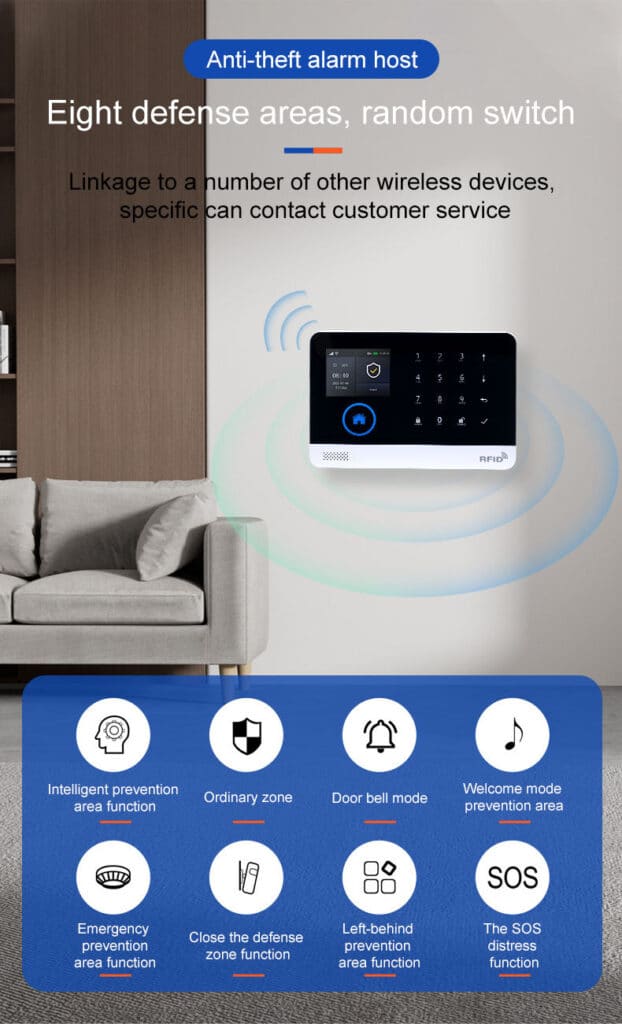
Step-by-Step Framework for Selecting the Best Smart Home Security Control Panel
Step 1: Define the Intrusion Risk Model
Identify entry points, asset value, and threat profile.
Step 2: Map Sensor Density and Expansion Needs
Plan not just for today, but for future expansion.
Step 3: Validate Alarm Logic Capabilities
Ensure the panel supports professional alarm behaviors—not just consumer presets.
Step 4: Test in Real Conditions
Pilot installations expose weaknesses that datasheets never reveal.
Step 5: Negotiate Long-Term Support and Updates
A control panel is a long-term security asset, not a disposable gadget.
Professional Installation and Configuration Best Practices
Beyond physical mounting, true system reliability comes from correct programming:
- Use supervised zones wherever possible
- Assign realistic entry delays based on site layout
- Configure silent duress codes
- Test every failure scenario (power loss, network loss, tamper)
A poorly configured smart panel can be more dangerous than a simple one, as users may develop false confidence.
Common Mistakes That Undermine Burglar Alarm Effectiveness
- Over-reliance on app notifications without sirens
- Ignoring sensor placement physics
- Failing to segment zones logically
- Disabling supervision alerts to “reduce noise”
Each of these mistakes has caused real-world burglar alarm failures in projects I’ve audited.
Maintenance and Lifecycle Management
A burglar alarm system is a living system. Best practices include:
- Monthly functional tests
- Quarterly log reviews
- Annual firmware and battery audits
- Continuous user education
Maintenance is not optional—it is part of the security design.
Conclusion: Building a Smarter, Stronger Burglar Alarm Defense
The best smart home security control panel is not defined by brand or price, but by how effectively it supports real burglar alarm objectives: deterrence, detection, response, and resilience. When selected and configured correctly, it transforms a collection of devices into a coordinated, intelligent defense system.
By applying the principles and practices outlined in this guide, you can move beyond generic “smart home security” and build a professionally engineered burglar alarm system that stands up to real threats—not just marketing demos.