
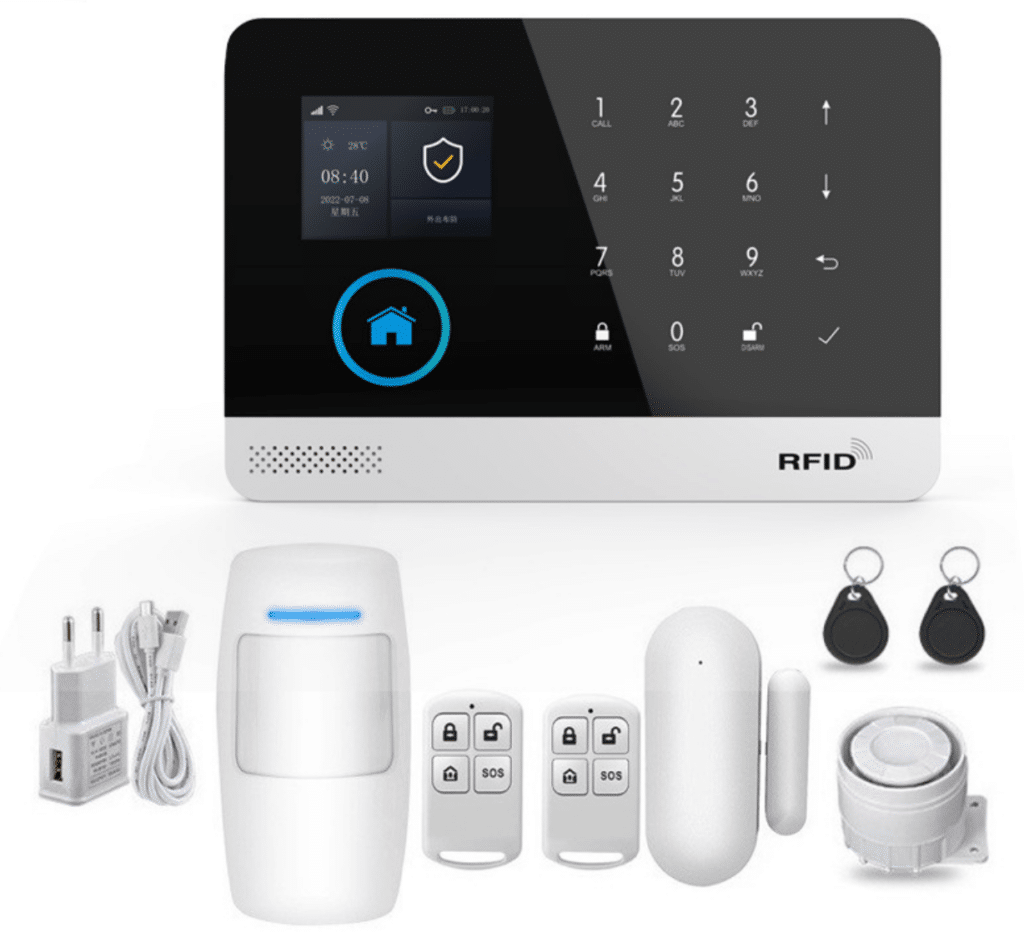
Introduction: Empowering Your Home Against Intruders with Smart, App-Based Alarm Control
Burglaries remain one of the most persistent and financially damaging threats to residential properties worldwide. While construction standards, locks, and neighborhood awareness have improved, experienced intruders continue to exploit delayed response times, blind zones, and outdated alarm systems. After more than two decades working directly in the burglar alarm and intrusion detection industry—covering product design, field deployment, alarm monitoring workflows, and large-scale residential rollouts—I can say with certainty: the control panel is the true backbone of any effective burglar alarm system.
Traditional alarm panels were built for a different era. They required physical interaction, offered limited diagnostics, and often failed silently when communication links dropped. The modern threat landscape demands something far more dynamic. This is where the app-controlled home security panel fundamentally changes the game.
An app-controlled home security panel transforms a burglar alarm system from a static, locally bound device into a real-time, user-driven defense platform. Through a secure mobile application, homeowners, property managers, and security professionals gain immediate visibility into system status, alarm events, sensor health, and communication paths—no matter where they are.
From arming your entire system remotely to verifying intrusion alerts with live camera feeds before dispatching authorities, app control bridges the critical gap between detection and response. In burglary scenarios—where most incidents last less than ten minutes—this speed and visibility directly determine outcomes.
For security integrators, developers, landlords, and bulk buyers, app-controlled panels also solve long-standing operational pain points: faster installations, fewer service calls, scalable fleet management, and measurable reductions in false alarms. These are not consumer gimmicks—they are professional-grade improvements grounded in real-world alarm operations.
This guide focuses squarely on burglar alarm defense, not generic “smart home” convenience. I will walk you through what truly matters: how app-controlled panels function within intrusion systems, how to deploy them correctly, where failures typically occur, and how to engineer reliability at scale. Everything here is based on field-proven practices, not marketing theory.
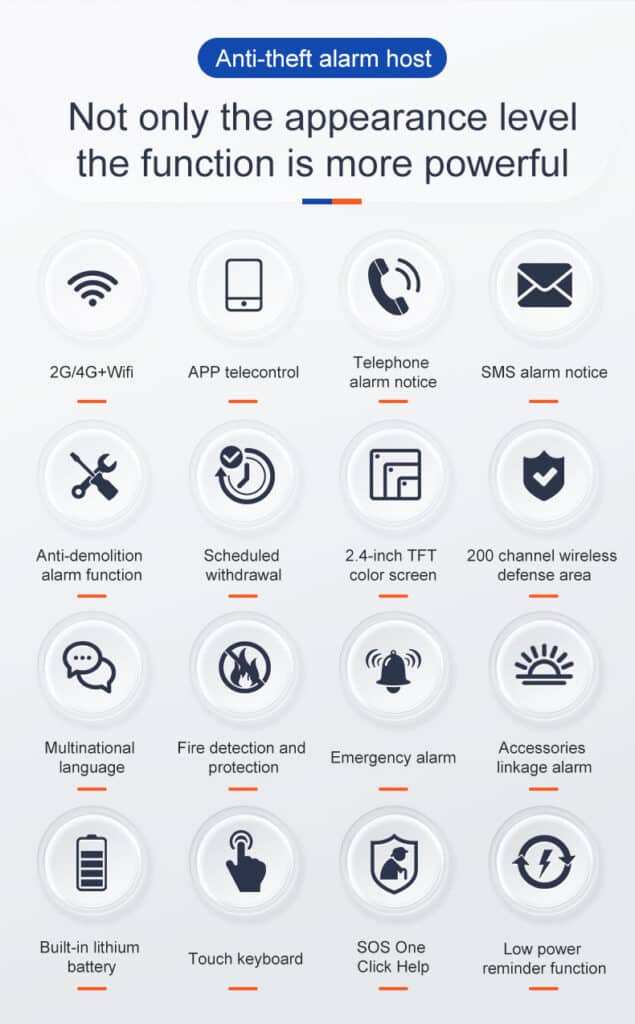
What Is an App-Controlled Home Security Panel? A Burglar Alarm–Focused Definition
An app-controlled home security panel is the central command unit of a burglar alarm system that enables full system control, configuration, and event visibility through a secure mobile application. Unlike legacy keypads that operate only on-site, these panels maintain continuous communication with users and monitoring centers via IP and cellular networks.
From a burglar alarm perspective, the panel performs five critical functions:
- Sensor Supervision – Continuously monitors door/window contacts, motion detectors, glass-break sensors, and tamper switches.
- Event Processing – Determines whether an event is valid, delayed, zoned, or immediate.
- Alarm Signaling – Activates sirens locally and transmits alerts remotely.
- User Interaction – Enables arming, disarming, bypassing, and status review via the app.
- Redundant Communication – Ensures alarm delivery even during power or internet failures.
Core Components Explained
- Control Panel Hardware Typically includes a touchscreen interface, onboard processor, backup battery, and communication modules. In burglar alarm deployments, reliability and supervision intervals matter far more than screen size.
- Wireless Sensors Entry sensors, PIR motion detectors, glass-break sensors, and panic buttons communicate via encrypted RF protocols. Proper sensor supervision intervals are essential to detect jamming or device failure.
- Dual-Path Communication Modules Wi-Fi combined with LTE/4G cellular ensures alarm delivery even if broadband is cut—a common burglar tactic.
- Mobile Application The app is not just a remote control; it is an operational dashboard. It displays zone status, event history, signal strength, battery health, and alarm verification tools.
In real intrusion scenarios, when a perimeter sensor is violated, the panel executes predefined logic: entry delay (if applicable), siren activation, push notification delivery, and monitoring center escalation. App access allows the user to confirm or cancel alarms instantly, dramatically reducing false dispatches.
Why App-Controlled Panels Redefine Burglar Alarm Effectiveness
1. Immediate Remote Awareness and Control
Burglar alarms fail most often due to delayed human response. App-controlled panels eliminate that delay. Whether you are at work, traveling, or asleep, intrusion alerts reach you instantly—with context.
From industry data, verified response workflows enabled by app confirmation reduce false dispatch rates by 60–75%, improving police response credibility and reducing fines.
2. Stronger Psychological Deterrence
Visible alarm panels, audible sirens, and immediate escalation increase perceived risk for intruders. When combined with app-linked cameras and lighting automation, burglars are far more likely to abort attempts early.
3. Reduced Installation and Ownership Costs
Wireless app-controlled panels significantly reduce labor time. For bulk deployments, this translates into faster project completion and predictable scaling. Over time, remote diagnostics reduce truck rolls and maintenance expenses.
4. Operational Scalability for Multi-Property Use
For landlords and property managers, app-controlled panels enable standardized alarm policies across dozens or hundreds of units—without on-site intervention.
5. Higher System Reliability Through Supervision
Modern panels actively monitor sensor health, signal quality, and communication paths. Failures are reported proactively instead of being discovered after an incident.
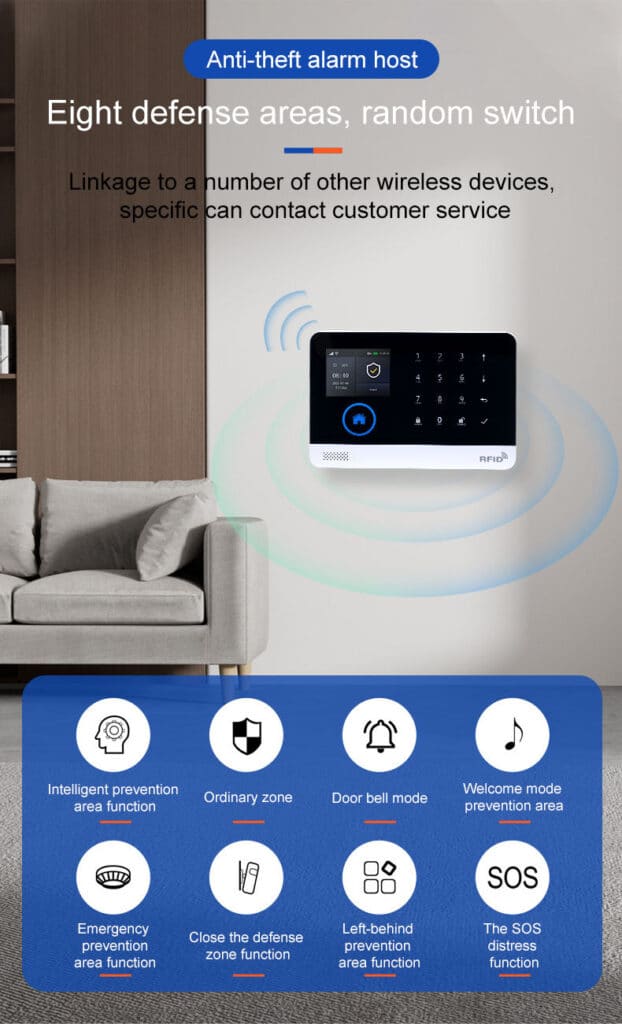
How to Select the Right App-Controlled Home Security Panel for Burglar Alarm Use
Selecting a panel is not about brand popularity—it is about intrusion reliability.
Step 1: Define Threat and Property Profile
- Entry count
- Occupancy patterns
- Pet presence
- Local false alarm ordinances
- Need for professional monitoring
Step 2: Evaluate App Capabilities (Non-Negotiables)
- Real-time push alerts
- Zone-level control
- Event logs with timestamps
- Multi-user permission management
- Remote firmware updates
Step 3: Communication Redundancy
Never deploy a burglar alarm panel without cellular backup. Intruders cut internet lines—this is not theoretical.
Step 4: Certification and Compliance
Look for UL-listed panels and encrypted communication protocols (AES-128 or higher).
Step 5: Total Cost of Ownership
Factor in monitoring fees, sensor replacement cycles, and bulk pricing agreements.
Step-by-Step Deployment Guide: Engineering a Reliable App-Controlled Burglar Alarm System
Phase 1: Pre-Deployment Planning
- Map all entry points and interior paths.
- Identify high-risk zones (rear doors, garages).
- Validate Wi-Fi coverage and cellular signal strength.
- Assign zone naming conventions before installation.
Phase 2: Physical Installation
- Mount panel centrally, away from entry points.
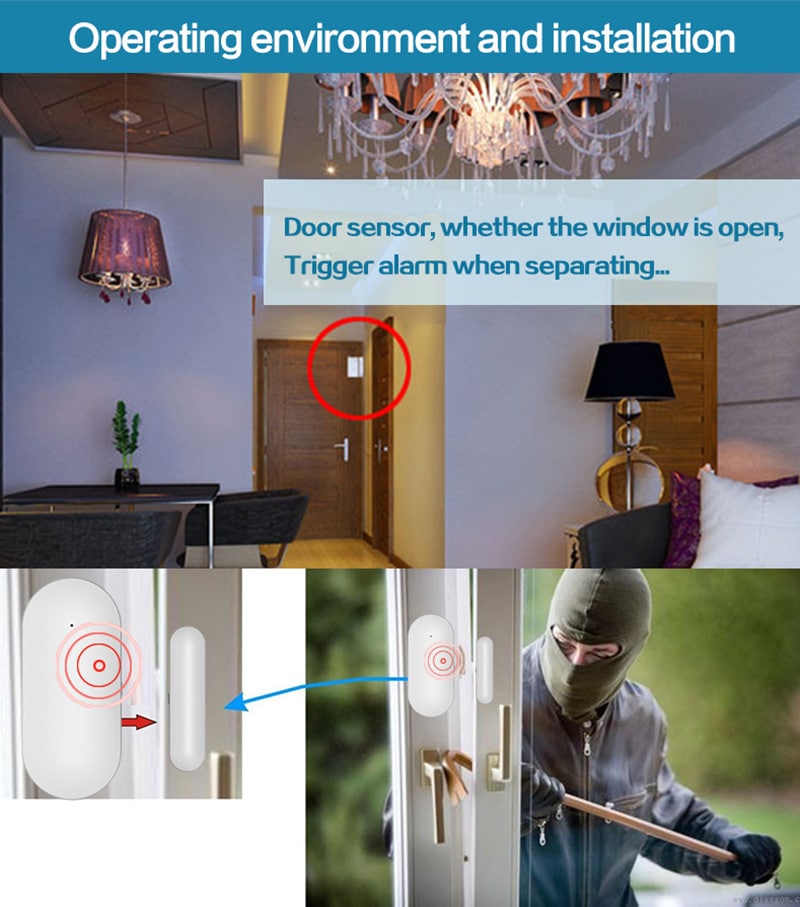
- Install door/window sensors with precise magnet alignment.
- Position motion detectors at 6–8 feet, avoiding HVAC airflow.
- Install sirens where they are clearly audible outside the structure.
Phase 3: App Configuration
- Secure account with strong credentials and 2FA.
- Pair devices and verify supervision status.
- Configure entry/exit delays carefully.
- Assign arming modes (Away, Home, Night).
- Enable alarm verification features if supported.
Phase 4: Validation and Testing
- Conduct full system walk tests.
- Verify notification latency.
- Test power and internet failure scenarios.
- Train users thoroughly.
Integrating Advanced Burglar Alarm Functions
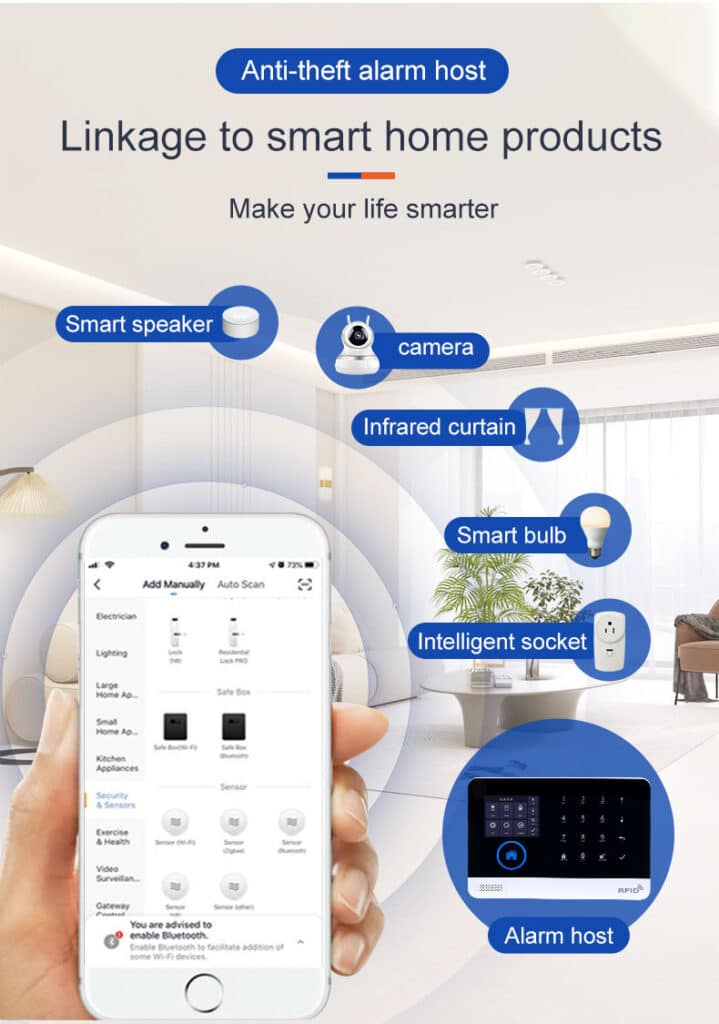
App-controlled panels excel when integrated with:
- Smart locks (auto-lock on arm)
- Cameras (visual verification)
- Lighting automation (alarm-triggered illumination)
- Access control systems (for mixed-use properties)
These integrations create layered defense, not isolated detection.
Ongoing Maintenance and Operational Best Practices
- Weekly system tests
- Annual battery replacement
- Monthly event log review
- Firmware updates as released
- User refresher training
For bulk deployments, centralized app dashboards dramatically reduce operational overhead.
Common Failure Points and Professional Troubleshooting
| Issue | Root Cause | Solution |
|---|---|---|
| Missed alerts | Weak connectivity | Enable cellular priority |
| False alarms | Poor sensor placement | Reposition & recalibrate |
| Panel offline | Power or router failure | Backup battery + LTE |
| Delayed notifications | App settings | Adjust notification priority |
Most failures are preventable through disciplined deployment.
Real-World Results: App-Controlled Panels Stopping Burglaries
Across residential and multi-unit deployments I’ve overseen, app-controlled burglar alarm panels consistently deliver:
- Faster response times
- Lower false alarm rates
- Higher user engagement
- Measurable crime reduction
These are operational outcomes—not marketing claims.
The Future of App-Controlled Burglar Alarm Panels
Expect:
- AI-assisted threat analysis
- Improved alarm verification workflows
- Deeper integration with video analytics
- More open ecosystems for professional integrators
The panel will remain the core of intrusion defense—but smarter and more autonomous.
Conclusion: Build Smarter Burglar Alarm Defense—Starting at the Panel
An app-controlled home security panel is not a luxury upgrade. It is the modern foundation of effective burglar alarm defense. When selected correctly, installed professionally, and operated intelligently, it transforms how intrusion threats are detected, verified, and stopped.
If you are planning to deploy, upgrade, or procure at scale, focus on reliability, communication redundancy, and real operational control—not consumer gimmicks.
A well-deployed panel doesn’t just alert you—it gives you control when it matters most.