
In commercial security, few decisions carry as much weight as the installation of an alarm system. A properly installed system doesn’t just detect intruders—it protects assets, ensures regulatory compliance, reduces insurance premiums, and delivers measurable return on investment. Yet far too many businesses discover too late that a rushed, poorly planned, or improperly executed alarm system installation turns what should be a strategic asset into a costly liability.
The consequences are not theoretical. Faulty installations contribute to repeated break-ins despite “armed” systems, trigger regulatory violations during audits, lead to denied insurance claims after incidents, and generate ongoing operational expenses through false alarms and unnecessary service calls. In short, alarm system installation mistakes don’t just compromise physical security—they erode the bottom line in ways that compound over time.
This comprehensive guide examines the most damaging alarm system installation errors from the perspective of their real-world business impact. Written for security decision-makers, facility managers, procurement specialists, and technical teams responsible for protecting commercial assets, it provides actionable steps to avoid these pitfalls and transform your alarm system into the reliable safeguard your organization needs.
The True Cost of Alarm System Installation Gone Wrong
Before diving into specific mistakes, it’s worth quantifying what’s at stake.
A single undetected burglary in a retail or warehouse environment can result in losses ranging from tens of thousands to millions of dollars in stolen inventory, equipment, and business interruption. When an alarm system fails due to installation errors, insurers frequently deny claims, citing “improper installation” clauses in policies. False alarm rates above local thresholds can trigger fines or suspended police response—effectively rendering the system useless in an emergency. And chronic reliability issues turn the system into a recurring expense rather than an investment.
The businesses that suffer most are those that treat alarm system installation as a checkbox rather than a strategic process. The ones that thrive approach it with the same rigor they apply to IT infrastructure or financial controls.
Mistake #1: Skipping Professional Site Surveys and Risk Assessments
Why It Happens
Many organizations select and install alarm systems based on square footage, budget, or vendor recommendations without conducting a thorough on-site risk assessment. Procurement teams often pressure installers to “just get it done” to meet deadlines.
The Business Consequences
Without a proper survey, critical vulnerabilities remain uncovered. Entry points are missed, detection zones overlap inefficiently, and environmental factors (lighting, traffic patterns, electromagnetic interference) are ignored. The result: blind spots that intruders exploit, high false alarm rates, and systems that fail compliance audits.
Real-world example: A mid-sized distribution center installed a perimeter alarm system without assessing delivery bay activity. Forklift traffic repeatedly triggered motion detectors, generating hundreds of false alarms. Local police eventually classified the site as a “chronic false alarm location,” refusing priority response. When a genuine break-in occurred six months later, response was delayed by 45 minutes—long enough for thieves to clear out high-value inventory.
How to Avoid It: Step-by-Step Site Assessment Process
- Engage a certified security consultant or installer with commercial experience to conduct a full physical survey before any equipment is ordered.
- Document all potential entry points: doors, windows, loading docks, roof access, vents, and adjacent walls.
- Map high-value asset locations and high-risk zones (cash offices, server rooms, inventory storage).
- Evaluate environmental factors: lighting levels, pedestrian/vehicle traffic, electromagnetic sources, temperature fluctuations.
- Perform a threat analysis specific to your industry and location (e.g., organized retail crime patterns, local burglary statistics).
- Produce a written risk assessment report with prioritized recommendations and detection zone mapping.
- Use the report as the foundation for system design and equipment selection.
Time invested here prevents years of regret later.
Mistake #2: Improper Sensor Selection and Placement
The Hidden Costs
Choosing the wrong type of detector—or placing the right detector in the wrong location—is one of the most common and expensive alarm system installation errors. Dual-technology motion sensors in high-traffic areas, glass-break detectors mounted too far from windows, or magnetic contacts installed on doors with excessive play all lead to unreliable performance.
Real-World Impact
- Excessive false alarms → police non-response → effective system failure
- Missed detections → successful intrusions → insurance claim denials
- Premature equipment failure → higher maintenance costs
Correct Selection and Placement Guidelines
Motion Detectors
- Use dual-technology (PIR + microwave) sensors only in low-traffic interior spaces.
- Avoid aiming detectors at windows, HVAC vents, or heat sources.
- Mount at 7–9 feet height with clear line-of-sight; avoid corners where coverage overlaps inefficiently.
- In warehouses, use curtain-style detectors for perimeter protection rather than wide-area volumetric sensors.
Door and Window Contacts
- Install recessed contacts on high-security doors for tamper resistance.
- Use wide-gap contacts only where door alignment varies significantly.
- Triple-check alignment—misalignment of even 1/8 inch can cause chronic trouble signals.
Glass-Break Detectors
- Position within 20–25 feet of protected glass with direct line-of-sight.
- Test acoustic patterns on-site; different glass types require different sensitivity settings.
- Combine with shock sensors on high-risk windows for layered protection.
Always conduct on-site bench testing and walk-testing after installation to verify coverage.
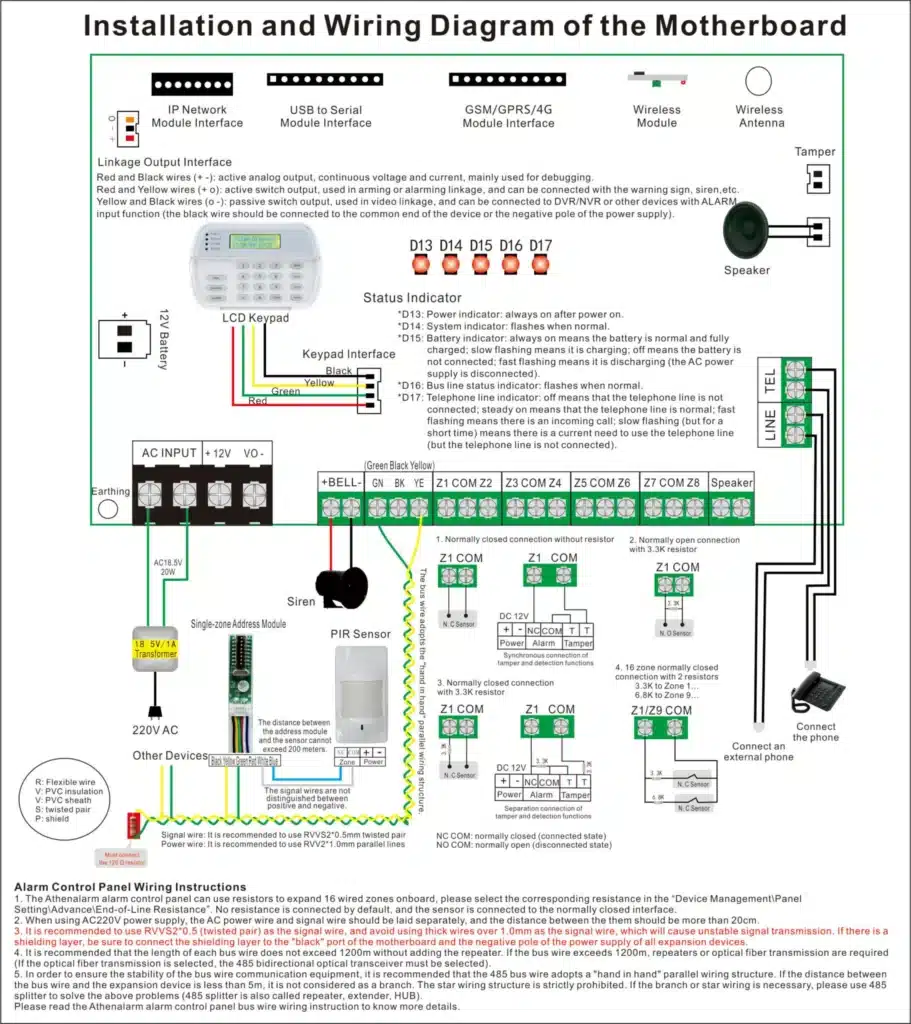
Mistake #3: Substandard Wiring and Power Supply Design
Why It Matters More Than Ever
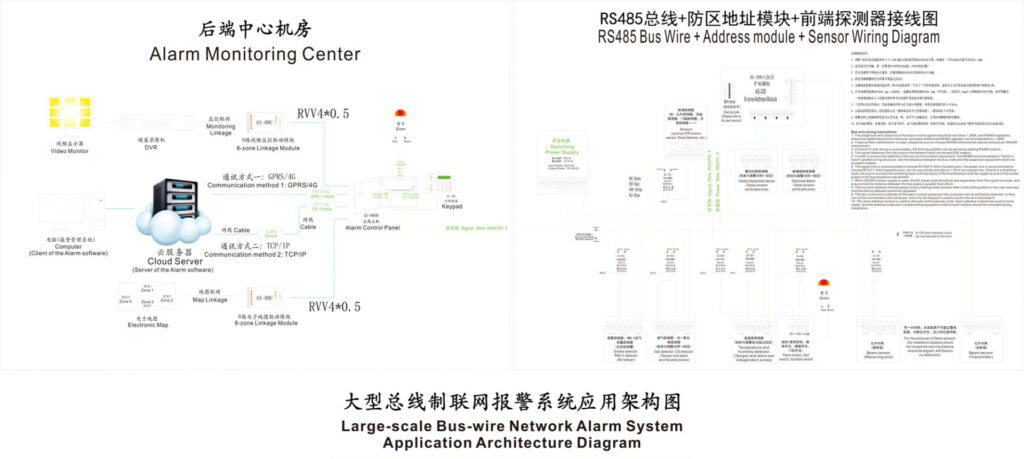
Modern alarm systems integrate with access control, video surveillance, and cloud monitoring. Poor wiring practices create single points of failure that can disable entire systems.
Common Wiring Mistakes and Their Consequences
- Running low-voltage alarm cabling alongside high-voltage electrical lines → electromagnetic interference → false alarms
- Using undersized wire gauges → voltage drop → unreliable device operation
- Failing to provide dedicated backup power circuits → system offline during power outages
- Skipping end-of-line resistors or proper termination → tamper alarms and communication failures
Professional Wiring Standards
- Use shielded, twisted-pair cable for all data communication lines (RS-485, etc.).
- Maintain minimum 12-inch separation from power-limited circuits and 24-inch from power lines.
- Install all wiring in conduit where exposed or in high-risk areas.
- Provide dedicated, supervised power supplies with battery backup sized for minimum 24-hour operation (72 hours for high-risk facilities).
- Label all cables clearly at both ends and maintain as-built wiring diagrams.
- Test for ground faults and voltage drop at the furthest device.
These practices dramatically improve system reliability and reduce long-term service costs.
Mistake #4: Ignoring Integration with Insurance and Compliance Requirements
The Overlooked Connection
Many businesses install alarm systems to qualify for insurance discounts without verifying that the installation meets specific insurer or regulatory standards. This oversight can void coverage entirely.
Key Standards and Requirements
- UL 681 (Installation and Classification of Burglar and Holdup Alarm Systems)
- NFPA 730 requirements for commercial occupancies
- Specific insurer mandates (e.g., central station monitoring with runner response, line security)
- Local ordinances governing false alarm rates and police response
How to Ensure Compliance
- Request written confirmation from your insurer regarding required system features and certification levels before design begins.
- Engage a UL-listed or nationally recognized testing laboratory (NRTL) certified installer.
- Obtain a UL certificate or equivalent upon completion—many insurers require this specific documentation.
- Implement verified response protocols (audio/video verification) to maintain police priority response.
- Schedule annual inspections and maintain detailed service records.
A compliant installation doesn’t just avoid penalties—it often reduces premiums by 10–20%.
Mistake #5: Neglecting User Training and Documentation
The Human Factor
Even a perfectly installed system fails when staff don’t understand proper operation. Improper arming/disarming procedures account for a significant percentage of “false alarms” and security breaches.
Essential Training Components
- Comprehensive user manuals tailored to your specific system
- Hands-on training for all authorized personnel
- Clear signage at entry points with arming instructions
- Designated keyholders with documented responsibilities
- Regular refresher training and access audits
Documentation Best Practices
Maintain a complete system binder including:
- As-built drawings and zone lists
- User manuals for all components
- Service contact information and procedures
- Emergency response protocols
- Annual test records
Mistake #6: Failing to Plan for Scalability and Future Integration
Short-Term Thinking, Long-Term Costs
Many installations focus solely on current needs without considering future expansion or technology integration. This leads to costly retrofits when adding new facilities, upgrading to IP-based systems, or integrating with emerging technologies.
Future-Proof Design Principles
- Use modular control panels with expansion capacity
- Install extra wiring runs during initial construction
- Choose open-protocol systems that support multiple manufacturers
- Plan network infrastructure for IP communicators and cloud management
- Document all infrastructure for future reference

Mistake #7: Choosing the Lowest Bidder Without Verifying Expertise
The False Economy
The cheapest quote often reflects corner-cutting on labor, materials, or design time. Experienced commercial installers charge more because they prevent expensive problems.
How to Vet Installers Properly
- Verify licensing and insurance specific to alarm installation in your state.
- Check for manufacturer certifications (e.g., Honeywell, DSC, Bosch).
- Request references from similar commercial installations completed within the last 12 months.
- Review their safety record and worker compensation history.
- Confirm they carry errors and omissions insurance.
Turning Your Alarm System into a True Asset
A properly installed alarm system does more than detect threats—it provides actionable business intelligence, reduces insurance costs, ensures regulatory compliance, and delivers peace of mind.
The difference between a system that merely exists and one that actively protects your organization lies in the quality of its installation. By avoiding these seven critical mistakes, you transform alarm system installation from a necessary expense into a strategic investment that pays dividends for years.
Ready to ensure your next alarm system installation is done right the first time? Contact our team of certified commercial security specialists for a comprehensive risk assessment and professional installation tailored to your business needs. We specialize in helping organizations like yours avoid costly mistakes and achieve maximum protection and ROI.