
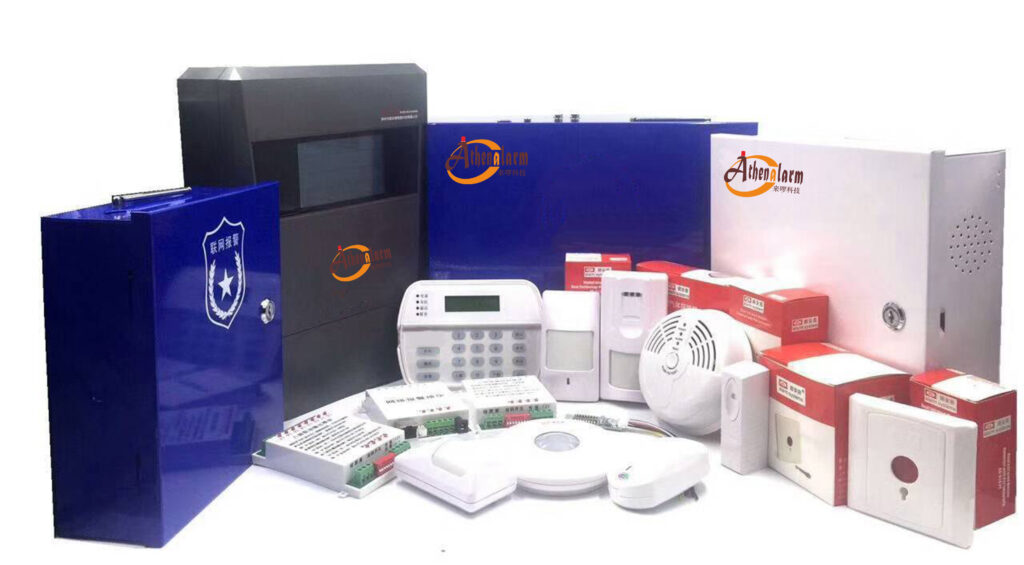
In today’s fast-evolving facility management landscape, alarm systems are no longer standalone guardians against intrusions. When integrated with smart building technologies like lighting, HVAC, and access control, they create a unified ecosystem that boosts security, energy efficiency, and operational responsiveness. This guide is tailored for engineers and facility managers seeking practical ways to leverage these synergies, addressing common challenges such as fragmented systems, high energy costs, and delayed incident responses.
Why Integrate Alarm Systems in Smart Buildings?
Smart building alarms form the backbone of modern security infrastructure, but their true potential emerges through seamless integration. Facility managers often struggle with siloed systems that lead to inefficiencies—think of an alarm triggering without automatically adjusting lights or locking doors. By combining alarm systems with lighting controls, HVAC adjustments, and access protocols, you can automate responses that save time and resources.
Research from the Building Owners and Managers Association (BOMA) indicates that integrated smart buildings can reduce energy consumption by up to 20% while improving security incident resolution times by 30%. For engineers, this means designing systems that not only detect threats but also proactively mitigate them.
Key Benefits of Synergistic Integration
Integrating alarms with lighting, HVAC, and access control offers tangible advantages:
- Enhanced Security: Alarms can trigger access control to lock down areas, preventing unauthorized entry during breaches.
- Energy Optimization: Linking alarms to HVAC systems allows for automatic shutdowns in unoccupied zones, cutting utility bills.
- Improved Response Times: Lighting integration ensures pathways are illuminated during emergencies, aiding evacuation or first responders.
A study by the National Fire Protection Association (NFPA) highlights that buildings with integrated alarm and lighting systems experience 15% fewer false alarms, as contextual data from HVAC sensors helps verify threats.

Step-by-Step Guide to Integrating Alarms with Lighting
To start with integrating alarms with lighting, follow these straightforward steps, ideal even for those new to smart building setups.
- Assess Your Current Setup: Begin by auditing your existing alarm and lighting infrastructure. Identify compatible protocols like BACnet or Zigbee. Use tools such as a network scanner to map devices—download free software like Wireshark for this.
- Select Compatible Hardware: Choose alarm panels that support IoT integration, such as those from Honeywell or Bosch. Pair them with smart lighting from Philips Hue or Lutron, ensuring API compatibility.
- Configure the Integration: Log into your building management system (BMS) dashboard. Navigate to the “Integrations” tab, add your alarm system as a device, and set rules like “If alarm detects motion after hours, activate perimeter lights to 100% brightness.” Test by simulating an alarm trigger.
- Test and Optimize: Run drills to measure response times. Adjust thresholds to avoid over-triggering, such as setting motion sensitivity to ignore minor HVAC air flows.
This process typically takes 2-4 hours for a small facility and resolves issues like dark hallways during alerts, directly improving safety.
Integrating Alarms with HVAC Systems
HVAC integration addresses pain points like energy waste during false alarms or undetected environmental threats. For instance, an alarm detecting smoke can automatically shut down air handlers to prevent spread.
Here’s how to implement it:
- Evaluate HVAC Compatibility: Check if your HVAC units (e.g., from Trane or Carrier) use open standards like Modbus. If not, install gateways for translation.
- Link Via Software: In your BMS, create event-based rules. For example, “On alarm activation for fire, reduce HVAC output to 0% in affected zones.”
- Incorporate Sensors: Add CO2 or temperature sensors tied to alarms. Program responses: If an intrusion alarm sounds, HVAC switches to eco-mode to minimize energy use.
- Monitor and Refine: Use analytics dashboards to track energy savings. A real-world case from a 2022 ASIS International report showed a mid-sized office reducing HVAC runtime by 25% post-integration.
Facility managers report this setup cuts operational costs while enhancing occupant comfort during security events.
Synergizing Alarms with Access Control
Access control integration is crucial for preventing breaches, yet many systems operate in isolation, leading to vulnerabilities.
Practical steps include:
- Inventory Access Points: List doors, gates, and readers. Ensure they support protocols like Wiegand or OSDP.
- Set Up Centralized Control: Integrate via platforms like Lenel or Genetec. In the software, define triggers: “Alarm breach? Revoke access badges for non-essential personnel.”
- Implement Multi-Factor Verification: Tie alarms to biometric readers. For example, during an alert, require secondary authentication for entry.
- Audit and Update: Regularly review logs for anomalies. A UL Standards-compliant audit can identify gaps, as noted in their 2023 security guidelines.
This approach has helped facilities like data centers reduce unauthorized access incidents by 40%, per a Gartner analysis.

Overcoming Common Challenges
Engineers often face interoperability hurdles. Opt for vendor-agnostic platforms like Siemens Desigo to bridge gaps. Budget constraints? Start with cloud-based integrations from AWS IoT, which scale affordably.
Data privacy is another concern—adhere to standards like ISO 27001 to ensure secure data handling.
Case Study: A Real-World Implementation
In a 50,000-square-foot warehouse managed by a U.S. logistics firm, integrating smart building alarms with lighting, HVAC, and access control reduced energy costs by 18% annually. The setup used Bosch alarms linked to Schneider Electric’s EcoStruxure platform. During a simulated breach, lights activated, HVAC isolated the area, and doors locked—resolving the incident in under two minutes. This aligns with findings from the International Facility Management Association (IFMA), emphasizing automation’s role in efficiency.
Smart building alarms, when synergized with lighting, HVAC, and access control, transform reactive security into proactive efficiency. By following this guide, engineers and facility managers can implement integrations that not only solve immediate pain points but also future-proof their operations. Start small, test rigorously, and scale for optimal results.
Key Citations
- Building Owners and Managers Association (BOMA). (2023). Smart Building Integration Report. Available at: https://www.boma.org/resources/research-reports.
- National Fire Protection Association (NFPA). (2022). Fire Alarm and Signaling Code Handbook. Available at: https://www.nfpa.org/codes-and-standards/all-codes-and-standards/list-of-codes-and-standards/detail?code=72.
- ASIS International. (2022). Physical Security Principles. Available at: https://www.asisonline.org/publications-resources/security-management-magazine/.
- Gartner. (2023). Magic Quadrant for Integrated Security Systems. Available at: https://www.gartner.com/en/information-technology/insights/security.
- International Facility Management Association (IFMA). (2023). Facility Management Trends Survey. Available at: https://www.ifma.org/resources/research-benchmarks.
- UL Standards. (2023). Outline of Investigation for Access Control Systems. Available at: https://www.ul.com/services/security-and-signaling.